
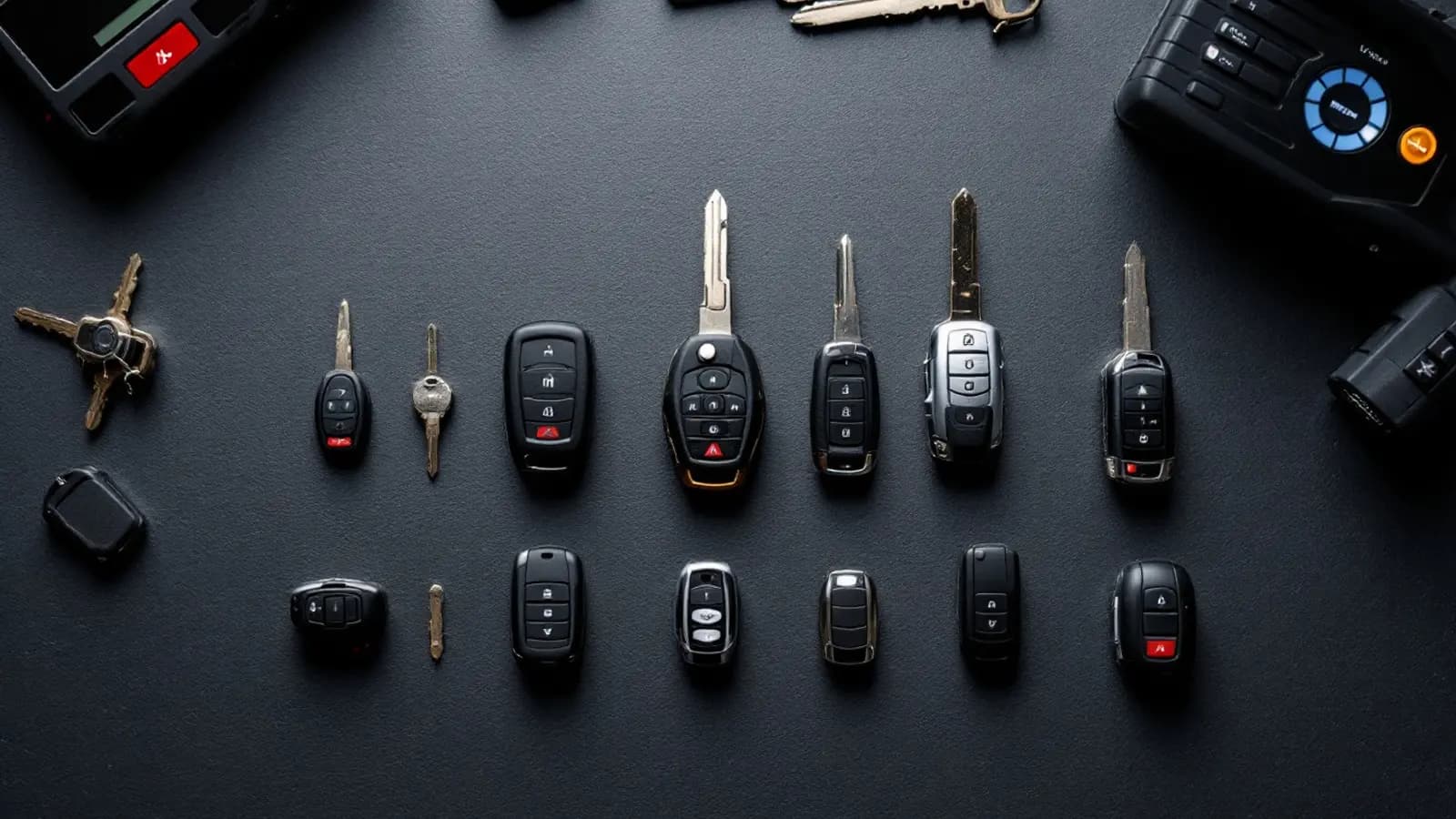
Aftermarket vs OEM Car Key Fobs in Dallas: 2026 Buyer's Guide
2026 Dallas guide to OEM vs aftermarket car key fobs: why a $30 Amazon fob rarely works, what programming adds, and when OEM-equivalent saves money.
Why the Key Fob Aisle Is So Confusing
As of October 2026, one of the most common questions Dallas drivers ask before replacing a lost or broken key fob is a fair one: "Why can't I just buy the same fob online for $30 instead of paying a locksmith or dealer?" Search any marketplace and you will find listings that look identical to the fob in your hand, at a fraction of what a professional replacement costs. The photos match, the button layout matches, and the listing swears it fits your exact year, make, and model.
Then the fob arrives, and it does nothing. The buttons do not lock the doors, the car does not recognize it to start, and the mechanical blade — if there even is one — does not fit the ignition or door. What went wrong is not bad luck. It is the difference between a key fob as a physical object and a key fob as a programmed, cut, vehicle-matched security device. Understanding that difference is the whole game, and it is the fastest way to avoid wasting money on a part that was never going to work on its own. This guide breaks down the three real tiers of replacement fobs — genuine OEM, OEM-equivalent aftermarket, and cheap counterfeit marketplace parts — and shows exactly when each one is the right call.
The Three Tiers of Replacement Fobs
Every key fob you can buy falls into one of three categories, and the price gap between them exists for real reasons.
Genuine OEM (Original Equipment Manufacturer). This is the identical part your vehicle's factory installed, sourced through the manufacturer's supply chain. It carries the correct chip, the correct radio frequency, the manufacturer's part number, and — importantly — it is a blank that has never been married to any vehicle. OEM is the most expensive tier and is sometimes the only tier that works, particularly on the newest European models with encrypted, gateway-protected immobilizer systems.
OEM-equivalent aftermarket. These are high-quality replacement fobs built to the same electrical and mechanical spec as the factory part, made by established aftermarket manufacturers who reverse-engineer the correct chip generation and frequency. A good aftermarket fob is not a knockoff — it is a legitimate, purpose-built replacement that programs and functions exactly like OEM on a wide range of vehicles, usually for meaningfully less money. This is the tier that saves Dallas drivers real dollars when the vehicle supports it.
Cheap counterfeit / marketplace fobs. These are the $20 to $40 listings. They are frequently the wrong chip generation, the wrong frequency for the U.S. market, uncut, unprogrammed, and sometimes outright counterfeit shells with mismatched or non-functional internals. Some are genuinely defective out of the box. Even when the shell is fine, the electronics inside are a gamble — and a fob that cannot hold the correct transponder data can never be programmed to your car, no matter who does the programming.
Why a $30 Amazon Fob Usually Can't Just Work
There is no single reason a cheap online fob fails — there are usually several stacked on top of each other. Any one of them is enough to make the part useless as delivered.
Wrong radio frequency. Key fobs transmit on a specific frequency band, and it varies by market and model — a fob built for another region simply will not be heard by your car's receiver. A listing that says "fits Toyota Camry" without specifying the exact frequency for your model year is a coin flip at best.
Wrong chip generation. The transponder chip inside the fob is what the immobilizer actually authenticates. Manufacturers have moved through multiple chip generations over the years, and a fob with an older or incompatible chip cannot be programmed to a vehicle expecting a newer encryption scheme. The shell looks right; the brain inside is wrong.
Uncut mechanical blade. Nearly every fob still includes a physical key blade — for the door if the battery dies, or for the ignition on remote-head designs. That blade ships as a blank. It has to be cut to your vehicle's key code on a proper key-cutting machine. An online fob arrives uncut, and a blade that does not fit does you no good in a real lockout.
Unprogrammed. This is the big one. A blank fob has no relationship with your car. Programming is the process that writes your vehicle's unique immobilizer data to the fob and registers the fob's ID in the car's computer so the two authenticate each other. Without programming, even a perfect OEM fob is an inert piece of plastic. Your car will not start with it and often will not even unlock with it.
Counterfeit internals. At the bottom of the market, some fobs are simply fakes — mismatched boards, cloned casings, or chips that cannot store the data programming requires. These cannot be salvaged by any locksmith or dealer, because the failure is in the part itself.
The Federal Trade Commission's consumer guidance is worth keeping in mind here: when a deal looks dramatically cheaper than every legitimate source, the gap is usually explained by something the listing is not telling you. A $30 fob that "fits your car" but arrives uncut, unprogrammed, and possibly on the wrong frequency was never a $30 solution — it was a $30 shell plus the cutting, programming, and compatibility verification the listing quietly left out.
What "Programming" Actually Adds
Programming is the step that turns a compatible blank into a working key, and it is where the real value of a professional replacement lives. On a modern vehicle, programming does two linked things: it writes the vehicle's encrypted immobilizer credentials into the fob's chip, and it enrolls that fob's unique identifier into the car's immobilizer module so the engine will authorize a start. On push-to-start vehicles, it also pairs the proximity antenna so the car detects the fob inside the cabin.
This requires a diagnostic tool that can talk to the vehicle's security system — dealer-level equipment, not a generic code reader. On some vehicles the procedure is straightforward when at least one working key is present. When all keys are lost, the tool has to establish trust with the immobilizer from scratch, which is a longer, more involved job — and why an all-keys-lost situation adds a surcharge on top of the key price. On the newest models, the immobilizer sits behind a security gateway that may require online authorization through the manufacturer under the NASTF Secure Data Release Model before any key can be added. Our key fob programming service in Dallas uses dealer-level tools (BMW ISTA, Mercedes Xentry, VW/Audi ODIS, Toyota Techstream, Ford FDRS, GM GDS, and more) to handle this on-site, and our no-key-detected and immobilizer page covers the all-keys-lost scenario specifically.
Dallas Fob Pricing by Key Type
Here is what a fully cut, programmed, and verified working key costs in the Dallas market in 2026 — the all-in number, not just the plastic. Whether the fob underneath is OEM or quality OEM-equivalent aftermarket, these ranges hold; the aftermarket route lands at the lower end of each band where the vehicle supports it.
| Key type | Dallas price range (2026) |
|---|---|
| Basic transponder / chip key | $120 – $200 |
| Remote head key | $160 – $280 |
| Flip / switchblade key | $180 – $320 |
| Smart proximity fob (push-to-start, domestic/Asian) | $250 – $500 |
| European smart fob (BMW, Mercedes, Audi, Porsche, Jaguar, Land Rover) | $350 – $600+ |
| All-keys-lost (any type) | Add $75 – $250 |
| Lockout | $85 – $200 daytime / $125 – $275 after-hours |
Every one of these is flat-rate and quoted by phone before dispatch, based on your year, make, model, and key type. The all-in price includes the fob itself, cutting the mechanical blade, programming, and verifying the finished key works — the three steps a marketplace listing leaves you to figure out on your own. You can see the full breakdown on our car key replacement page and in the 2026 Dallas price guide.
When OEM-Equivalent Aftermarket Is Perfectly Fine
For a large share of vehicles on Dallas roads, a quality OEM-equivalent aftermarket fob is not a compromise — it is the smart choice. Many domestic and Asian-brand vehicles — Toyota, Honda, Ford, Chevrolet, Nissan, and similar — use immobilizer architectures that quality aftermarket manufacturers support fully. On those cars, a well-made aftermarket fob programs identically, functions identically, and costs less than sourcing the branded OEM part. The savings are real and there is no downside in day-to-day use.
The key word is quality. OEM-equivalent aftermarket means a fob built to spec by a reputable manufacturer with the correct chip and frequency — not a random marketplace listing. A trustworthy locksmith sources these parts intentionally and stands behind the finished key working, which is a completely different transaction from gambling on the cheapest listing you can find. When the vehicle supports it, choosing the aftermarket route on a spare or a replacement is often the best value in the whole market — you get a fully working key for less, verified on-site before you pay.
When Only OEM Will Do
There are situations where the aftermarket route is a false economy or simply impossible, and being honest about them saves everyone time. The most common is late-model European vehicles. BMW, Mercedes, Audi, Porsche, Jaguar, and Land Rover run encrypted immobilizer systems that, on newer model years, will only accept genuine OEM keys — the aftermarket equivalents either do not exist for that generation or will not authenticate. This is a big part of why European smart fobs land in the $350 to $600+ band: the part itself is more expensive and the programming is more involved. Our European car locksmith page explains the brand-by-brand picture.
OEM is also the right call on the newest gateway-locked VINs across all brands, where the security architecture is tight enough that only a factory-blank key programmed through authorized channels will take. And some drivers simply prefer OEM on their primary key for peace of mind, keeping a quality aftermarket fob as the spare — a perfectly reasonable strategy. If you have lost every key to a vehicle, the lost car keys service in Dallas walks through what an all-keys-lost job involves and how the OEM-versus-aftermarket decision plays into it.
Where the Line Moves on European and Italian Platforms
The domestic-and-Asian rule above — quality aftermarket is usually fine — does not carry over cleanly to the European brands, and the reason is not snobbery about parts. It is what happens after the key is written.
On Volkswagen's MQB cars the key has to be pre-coded for the specific vehicle before the car will learn it, so a generic aftermarket fob that was never coded is a non-starter regardless of how well it is made. On Alfa Romeo, Maserati and their platform relatives — including the Dodge Hornet, which is an Alfa Romeo Tonale underneath — the car keeps a record of how many keys it expects and has to be realigned after a key is added. An aftermarket fob can be accepted and still leave comfort functions or passive entry behaving oddly if the part is not to specification. Those two cases are worked through in Alfa Romeo Tonale and Dodge Hornet key replacement.
Used European fobs are the bigger trap. A fob that has been programmed to one car is, on most of these platforms, locked to it and cannot be rewritten for another. It is the single most common reason a customer-supplied part ends a visit without a working key.
The practical rule for a European car: ask which grade of part your specific platform accepts before buying anything, and make the spare while one key still works, when the choice of parts is widest and the job is cheapest. The numbers for that, make by make, are on European car spare key cost in Dallas.
How to Buy Smart in the Dallas Market
The practical takeaway is straightforward. Do not buy a fob online and hope a shop will program a part you already own — you have no way to verify the chip, frequency, or authenticity before it arrives, and if it is the wrong generation, no amount of programming will fix it. Instead, tell a professional your exact year, make, model, and how many working keys you currently have, and let them source the correct part. A good locksmith will tell you honestly whether your vehicle is a strong aftermarket candidate (and cheaper for it) or a genuine OEM-only case, and quote a flat all-in price either way before dispatching.
Drivers across the metroplex — from Dallas proper to Plano, Frisco, and Highland Park — run into the same online-fob trap, whether it is a $30 Camry listing or a European fob that "looked identical" but never authenticated. For anyone weighing a mobile locksmith against a dealership on a European vehicle specifically, our dealer-versus-mobile European car key guide lays out the cost and convenience trade-offs, and the scam-avoidance guide covers how to make sure whoever you hire quotes honestly before they arrive.
Frequently Asked Questions
Q: Will a key fob I buy on Amazon work if a locksmith just programs it? A: Usually not, and that is the core problem. A cheap marketplace fob is often the wrong chip generation or frequency, ships uncut, and may be counterfeit — and no programming can fix a part that physically cannot hold your vehicle's immobilizer data. A professional sources a verified-compatible OEM or quality aftermarket fob, then cuts and programs it, which is why the all-in price runs $120 to $600+ depending on key type.
Q: What is the difference between OEM and aftermarket key fobs? A: OEM is the identical part your manufacturer installed, sourced through the factory supply chain; OEM-equivalent aftermarket is a legitimate replacement built to the same electrical and mechanical spec by a reputable manufacturer. On many domestic and Asian vehicles, a quality aftermarket fob programs and functions identically to OEM for less money — the difference is mainly price and, on some newer European models, whether the vehicle will accept anything but genuine OEM at all.
Q: Why does a car key fob cost $250 to $500 when the plastic part seems cheap? A: A smart proximity fob replacement is not just the shell — the price covers a verified-compatible fob, cutting the mechanical blade to your key code, programming the encrypted immobilizer data, enrolling the fob in the car's computer, and verifying the finished key starts the vehicle. Those steps require dealer-level diagnostic tools, and on an all-keys-lost job add $75 to $250 on top of the base key price.
Q: Is an aftermarket key fob safe and reliable to use every day? A: Yes — a quality OEM-equivalent aftermarket fob from a reputable manufacturer is fully reliable and functions identically to OEM on the vehicles it supports. The risk lives at the bottom of the market with counterfeit $20 to $40 listings, not with legitimate aftermarket parts that a professional locksmith sources and stands behind after verifying the finished key works.
Q: When do I actually need a genuine OEM fob instead of aftermarket? A: You typically need genuine OEM on late-model European vehicles (BMW, Mercedes, Audi, Porsche, Jaguar, Land Rover) and the newest gateway-locked VINs across all brands, where the encrypted immobilizer only accepts a factory-blank key. That is a major reason European smart fobs run $350 to $600+ — the part is more expensive and the programming is more involved than on a typical domestic or Asian model.
Q: Can a mobile locksmith program a new fob at my location in Dallas? A: Yes — a mobile automotive locksmith handles the large majority of fob replacements on-site with dealer-level tools, no tow required, from Dallas proper out through Plano, Frisco, and the wider DFW metroplex. The main exception is the newest gateway-locked vehicles that may require online manufacturer authorization through the NASTF secure-data framework before a key can be added, which your locksmith will flag when you give the year, make, and model.
The Bottom Line
The reason a $30 online fob rarely "just works" is that a working car key is three things at once — a compatible part, a cut blade, and programmed immobilizer data — and a marketplace listing only sells you the first, if that. For many Dallas vehicles, a quality OEM-equivalent aftermarket fob is the smartest value and lands at the lower end of the published price band. For late-model European cars and the newest gateway-locked VINs, only genuine OEM will do. The honest move is to give a professional your exact year, make, model, and working-key count and let them source the right part with a flat quote up front. Call or text Dallas Locksmith Pros at (469) 896-4128 for a straight answer on whether your vehicle is an aftermarket-friendly job or an OEM-only case — quoted before anyone is dispatched.
Related articles
What It Costs to Program a Key You Already Bought in Dallas (2026)
As of September 2026, programming a fob you supplied costs $75-$250 in Dallas with a working key, $150-$400 without. Full labor table and what we can't program.
Read moreExotic & Ultra-Luxury Car Key Replacement Cost in Dallas (2026)
As of September 2026, an exotic car key in Dallas runs $350-$600+ before module work, and some marques are factory-order only. Here is the real breakdown.
Read moreFerrari & Lamborghini Key and Immobilizer Service in Dallas: What We Can Do, and What We Will Not Pretend To
As of August 2026, Ferrari and Lamborghini key work in Dallas is $350-$600+ plus $75-$250 all-keys-lost, VIN-verified before dispatch, ownership proof required.
Read moreNeed a Dallas locksmith right now?
Licensed mobile automotive locksmith. Same-day response across DFW.
Call (469) 896-4128