
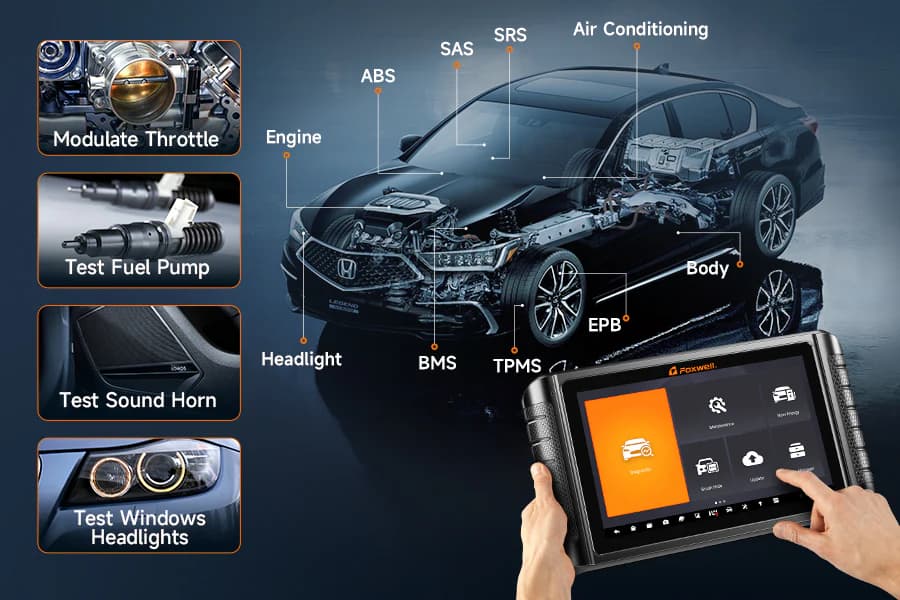
Module Programming & Repair in Dallas
BCM, FEM, CAS, KVM, EZS, ESL — programmed, cloned, repaired or replaced at your location.
Your vehicle's security and body electronics live in a handful of control modules — the BCM, BMW's FEM and CAS, Jaguar and Land Rover's KVM, Mercedes' EZS and ESL. When one fails or gets replaced, it must be programmed to your exact vehicle before anything works again. Dallas Locksmith Pros programs, clones, repairs, and replaces these modules mobile across Dallas, at a fraction of dealer pricing.
Quick Answer
Module programming and cloning in Dallas runs $250–$600, virgin-coding a used donor module to your VIN runs $400–$900, and full module replacement with programming runs $600–$1,200 depending on the unit. Dallas Locksmith Pros handles BCM, FEM, CAS, KVM, EZS, and ESL work on-site — diagnosis first, so you never buy a module the car didn't need. Call (469) 896-4128.
What This Costs in Dallas
Ranges current as of July 2026. Final price depends on year, make, model, and whether a working key exists — confirmed on the phone before dispatch.
| Service | Typical range | What drives it |
|---|---|---|
| Module diagnosis | $120–$280 | Fault isolation before any parts are sold |
| Module programming / cloning | $250–$600 | Coding a new or existing unit to your vehicle |
| Used module, virgin + VIN-coded | $400–$900 | Donor unit reset and adapted to your car |
| Module replacement + programming | $600–$1,200 | Unit supplied, installed, coded, verified |
| Key programming after module work | $120–$500 | Keys re-registered to the new unit by key type |
| Dealer comparison, same work | $700–$1,100+ | Typical franchise pricing before towing |
The Modules That Decide Whether Your Car Starts
A body control module, or BCM, runs locks, lighting, windows, and on many vehicles the key check itself. BMW splits those duties: CAS handles key recognition and start authorization on earlier chassis, FEM combines body control and key security on later ones. Jaguar and Land Rover put smart key handling in the KVM. Mercedes pairs the EZS electronic ignition switch — the module your key actually authenticates against — with the ESL steering lock that physically frees the column. These are not interchangeable computers; each holds vehicle-specific security data, and each sits in the authorization chain between your key and a running engine. When one fails, the car does not degrade politely — it stops.
Repair, Reprogram, or Replace: How We Choose
Three paths exist, and picking the wrong one wastes hundreds. Reprogramming applies when the hardware is healthy but the data is not — corrupted software after a voltage spike, lost key registrations, a unit that needs recoding after another repair; that is $250–$600 work. Repair applies when a known component inside the module fails — a worn motor in an ESL, cracked solder in a water-exposed BCM — and board-level work saves the original unit with its data intact. Replacement is the last resort, for units too damaged to save, at $600–$1,200 with programming. Diagnosis comes first precisely because dealers frequently quote replacement for faults the cheaper two paths fix.
Why a Used Donor Module Won't Just Plug In
Buying a $150 used module online feels like a bargain until it immobilizes your car. Security modules ship married to their donor vehicle — they carry that car's VIN, key data, and immobilizer secrets — so installed as-is they either refuse your keys or brick the start chain entirely. The fix is virgin coding: the donor unit's identity is reset to a factory-blank state, your VIN and configuration are written in, and your keys are registered against it. Done right, at $400–$900 all-in, a used module performs identically to a $1,000+ new one. Done wrong, it becomes the reason the car now needs a flatbed.
Failure Signatures, Module by Module
Modules fail in recognizable ways. A BCM going down produces electrical chaos — wipers, locks, or lights acting possessed, batteries draining overnight, keys intermittently ignored. A BMW CAS or FEM fault shows as key-not-detected messages, a dead start button, or a car that stopped seeing its fob after a jump start. A failing KVM strands Jaguars and Land Rovers with smart-key-not-found warnings that come and go before going permanent. A Mercedes ESL announces itself with a key that will not turn or a wheel that will not unlock; the EZS side shows as a key inserted into a completely dead slot. Matching symptom to module family is most of the diagnosis.
What Happens After Water, Collisions and Jump Starts
Three events send us the most module work. Flood water — a Dallas storm regular — wicks into floor-mounted and firewall modules and kills them weeks later through corrosion, long after the carpet dried. Collisions destroy modules directly or sever their networks, and insurance repairs routinely stall waiting on a unit no body shop can code. Bad jump starts and welding without battery disconnection spike voltages that corrupt module memory, producing a car that died from a repair that went fine mechanically. In all three cases the pattern is identical: the module either needs its data rebuilt or the unit replaced and married to your VIN — both mobile jobs.
Where the Per-Make Deep Dives Live
This page covers the module work every brand shares. The brand-specific procedures — BMW FEM and CAS programming, Mercedes EZS and ESL replacement, Ford PCM work, GM theft-deterrent relearns, Chrysler RF Hub service, VW immobilizer generations and more — each have a dedicated page under our Specialist Programming Services section, with chassis-level detail, model coverage, and the exact security steps involved. If you already know which module your vehicle needs, the specialist page for that make will tell you precisely how the job runs. If you do not, start with the diagnosis: naming the failed module is our job, not yours.
Running a Module Job in Dallas, Start to Finish
It starts with a call to (469) 896-4128 with your year, make, model, VIN, and symptoms. From the VIN we identify which module family your vehicle uses and quote the diagnosis and likely repair paths with firm numbers. A mobile technician dispatches anywhere in Dallas–Fort Worth, confirms the fault at the vehicle rather than trusting the internet's guess, and executes the right path — reprogram, repair, or replace-and-code — on-site. Keys are re-registered, systems are verified end to end, and the car leaves running. One honest caveat we state everywhere: our engine-adjacent module work is strictly repair programming — factory calibrations only, never emissions deletes and never performance tuning.
How Module Programming & Repair Works, Step by Step
- 1
Phone quote from VIN and symptoms
Call with the year, make, model, VIN and symptoms; from the VIN we identify the module family and quote firm numbers for diagnosis and the likely repair paths.
- 2
Confirm the failed module at the vehicle
The technician tests the fault at the car rather than trusting an internet guess, matching the symptom signature to the BCM, CAS, FEM, KVM, EZS or ESL.
- 3
Choose reprogram, repair, or replace
We reprogram healthy hardware with bad data, board-repair a failed component to keep your original unit, or fit a replacement and code it — diagnosis first so you skip a module the car did not need.
- 4
Virgin-code and write your VIN
A used donor unit is reset to a factory-blank state and your VIN, configuration and immobilizer data are written in, so it performs like a coded original.
- 5
Re-register keys and verify end to end
We enroll your existing keys against the newly coded unit and verify every system before leaving; engine-module work is repair-only — factory calibrations, never emissions deletes or tuning.
Where the honest limit is
We program, repair, and replace security and body modules across domestic, Asian, and European brands, but the newest gated platforms — vehicles requiring OEM-online dealer accounts for module coding — are dealer-only jobs, and we identify them on the phone rather than at your curb. All engine-control work is repair-only: factory calibrations, no emissions deletes, no tuning, ever. Every module job is confirmed against your VIN before dispatch.
Need This Service?
Same-day mobile service across Dallas & DFW. Call or text us now.
Where the Dealer's Extra Cost Goes
Same programming result — but the dealership path stacks a tow, a bench-time charge, and franchise labor on top. Here is the line-item difference.
| Cost line | At the dealership | Dallas Locksmith Pros |
|---|---|---|
| Tow to the dealership | $120–$250 | $0 — we come to you |
| Diagnostic / bench time | $120–$200 | Included |
| Key or module (part) | Retail markup | Fair, quoted upfront |
| Programming labor | Franchise rate | Included |
| Days without the car | Often 2–5 | Same day |
| All-in, typical | $700–$1,100+ | Usually 40–60% less |
Ranges as of July 2026. Your exact price is confirmed from the year, make, and model before dispatch.
Reviewed by the Dallas Locksmith Pros team
Licensed Texas automotive locksmiths · DPS Private Security #B32279201
Related Services
Specialist Programming Services



































Frequently Asked Questions
Programming or cloning a module to your vehicle runs $250–$600. A used donor unit virgin-coded to your VIN runs $400–$900 all-in, and full replacement with a new or used module, installed and programmed, runs $600–$1,200. Dealers typically charge $700–$1,100+ for comparable work before towing. We quote firm from your VIN before dispatch.
Usually, yes. A used donor module virgin-coded to your VIN performs identically to a new one and is available immediately from the salvage market, and many failed units can be board-level repaired instead of replaced — keeping your original data intact. Both paths run days, not weeks, and both cost substantially less than the backordered part.
Absolutely. On many vehicles the BCM sits directly in the immobilizer chain, validating the key before start authorization is granted — so a failing one produces no-starts, intermittent key recognition, phantom electrical behavior, and overnight battery drains. It is one of the most misdiagnosed faults in the trade, which is why we test the module before anyone buys parts.
Almost always. The module arrived still married to its donor vehicle, so your car is rejecting a stranger's security data — not broken further. We virgin the unit to a blank state, code your VIN and configuration into it, and register your keys against it on-site. The car typically starts within the same visit, and your $150 salvage find becomes a working part.
Yes — key re-registration is part of every security module job we do, not an extra you discover later. Your existing keys are enrolled against the newly coded unit and every function is verified before we leave: start, locks, remote buttons, and proximity detection where fitted. If a key was already failing, we can cut and program a replacement in the same visit.
No — categorically. Our engine-module work is repair programming only: factory calibrations restored or matched so a repaired vehicle runs the way the manufacturer built it. We do not perform emissions deletes, defeat devices, or performance tuning under any circumstances. If a module job touches the engine controller, it leaves with a stock, legal calibration.
Get Expert Help Today
Mobile service across Dallas & DFW. Dealer-level tools. No guesswork.