
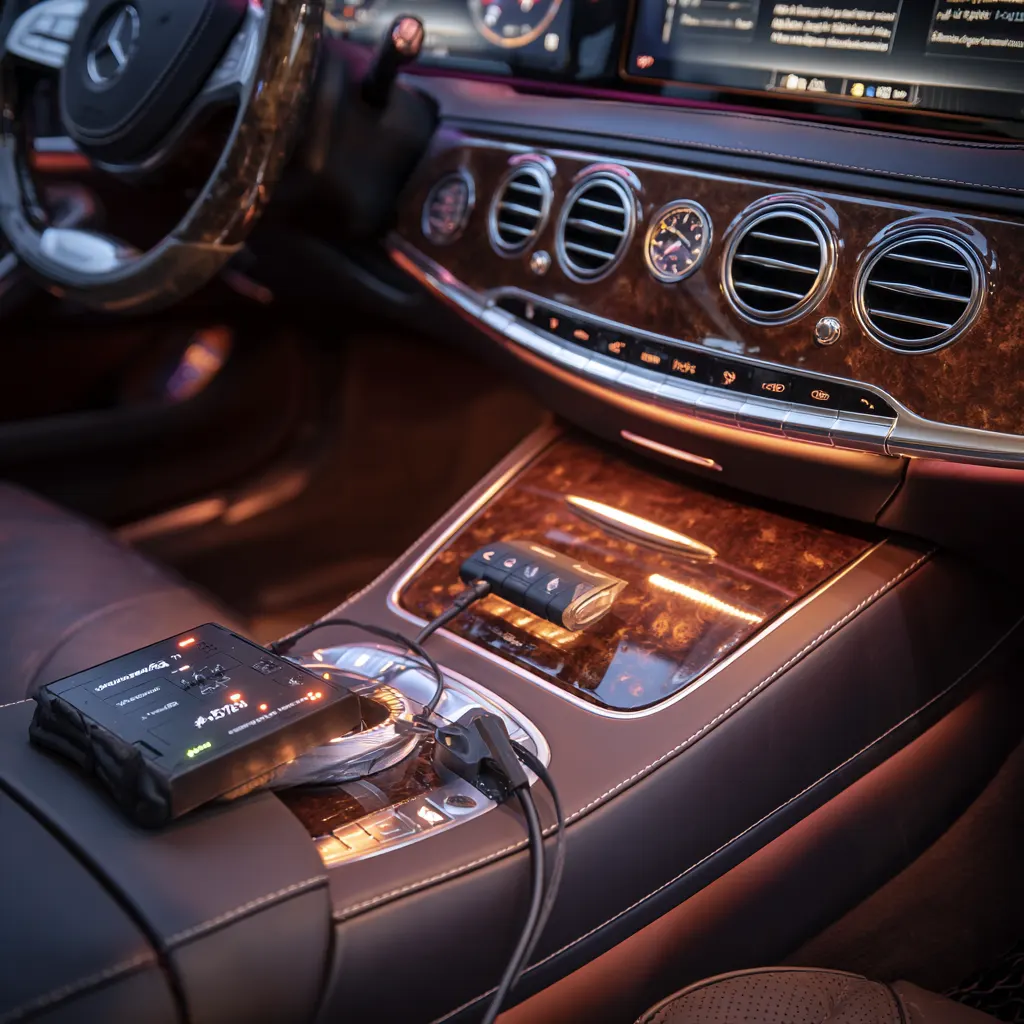
No Key Detected & Immobilizer Issues in Dallas
Fob in hand, car says no — we run the full diagnosis ladder at your location.
You are holding the key, and the dash insists there is no key. That message means the immobilizer — the anti-theft system that must approve every start — cannot hear or does not trust your fob. The fault can live in the fob, the air between it and the car, the receiving antenna, or the security module itself. Dallas Locksmith Pros diagnoses that chain in order, on-site, and fixes the actual link that failed.
Quick Answer
A 'No Key Detected' warning in Dallas costs $120–$280 to professionally diagnose and resolve when the fault is synchronization or antenna-related, and as little as a fob battery when it is not. If the fob itself has failed, replacements run $250–$500 ($350–$600+ European); module-level faults run $250–$600 to reprogram. Dallas Locksmith Pros isolates the true cause on-site before selling you anything — call (469) 896-4128.
What This Costs in Dallas
Ranges current as of July 2026. Final price depends on year, make, model, and whether a working key exists — confirmed on the phone before dispatch.
| Service | Typical range | What drives it |
|---|---|---|
| Immobilizer diagnosis & relearn | $120–$280 | Full fob-to-module fault isolation, on-site |
| Replacement smart fob, programmed | $250–$500 | When the fob itself has genuinely failed |
| European replacement key | $350–$600+ | BMW, Mercedes, Audi, VW, Jaguar, Land Rover |
| Antenna / receiver repair | $120–$280 | Failed low-frequency antennas and wiring |
| Security module reprogramming | $250–$600 | BCM, CAS, FEM, EZS faults behind the warning |
| Module replacement if failed | $600–$1,200 | Supplied, coded to your VIN, keys re-registered |
What the Car Is Really Saying When It Says No Key
Push-to-start vehicles hunt for your fob with low-frequency antennas inside the cabin; the fob answers on a separate radio band, and a security module checks that answer against stored cryptographic data before releasing the start circuit. 'No Key Detected' simply means that conversation failed — somewhere. The failure can be the fob not answering (dead battery, cracked board), the question never arriving (interference, dead antenna), or the vehicle not trusting a perfectly good answer (lost synchronization, module fault). The message never tells you which. Guessing is how people buy $400 fobs for $5 problems, which is why we diagnose the chain in strict order.
Rung One and Two: The Battery and the Airwaves
The overwhelming majority of these calls end at the first rung: a coin cell that dropped below the voltage the fob's transmitter needs — often while still powering the buttons, which fools owners into ruling it out. Fresh battery, correct orientation, two-minute fix. Rung two is interference: phones, wireless chargers, laptops, metal cases, and even certain parking garages can drown the low-frequency conversation. Move the fob away from electronics and try again; if the message vanishes, nothing is broken. Only after both rungs are cleared does hardware become the suspect — and clearing them takes minutes, which is exactly why we walk them with you on the phone before dispatching anyone.
Rung Three and Four: Antennas, Then the Module
When the fob is proven healthy, the vehicle's receiving side goes under test. The cabin antennas — typically in the console, doors, and near the column — fail individually, producing telltale partial symptoms like a car that unlocks by proximity but will not start, or starts only when the fob touches one specific spot. Antenna and wiring repair runs $120–$280. The final rung is the security module itself — BCM, CAS, FEM, or EZS depending on the vehicle — where corrupted data or hardware failure makes the car distrust a fob it once knew. That is $250–$600 to reprogram, or $600–$1,200 if the unit is genuinely dead and needs replacement.
Telling an Immobilizer No-Start From a Mechanical One
The immobilizer blocks fuel and spark, not the starter — so an immobilizer no-start cranks strong and clean while the engine simply never fires, usually with a key or security lamp lit or flashing on the dash. Contrast the mechanical signatures: clicking or silence means battery or starter trouble; sluggish cranking means low voltage; cranking that catches and dies unevenly points at fuel delivery. The distinction decides who you call. A tow to a repair shop for what is actually a security fault wastes a day and a tow fee, because the shop will diagnose their side, find nothing wrong, and refer you back to a locksmith — we routinely take those handoffs mid-tow.
The Backup Start Your Car Already Has
Manufacturers plan for dead fob batteries, and nearly every push-to-start vehicle hides an emergency path worth knowing before you need it. Many have a marked or unmarked slot — in the console, cupholder, or steering column area — that reads the fob passively. Others want the fob physically held against the start button while you press it, letting the button's antenna power the chip directly, no battery needed. Your owner's manual shows your car's version under keyless entry or dead-fob procedures. If the backup method starts the car, you have proven the problem is only the fob battery — and saved yourself a service call entirely.
The Two-Minute Phone Script That Gets It Fixed Faster
When you call (469) 896-4128, five facts turn a mystery into a diagnosis: the year, make, and model; the exact dash message, word for word, since 'key not detected' and a flashing security lamp implicate different links in the chain; whether the engine cranks normally, weakly, or not at all; what happened just before — battery change, jump start, storm, months of sitting; and whether a second fob behaves any differently. That last one is the single most powerful clue you have: two fobs failing identically points at the vehicle, one failing alone points at that fob. With those answers we arrive carrying the right fix, not a parts catalog.
Same-Day Immobilizer Service Across Dallas
Immobilizer faults strand cars wherever they happen to be parked, so this work has to be mobile — and ours is, across Dallas and the surrounding DFW cities, seven days a week. The technician runs the ladder at your vehicle with dealer-level diagnostics: fob signal verified, antennas tested, module communication checked on the network, and the failed link repaired, re-synchronized, or reprogrammed on the spot. Most synchronization and antenna faults are resolved in a single visit inside an hour; module-level work runs longer but still ends with the car starting where it sits. You get a firm all-in quote from your VIN before any truck moves.
How No Key Detected / Immobilizer Issues Works, Step by Step
- 1
Phone script that scopes the fault
Tell us the year, make, model, the exact dash message, whether the engine cranks strong or weak, what happened just before, and whether a second fob behaves differently.
- 2
Clear the battery and interference rungs
We walk the first two rungs with you — a coin cell too weak to transmit, or interference from phones, chargers and metal — because most calls end here in minutes.
- 3
Test the antennas and the module
On-site we verify the fob signal, then test the cabin low-frequency antennas and check the BCM, CAS, FEM or EZS communication on the network to find the failed link.
- 4
Repair, resync, or reprogram the failed link
We fix the actual link — fresh fob or antenna repair, a synchronization relearn, or module reprogramming — with a firm all-in quote from your VIN before any work begins.
- 5
Verify the start and clear the warning
We confirm the engine starts, the security lamp is out, and the no-key message is gone; synchronization and antenna faults usually resolve in a single visit inside an hour.
Common Symptoms We Fix
Dashboard displays 'No Key Detected'
The vehicle cannot hear or verify your fob — battery, interference, antenna, or module, in that order of likelihood.
Engine cranks but won't start
Strong cranking with no fire is the immobilizer withholding fuel and spark because it doesn't trust the key's answer.
Security/immobilizer light flashing
The anti-theft system is actively rejecting authorization — a failed handshake between fob, antenna, and module.
Key works intermittently
A fading coin cell, a marginal antenna, or a module fault in progress — intermittent today is usually a no-start soon.
Where the honest limit is
We resolve nearly all key-detection and immobilizer faults on-site, but genuine engine-management failures beyond the security chain belong with a repair shop, and the newest platform-gated VINs can require dealer-online access for module-level fixes — we identify both situations on the phone, not after a call-out. Every dispatch is confirmed against your VIN so the truck arrives with the right equipment the first time.
Need This Service?
Same-day mobile service across Dallas & DFW. Call or text us now.
Where the Dealer's Extra Cost Goes
Same programming result — but the dealership path stacks a tow, a bench-time charge, and franchise labor on top. Here is the line-item difference.
| Cost line | At the dealership | Dallas Locksmith Pros |
|---|---|---|
| Tow to the dealership | $120–$250 | $0 — we come to you |
| Diagnostic / bench time | $120–$200 | Included |
| Key or module (part) | Retail markup | Fair, quoted upfront |
| Programming labor | Franchise rate | Included |
| Days without the car | Often 2–5 | Same day |
| All-in, typical | $700–$1,100+ | Usually 40–60% less |
Ranges as of July 2026. Your exact price is confirmed from the year, make, and model before dispatch.
Reviewed by the Dallas Locksmith Pros team
Licensed Texas automotive locksmiths · DPS Private Security #B32279201
Related Services
Specialist Programming Services




































Frequently Asked Questions
Then the fault has moved up the ladder: interference, a failed cabin antenna, lost synchronization, or a security module issue. Try starting with the fob held directly against the start button — if that works, the fob's transmitter is weak; if not, the vehicle side needs testing. On-site diagnosis runs $120–$280 and pinpoints the actual link before you spend fob money.
That is the classic signature of a partially failed antenna network. Push-to-start cars carry several low-frequency antennas, and when most have died, the one survivor only reads the fob at close range — hence the magic spot. It will keep shrinking until nothing works. Antenna and wiring repair runs $120–$280 and is far cheaper than the module replacement this often gets misdiagnosed as.
Yes — voltage spikes and dips during a jump are a leading cause of lost key synchronization, and in worse cases they corrupt security module memory outright. If the no-key warning appeared immediately after a jump, dead battery, or battery replacement, synchronization is the prime suspect: a $120–$280 relearn usually restores it without any new hardware.
Two fobs failing together almost never means two coincidental fob failures — it points squarely at the vehicle side: a dead antenna circuit, a blown fuse feeding the receiver, or a security module fault. This is actually useful diagnostic gold, so mention it when you call. Expect the fix to land in antenna repair ($120–$280) or module work ($250–$600) rather than new keys.
Cautiously, and briefly. An intermittent detection fault nearly always progresses to a full no-start, and it chooses the moment — often a parking lot far from home. The car will not shut off while driving; immobilizers only gate starting, not running. But treat every successful start as borrowed time and get the chain diagnosed within days, at your location, before it strands you.
It depends entirely on which link failed, which is why diagnosis comes first. A fob battery is a few dollars; synchronization relearns and antenna repairs run $120–$280; a genuinely failed fob runs $250–$500 programmed, or $350–$600+ European; module reprogramming runs $250–$600, with replacement at $600–$1,200 in the worst case. You get the firm number from your VIN before any work begins.
Get Expert Help Today
Mobile service across Dallas & DFW. Dealer-level tools. No guesswork.