
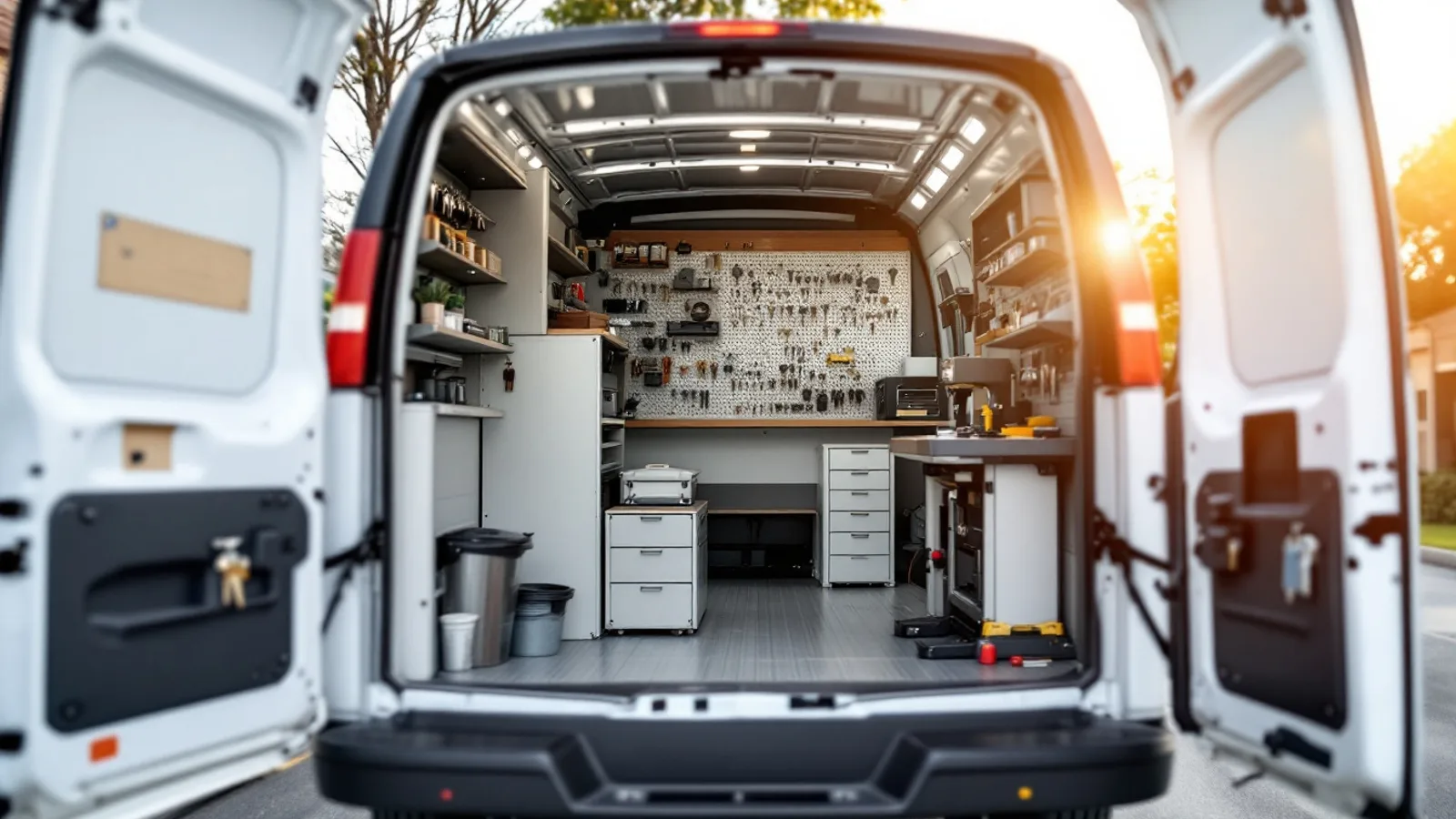
Car Locksmith Near Me in Dallas: How to Verify One Before You Let Them Touch Your Car
As of October 2026, here is how to tell a real Dallas auto locksmith from a lead broker, and what a legitimate flat quote looks like.
The Search Result Is Not Always a Locksmith
Search "car locksmith near me" from a Dallas parking lot and you will get a page of listings. Some of them are technicians with vans, tools and a Texas license. Some of them are call centers that buy the ad, take your address, and sell your call to whoever is willing to pay for it. You will not be able to tell the difference from the listing, and that is by design.
As of October 2026, the practical defense is not picking the top result. It is asking four questions before anyone is dispatched, and knowing what the answers should sound like. A legitimate Dallas auto locksmith will answer all four in under ninety seconds. A broker will deflect all four, because the person on the phone genuinely does not know — they are not the one who will show up.
This page is the checklist. It is written by a company that competes for those same searches, which means you should read it with appropriate skepticism and then use it on us too. Our number is (469) 896-4128 and every item below is one you are welcome to test.
Quick Answer
Verify a car locksmith in four steps: ask for their Texas DPS Private Security Program license number and the exact legal company name, get a firm total quote before dispatch rather than a "starting at" figure, confirm they will require proof of ownership from you, and confirm they perform non-destructive entry only. A legitimate Dallas lockout runs $85 to $200 during the day and $125 to $275 after hours, all in. A quote of "$19 service call" is the opening move of a bait-and-switch, not a price.
Check One: The Texas License
Texas regulates locksmiths through the Texas DPS Private Security Program, not through any trade board. Companies and individual technicians hold license numbers, and those numbers are verifiable through the state.
What to ask: "What is your company's Texas Private Security license number, and what legal name is it registered under?"
What a real answer sounds like: a number, given immediately, plus a company name that matches the name on the invoice, the van and the credit card charge. All three matching is the point.
What a broker answer sounds like: "All our technicians are licensed and insured." That sentence is a deflection. It names no entity, no number, and nothing you can check. It is also the single most common phrase in this industry, which tells you how well it works.
Texas also requires licensed technicians to carry identification. Asking to see it on arrival is normal, not rude, and no legitimate tech is offended by it.
Check Two: A Firm Quote Before Dispatch
This is where the money is lost, and it is worth understanding the pattern precisely.
The bait-and-switch works like this. You are quoted an absurdly low figure on the phone — "$19 and up," "$29 service call." Someone arrives who did not give you that quote and is not employed by whoever did. They inspect the car, announce that your vehicle is "high security" or "a special case," and the price becomes several hundred dollars. You are standing in a parking lot, possibly at night, possibly with somewhere to be. The leverage is entirely theirs, and it was manufactured on purpose. The FTC's consumer advice site covers this pattern in its guidance on hiring service providers, and it is the reason the low phone number exists in the first place.
What to ask: "What is the total, including the service call, for my exact vehicle at my exact location?"
What a real answer sounds like: a specific number or a tight range, given after they ask you for the year, make, model and ideally the VIN. Something like "a smart proximity fob on that car is $250 to $500 all in, and there is no separate trip charge." Range is fine — vagueness is not. A shop that will not quote before dispatch is telling you the price is going to be decided in front of you.
A structural tell: ask what the company is called and listen for a hesitation. A broker's phone agent handles dozens of brand names and often answers with a generic "locksmith services." Ask twice if you need to. Our detailed breakdown of this pattern lives in our car key replacement scams guide, including the specific phrases that reliably precede a price jump.
Check Three: Do They Ask You for Proof of Ownership?
This one inverts the usual direction of verification, and it is the most reliable single indicator on this page.
A legitimate automotive locksmith requires proof that the car is yours before making a key for it — photo ID plus current registration or title. On an all-keys-lost job it is absolutely mandatory, because creating a working credential for a vehicle from nothing is exactly the capability a vehicle immobilizer exists to deny.
So: a shop that does not ask you for ID is a shop that does not ask anyone for ID. That should worry you far more than the mild inconvenience of finding your registration. It means the same crew would make a key for your car for someone who is not you, on a different day, in a different parking lot.
What a legitimate request looks like in practice:
- Photo ID in the name on the registration or title.
- Current registration, title, or documentation from a dealer or rental company if the car is not titled to you personally.
- The technician physically looking at both, on site, before programming begins.
- No exceptions made for urgency, weather, or a persuasive story.
What it does not look like: a photo texted in advance in place of the physical check, or a verbal "yeah, it's mine" being accepted. The related question of whether a key can even be made from a VIN alone is covered in our key from VIN guide — the short version is that a VIN establishes what the key must be, while ownership documents establish whether it should be made at all.
Check Four: Non-Destructive Entry Only
For a lockout specifically, the method matters.
A modern car is opened without damage. Doors are unlocked using tools designed for the vehicle's linkage and geometry. Nothing is drilled, no glass is broken, no trim is pried, and no lock cylinder is destroyed. If a technician's proposed solution to a locked door involves drilling your ignition or breaking a window, you are being told, plainly, that they do not have the right tools.
What to ask: "Is this non-destructive entry, and will anything on my car be damaged or replaced?"
What a real answer sounds like: yes, non-destructive, nothing damaged, and here is what I use.
Note that the honest version of this comes with a boundary. Some vehicles have genuinely difficult door geometry, and a real technician will tell you when a job is harder than average rather than promising the impossible. Confidence that never admits difficulty is its own warning sign.
What Verification Costs You (Nothing) and Saves You (A Lot)
| Verification step | What you ask | The tell that something is wrong |
|---|---|---|
| Texas license | "Your DPS Private Security license number and legal company name?" | "All our techs are licensed" with no number |
| Firm quote | "Total for my exact vehicle at my location?" | "$19 and up," or no quote until arrival |
| Company identity | "What is the company called?" | Hesitation, or a generic "locksmith services" |
| Proof of ownership | "What documents do you need from me?" | They do not ask for any |
| Method | "Non-destructive entry, nothing damaged?" | Drilling or breaking glass proposed |
| Payment | "Do I get a written invoice with the company name?" | Cash only, no invoice, name mismatch |
| Published pricing | Compare to a real scale | A lockout quoted at $19, or at $600 |
For reference, real Dallas numbers as of August 2026: lockout $85 to $200 day and $125 to $275 after hours; transponder key $120 to $200; remote head key $160 to $280; flip key $180 to $320; smart proximity fob $250 to $500; European proximity fob $350 to $600+; all-keys-lost add-on $75 to $250; ignition repair or replacement $250 to $350. Anything wildly below that range is bait. Anything wildly above it is worth a second call.
Local Really Does Mean Something Here
"Near me" is doing real work in that search phrase, and it is not just about drive time.
A locksmith who actually works Dallas knows that a call from a downtown garage means levels, gates and a security desk, and plans for it. A dispatcher three states away routing a subcontractor does not know any of that, which is why those jobs run long and why the person who arrives is frequently unprepared for the vehicle.
A local shop also has something to lose. It has a physical service area, a phone number that stays the same, and reviews attached to a name that does not rotate. A brokered lead has none of those, and the technician who shows up has no ongoing relationship with your neighborhood in Mesquite, Irving, Plano or Cedar Hill. Our take on the specific pattern of app-driven and directory-driven dispatch is in our KeyMe and locksmith directory guide.
There is also an industry association worth knowing about: ALOA, the Associated Locksmiths of America. It is a long-standing trade body that maintains member listings and certification programs for locksmiths. Membership is not a legal requirement and its absence does not make a shop illegitimate — plenty of good technicians are not members. But its presence is one more independently checkable data point, and you can look at aloa.org directly rather than taking anyone's word for it.
A Fifth Check for European and Late-Model Cars: Can They Do Your Car?
The four checks above establish that a locksmith is legitimate. They do not establish that the locksmith can finish the job on your particular vehicle, and on a growing share of cars that is a separate question.
Late-model vehicles put a secured gateway between the diagnostic port and the car's network, and several European and Italian platforms need a configuration step after a key is written. A shop without the access or the equipment can be perfectly honest and still leave you with a key that half works. So for anything European, or anything built in the last few model years, add one question to the call:
"Have you done this exact platform, and is everything it needs included in the price?"
A shop that works on these cars answers with specifics. For a Mercedes it will ask the model year, because the generation line decides the whole job — Mercedes FBS3 and FBS4 key replacement shows why. For a Dodge Hornet it will know the car is an Alfa Romeo underneath and quote accordingly — see Alfa Romeo Tonale and Dodge Hornet key replacement. For a Volkswagen showing an immobilizer message it will ask what happened just before it appeared, as in Volkswagen says Immobilizer Active and won't start.
Vagueness here is not proof of a scam, but it is a reason to keep calling. The honest answer is sometimes "that VIN needs the dealer" — and a shop willing to say that on the phone is one worth remembering for the next car.
The Questions in One Block
Copy these. Ask them in this order.
- "What is your legal company name and your Texas DPS Private Security license number?"
- "My car is a [year] [make] [model], the VIN is [VIN], and I am at [exact location]. What is the total, including everything?"
- "What documents do you need from me when you arrive?"
- "Is this non-destructive — will anything on my car be damaged?"
- "Will I get a written invoice with that company name on it?"
Five questions. Ninety seconds. They cost nothing and they eliminate essentially every bad outcome in this trade.
Our full capability, pricing and service area sit on the automotive locksmith page, and the specific key work on our car key replacement page.
Frequently Asked Questions
Q: How do I check if a locksmith is licensed in Texas? A: Ask for the company's legal name and its Texas DPS Private Security Program license number, then verify it with the state. Locksmiths in Texas are regulated by the Department of Public Safety, not by a trade board, and licensed technicians are required to carry identification you can ask to see on arrival. A company that answers "all our techs are licensed and insured" without giving a number and a legal name has told you nothing verifiable.
Q: What should a car lockout actually cost in Dallas? A: $85 to $200 during the day and $125 to $275 after hours, all in, as of August 2026. That total should include the service call with no separate trip charge appearing later. A quote of $19 or $29 is not a price for the job, it is a price for showing up, and it is the standard opening move of a bait-and-switch where the real number gets announced while you are standing next to your locked car.
Q: Is it a red flag if a locksmith asks for my ID and registration? A: The opposite — it is the single strongest signal that you called a legitimate shop. Making a working key for a vehicle from nothing is exactly the capability a car's immobilizer exists to prevent, so verifying ownership is the ethical floor of the trade. A locksmith who will skip that check for you would skip it for someone standing next to your car on a different day, which is a far bigger problem than finding your registration.
Q: How can I tell if I called a real locksmith or a lead broker? A: Ask what the company is called and listen for hesitation, then ask for a firm total for your specific vehicle at your specific location. A broker's phone agent handles many brand names and often cannot answer either question cleanly, because the person who will actually arrive is a subcontractor they have not chosen yet. A real shop names itself instantly and quotes a number after asking for your year, make, model and VIN.
Q: Will a car locksmith damage my car getting into it? A: A properly equipped one will not. Non-destructive entry means the door is unlocked using tools matched to the vehicle's linkage and geometry — nothing drilled, no glass broken, no trim pried, no lock cylinder destroyed. If the proposed solution to a locked door involves drilling your ignition or breaking a window, that is a statement about the technician's tooling rather than about your car, and it is grounds to end the call.
Q: Does ALOA membership mean a locksmith is trustworthy? A: It is one useful data point, not a guarantee, and its absence is not disqualifying. ALOA is the Associated Locksmiths of America, a long-standing trade association that maintains member listings and certification programs, and you can check it directly at aloa.org rather than relying on a claim. Plenty of skilled independent technicians are not members, so weigh it alongside the Texas license, the firm quote and the ownership check rather than in place of them.
The Bottom Line
The five questions above are the whole defense. Legal name plus Texas DPS license number, a firm total before dispatch, a clear list of the documents they need from you, non-destructive entry confirmed, and a written invoice with the matching name. A Dallas lockout is $85 to $200 day and $125 to $275 after hours; keys run $120 to $500 by type plus $75 to $250 when nothing works. Ask us those questions the same way you would ask anyone else — call (469) 896-4128. Dallas Locksmith Pros answers 24/7, quotes flat-rate before dispatch, verifies ownership on every recovery, and performs non-destructive entry only.
Written by the Dallas Locksmith Pros mobile automotive team, serving drivers across Dallas and the surrounding metroplex 24/7.
Related articles
How to Avoid Car Key Replacement Scams in Dallas (2026 Guide)
2026 guide to avoiding car key replacement scams in Dallas: spot bait-and-switch quotes, unmarked vans, and cash-only demands before you pay $120-$600+.
Read moreEuropean Car Ignition Repair Cost in Dallas (2026): Priced by Ignition Type
2026 Dallas ignition repair prices for VW, MINI, Volvo, Jaguar, Alfa Romeo and Fiat: $180 to $550+, sorted by cylinder, key dock or start button.
Read moreWhat an Auto Locksmith Costs in Dallas (2026): Every Service in One Price Table
As of September 2026, Dallas auto locksmith work runs $85-$600+. One table for lockouts, keys, spares, ignition repair and module programming.
Read moreNeed a Dallas locksmith right now?
Licensed mobile automotive locksmith. Same-day response across DFW.
Call (469) 896-4128