
Land Rover KVM Module Programming in Dallas: Discovery, Velar & Evoque
As of July 2026, Land Rover KVM module programming in Dallas runs $550-$900+. Why a Discovery, Velar or Evoque keyless module must be married to the VIN.
The Module Nobody Talks About Until the Car Won't Start
Your Discovery started fine on Tuesday. On Wednesday it cranked, hesitated, and threw Smart Key Not Found — with the key sitting in the cupholder. By Thursday the door handles had stopped waking up at all. Nothing about that sequence is a key problem, and swapping fobs will not fix it. What you are almost certainly looking at is the KVM: the keyless vehicle module, the small computer that decides whether your Land Rover believes a key exists.
As of July 2026, Land Rover KVM work in Dallas typically lands between $550 and $900+ depending on whether the module can be repaired and re-coded or has to be replaced and married to the VIN, with a European smart fob itself running $350 to $600+ and an all-keys-lost recovery adding roughly $75 to $250 on top. That compares against a $700 to $1,100+ all-in dealer path once you stack an OEM part at retail, dealership labor, a flatbed, and a place in the service queue. This guide explains what the KVM actually does, why it cannot be treated as a plug-and-play part, the symptom set that points at it, and where the honest capability line falls on the newest vehicles.
What the KVM Actually Does
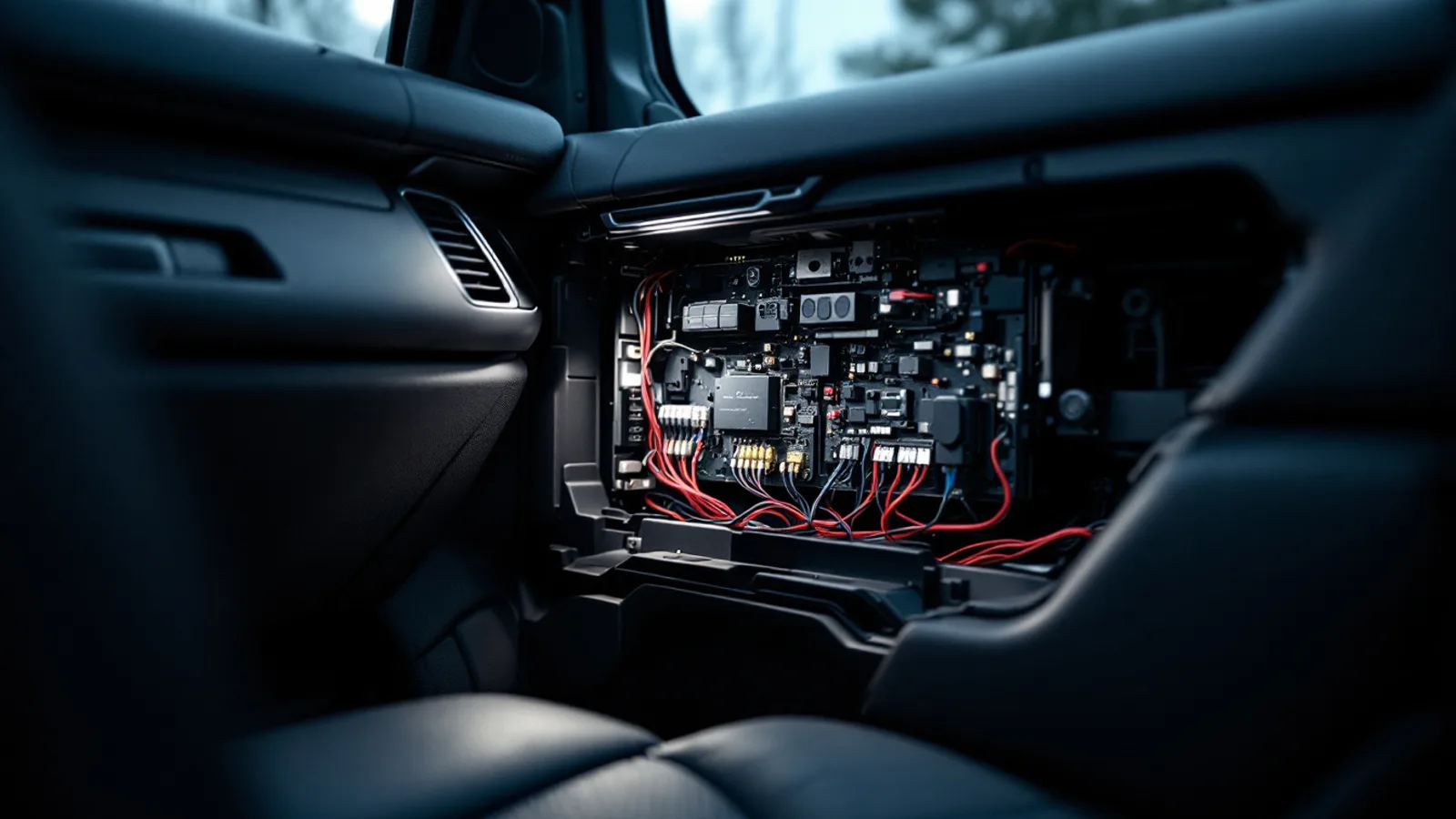
Land Rover — and its corporate sibling Jaguar — centralizes keyless functions in a single controller called the KVM, or Keyless Vehicle Module. Think of it less as a receiver and more as a gatekeeper. The KVM holds the vehicle's stored key credentials, drives the low-frequency antennas buried in the doors and cabin, listens for the fob's encrypted reply, decides which detection zone the key is standing in, and then tells the rest of the car whether to unlock, whether to allow a push-button start, and whether to let the engine control module deliver fuel.
That means the KVM sits between three separate systems that owners usually think of as unrelated: door entry, ignition authorization, and immobilizer security. When the module degrades, the failures look scattered — a handle that works some mornings, a start button that ignores you in a parking garage, a dash message that appears only when the car is warm. Owners chase the fob because the fob is the part they can hold. The no key detected and immobilizer issues service exists because that instinct is usually wrong on these vehicles.
From RFA to KVM
Older Land Rovers used a discrete RFA (Remote Function Actuator) to handle remote and passive-entry duties, with the immobilizer logic living elsewhere. The move to the KVM consolidated those responsibilities into one controller with far more authority. That consolidation is why a modern failure is more disruptive than an old one: an RFA fault historically cost you remote convenience, while a KVM fault can cost you the ability to start the vehicle at all.
Practically, this matters when someone quotes you. A shop that talks about your Discovery's "receiver" without naming the module family is guessing. The model, model year, and VIN determine which architecture you have, and that determines whether the job is a diagnostic-port procedure or bench-level work. The Land Rover brand page breaks capability down by platform, and our Land Rover KVM programming service covers the module work itself.
Why a Replacement KVM Has to Be Programmed to the VIN
Here is the single most misunderstood thing about this repair, and the reason a used module off an online marketplace is usually wasted money.
A KVM is not a passive part like an alternator. It ships from the factory — or arrives used from a donor vehicle — carrying identity data: a VIN it believes it belongs to, security credentials, configuration for the exact trim and market it was built into, and, in the case of a used unit, the key records of somebody else's Evoque. Bolt that module into your car and you now have two computers with conflicting ideas about which vehicle this is. The gateway rejects it, the engine controller refuses authorization, and you have converted a no-start into a no-start plus a mismatched module.
Programming a KVM to the VIN means writing the correct vehicle identity into the module, restoring or generating the security data the rest of the network expects, configuring it for that specific car's options, and then enrolling the keys against it so the immobilizer chain agrees end to end. It is data work, not wrench work — which is exactly why it takes manufacturer-level tooling and why it is priced as skilled electronics service rather than parts replacement. This class of work sits squarely inside the module programming and repair service, and the same principle governs Jaguar's version of the architecture in the Jaguar no key detected repair service.
There is a second reason the VIN marriage matters, and it is a security reason rather than a technical one. Vehicle access modules are deliberately built to resist being repurposed, because a module that could be freely swapped between cars would be a theft tool. The National Automotive Service Task Force publishes the industry framework for secure vehicle access, and the whole point of that framework is that identity is bound to the vehicle rather than floating between parts.
Common Land Rover Problems We See
Discovery and Discovery Sport: the intermittent no-start
The classic Discovery presentation is a car that starts nine times out of ten. The tenth time it cranks and dies, or refuses to crank at all, and by the time anybody looks at it the fault has cleared. Owners replace fob batteries, then fobs, then start suspecting the battery in the vehicle. What is usually happening is a KVM that is losing its handshake under specific conditions — heat soak after a Dallas afternoon, a marginal ground, or early-stage internal degradation. Intermittency is the fingerprint; a truly dead fob fails consistently.
Velar: keyless entry dies before the engine does
On the Velar the first symptom is often purely about the doors. The flush handles stop presenting, or you have to press the fob buttons where you used to just walk up. Starting still works because the cabin backup detection is still functioning. This is the KVM's antenna-driving and zone-decision role degrading before its immobilizer role does, and it is a genuinely useful early warning — a Velar caught at this stage is often a cheaper job than one caught three weeks later.
Evoque: "Smart Key Not Found" with a healthy key
The Evoque tends to announce itself on the dash. The message reads like a key fault and is not one. The tell is that a known-good second key produces the identical message, which rules out the fob and points at the module or its antenna network. Before assuming the worst, a competent technician still rules out the cheap causes — coin cell, interference from a phone charging pad or a second fob stacked against the first — because that ordering is what keeps you from paying for module work you did not need. We walk through that triage in detail in our guide to Range Rover no key detected faults in Dallas.
Water intrusion across the range
Land Rover KVM locations vary by platform, and on several of them the module sits where water eventually finds it — a plugged sunroof drain, a windshield seal, a rear hatch channel. Corrosion damage often presents as progressive rather than sudden: convenience features fail first, then detection, then start authorization. If your Land Rover has ever had damp carpet, mention it on the phone. It changes the diagnostic order and it materially changes the repair-versus-replace math.
Repair, Replace, or Re-code: the Economics
There are really three outcomes on a KVM job, and knowing which one you are in tells you what you should be paying.
Re-code only. The module is physically fine but its data is corrupted, its key records are stale, or a prior repair left it mismatched. This is the cheapest outcome — no part cost, just skilled programming — and it is more common than owners expect, especially after unrelated electrical work or a deeply discharged vehicle battery.
Repair and re-code. The module has a defined, fixable fault — corroded pins, a failed internal component, damage confined to a repairable section. Where a repair is genuinely durable it is the value play, because you keep the original module's identity and skip part cost entirely.
Replace and marry to the VIN. The module is beyond saving. A new or correctly-sourced unit gets the vehicle's identity written to it, the configuration set for that trim, and every key re-enrolled. This is the top of the range, and it is where the "you can't just swap it" rule bites hardest.
An honest shop tells you which of the three you are in after diagnosis, not before. Anyone quoting a firm replacement price over the phone without seeing the vehicle is quoting the most expensive outcome by default.
Land Rover KVM and Key Costs in Dallas (2026)
Here is how this work prices out on the Dallas mobile scale as of July 2026. The fob rows follow the published European smart-fob band; the module rows are higher because they carry programming labor and, in the replacement case, part cost.
| Scenario | Typical vehicle | Dallas range (2026) |
|---|---|---|
| Spare smart key added (working key exists) | Discovery, Velar, Evoque | $350 – $500 |
| Replacement smart key, key present | Any serviceable Land Rover | $350 – $600+ |
| All-keys-lost, key generation | Serviceable Discovery / Evoque | $450 – $800 |
| KVM re-code only (module healthy) | Data or configuration fault | $350 – $550 |
| KVM repair plus re-code | Corrosion or defined internal fault | $500 – $800 |
| KVM replacement married to VIN | Module beyond repair | $700 – $900+ |
| Newest / gated VINs | Latest platforms | VIN check first; may require OEM authorization |
| Dealer path (part + labor + tow + queue) | Any | Commonly $700 – $1,100+ all-in |
Two notes on that table. The all-keys-lost rows reflect the published $75 to $250 surcharge stacked on the fob band, because generating a credential with nothing valid to lean on is materially harder than copying trust from a key you already hold. And the "gated VINs" row is deliberately unpriced — quoting a curbside number on a vehicle that may require manufacturer authorization would be dishonest. Reading and rewriting a vehicle security module is specialized electronics work of the kind the Bureau of Labor Statistics groups among skilled installation-and-repair trades; you are paying for tooling and judgment, not a badge.
The Honest Boundary on the Newest Land Rovers
For the large majority of Discovery, Velar, and Evoque models on Dallas roads, a properly equipped mobile specialist does this work in your driveway with the same end result as the dealership, minus the tow and minus the wait. But on a subset of the newest platforms, security data and key generation can sit behind manufacturer online authorization, and no independent tool honestly bypasses that gate. For those specific VINs the correct answer is dealer or OEM-authorized service.
The way you find out which side of the line you are on is a VIN check before anyone is dispatched — not a technician shrugging in your driveway after you have already paid a trip charge. A shop that promises any Land Rover, any year, all-keys-lost, same day, regardless of VIN, is either uninformed or telling you what you want to hear. The candor is the service. The same boundary logic applies across the whole import segment, which is why our European car locksmith service starts every call with the VIN.
What a Dallas KVM Visit Looks Like
- Phone triage. Model, year, VIN, and the exact symptom pattern — intermittent versus constant, doors versus start, any history of water. That determines serviceability and the likely outcome bucket before dispatch.
- Ownership verification. Any job that creates a working credential from nothing requires photo ID plus registration or title. Immobilizers exist to prevent unauthorized key creation, consistent with NHTSA's vehicle theft-prevention guidance.
- Cheap causes first. Fob battery, interference, a fob that has fallen out of sync, and vehicle battery state of charge all get ruled out before anything invasive.
- Network diagnosis. Confirming whether the KVM is present on the bus, what it reports, and whether the antennas and their wiring are healthy — because a broken antenna circuit imitates a failed module.
- The decision. Re-code, repair, or replace-and-marry, quoted before work proceeds.
- Key enrollment and verification. Passive unlock tested at every handle, push-button start confirmed, remote functions checked, dash messages cleared.
We run this identically across Dallas, Plano, Frisco, and Coppell. When every key is already gone rather than merely unrecognized, the sequence differs — that path is laid out in our all-keys-lost Range Rover walkthrough in Preston Hollow and in the broader lost car keys service. If you simply need a working key rather than module work, start at car key replacement.
Frequently Asked Questions
Q: How much does Land Rover KVM programming cost in Dallas in 2026? A: A KVM job runs roughly $350 to $900+ depending on outcome: a re-code of a healthy module sits at the low end, a repair plus re-code in the middle, and a replacement married to the VIN at the top because it adds part cost. Keys themselves follow the European smart-fob band of $350 to $600+, with all-keys-lost adding $75 to $250.
Q: Can I buy a used KVM online and have it installed in my Discovery? A: No, not as a plug-and-play part. A used module arrives carrying another vehicle's VIN, security data, and enrolled keys, so the gateway and engine controller reject it. It must have your vehicle's identity written to it and be configured for your exact trim before keys can be enrolled, which is programming work regardless of where the hardware came from.
Q: How do I know whether it's my key or the KVM on my Velar? A: Test a known-good second key. If both keys produce the same failure, the fob is almost certainly not the problem and the module or its antenna network is. Also watch the pattern: a dying fob fails consistently and improves with a fresh coin cell, while a failing KVM tends to be intermittent and often kills keyless door entry before it kills starting.
Q: Does a Land Rover with a failed KVM have to be towed to the dealer? A: No for most serviceable vehicles, where the work is done on-site at your Dallas address and the vehicle drives away once keys verify. The exception is the newest platforms where security operations may require manufacturer online authorization, and those are identified from the VIN on the phone before anyone is dispatched rather than discovered at the curb.
Q: Why did my Evoque's keyless entry stop before the engine did? A: Because the module's door-detection role and its start-authorization role are separate jobs, and detection usually degrades first. The cabin antennas that authorize starting sit closer to the key and tolerate a weaker signal than the handle antennas do. Catching a Land Rover at the keyless-entry stage often means a cheaper repair than waiting for a no-start.
Q: Will water damage to the module always mean full replacement? A: No. Corrosion caught early is frequently repairable, and a repaired original module keeps its existing identity, which skips the VIN-marriage step and part cost entirely. Whether repair is durable depends on how far the corrosion traveled, which is a post-diagnosis answer — but mentioning any history of damp carpet on the phone genuinely changes the plan.
The Bottom Line
The KVM is the reason a Land Rover feels seamless when it works and inexplicable when it does not. It holds the key records, drives the detection antennas, and authorizes the start — so a single failing module produces symptoms that look like three unrelated problems. It cannot be swapped in from a donor vehicle because it carries identity that has to be written to your VIN. And the price follows the outcome: re-code, repair, or replace. Have your model, year, VIN, and the exact symptom pattern ready and call (469) 896-4128 — Dallas Locksmith Pros answers 24/7 and quotes flat-rate before dispatch.
Written by the mobile automotive team at Dallas Locksmith Pros, who program Land Rover keyless modules on-site across Dallas and the surrounding metroplex.
Related articles
Range Rover No Key Detected in Southlake: 2026 Diagnosis Guide
2026 guide: Range Rover No Key Detected in Southlake — KVM diagnosis, dead fob vs module fault, European fob pricing $350-$600+, all-keys-lost costs.
Read moreJaguar & Land Rover Key Replacement in Frisco: 2026 Cost Guide
2026 Jaguar Land Rover key replacement in Frisco: smart fobs $350-$600+, KVM/RFA and 'no key detected' faults, all-keys-lost adds $75-$250, done on-site.
Read moreJaguar I-PACE Spare Key in Dallas: The Electric Cat That Still Runs on 12 Volts
As of September 2026, a second Jaguar I-PACE key in Dallas runs $350-$600+. Why the spare matters more on an EV, and what the keyless module must agree to.
Read moreNeed a Dallas locksmith right now?
Licensed mobile automotive locksmith. Same-day response across DFW.
Call (469) 896-4128