
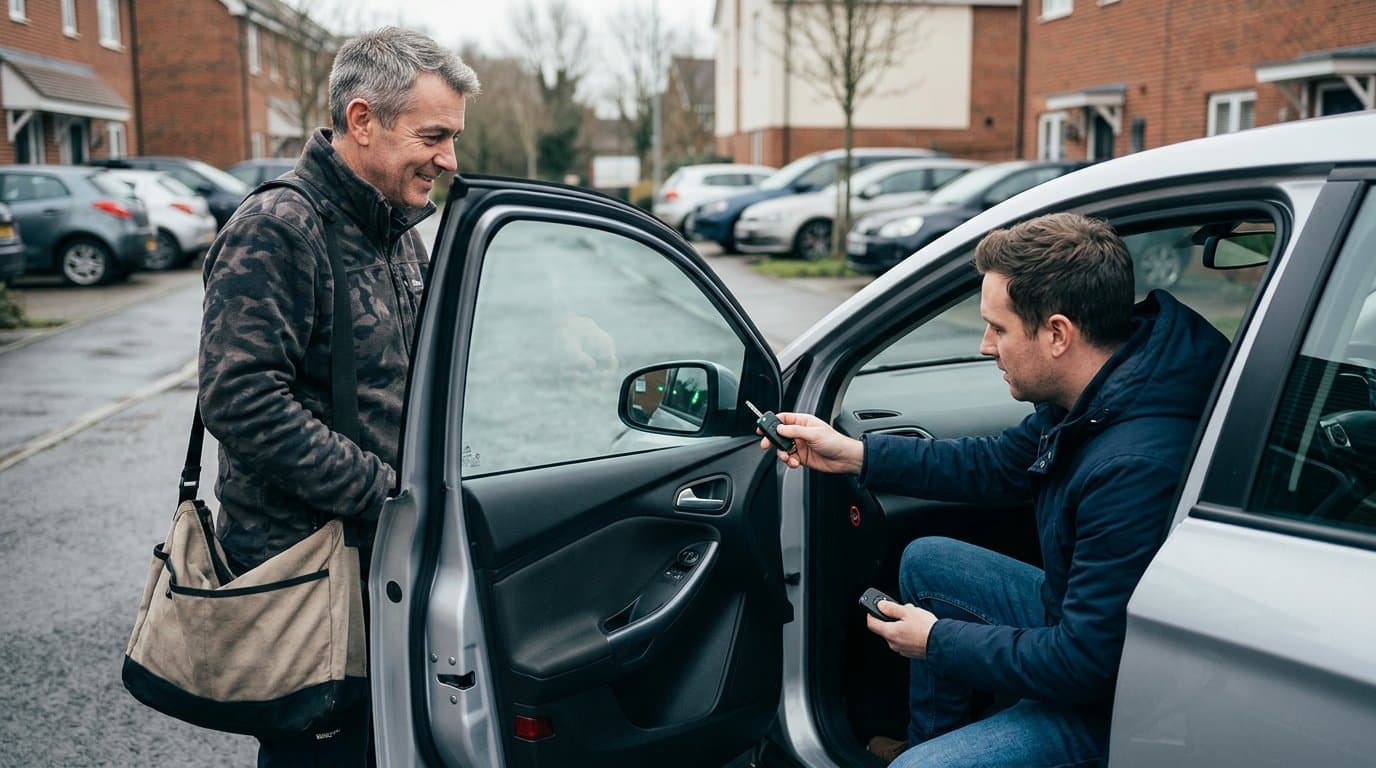
Replacement Car Key Handover Checklist: What to Test Before the Technician Leaves
A replacement car key handover checklist that shows what to test before the technician leaves to verify your new key works under real conditions.
As of October 2026, this handover checklist applies to every mobile key visit.
A programmed key is not the same as a working key. The five minutes you spend testing before the technician pulls away determines whether you own a reliable spare or an expensive paperweight that fails the first time you need it.
Dallas Locksmith Pros performs mobile car key replacement across Dallas, programming transponder keys, smart fobs and European credentials on-site at your location. Every visit ends with a handover test—not because we doubt the work, but because a key that starts the car in the driveway and fails in a parking garage three days later is a key that was never verified correctly. This checklist is what separates a clean job from a callback.
Why the Handover Test Matters More Than the Programming
Programming writes data into an immobilizer. Testing proves the car actually accepts that data under real conditions—with the doors closed, the brake applied, the steering column locked and the proximity antennas awake.
A technician who programs a key and watches it crank the engine once has completed half the job. The other half is verifying that every function the key claims to perform actually works in the states you will encounter: locked doors, dead fob batteries, low 12-volt systems and the cold start tomorrow morning when the car has been asleep for twelve hours. Skipping this step does not save time—it transfers risk from the technician's schedule to your next errand.
The cost of discovering a problem after the van leaves is not the return visit. It is the hour you spent stranded, the meeting you missed, or the tow bill that appeared because a key worked once under ideal conditions and never again.
The Five-Minute Verification Sequence: What Every Key Must Prove
A complete handover test covers mechanical function, electronic enrollment, remote operation and redundancy. Each piece proves a different part of the system, and each can fail independently even when programming reports success.
Start the Engine from Cold
The first test is a cold start with the new key, performed after the car has been locked and fully powered down for at least thirty seconds. This forces the immobilizer to wake, read the transponder and authorize fueling from a resting state rather than inheriting trust from an already-running session.
Insert the key, turn to the on position, wait for the immobilizer light to extinguish, then crank. On push-button cars, press the brake, press the start button and listen for the starter. If the engine fires and holds idle, the immobilizer recognized the credential correctly.
Verify Remote Lock and Unlock Functions
Remote functions are programmed separately from the transponder, and a perfectly good starting key can carry a dead or unsynchronized remote. Test lock and unlock from ten feet away with all doors closed, then walk to twenty-five feet and test again to confirm transmit range.
On cars with separate tailgate or panic buttons, press each one and verify the correct response. Shrinking range or inconsistent response suggests a weak fob battery or a remote that was enrolled incorrectly—problems you want surfaced now, not after the technician has driven thirty minutes away.
Test the Emergency Mechanical Blade
Smart fobs and flip keys hide a mechanical blade inside the shell, and that blade must be cut to open the driver's door when the fob battery dies. Pull the blade from the housing, insert it into the door lock and turn to unlock. If the blade does not fit smoothly or fails to unlock, it was cut incorrectly or to the wrong lock code.
This step catches blade errors that programming cannot see. A car will start happily on a proximity fob with a mis-cut emergency blade, and you will discover the problem only when the fob battery dies in a parking structure at night.
Confirm Proximity Entry and Push-Button Start Zones
Push-to-start vehicles detect the fob in zones around the car: door handles for passive entry, cabin interior for start authorization and sometimes the tailgate for hands-free lift. Walk to each door handle with the new fob in your pocket and pull—the door should unlock without touching the fob.
Sit in the driver's seat with the fob in your pocket, press the brake and press the start button. The engine should crank without presenting the fob to any specific surface. If the car demands that you hold the fob against the start button, the proximity enrollment failed and the system is falling back to backup-key mode—a scenario that works until the fob battery weakens slightly, at which point the car will refuse to start at all.
Some vehicles add a tailgate proximity zone. Stand behind the car with the fob in your pocket and wave a foot under the rear bumper or press the tailgate button. If hands-free lift is a factory feature and it does not respond, the fob was enrolled as a blade key rather than a full smart credential.
Start the Car with the Original Key
This is the step most mobile techs skip, and it is the one that protects you from orphaned-key syndrome. After programming the new key, test your original key by locking the car, waiting thirty seconds, unlocking with the original fob and starting the engine.
Enrollment procedures on some platforms erase existing keys when done carelessly, leaving you with one working new key and an original that no longer starts anything. Subaru registration writes the entire key set at once and drops any key not presented during the session. Other immobilizers will orphan a key if the technician exits programming mode without re-validating the full list. Testing the original proves you still own two working keys instead of one.
Remote Functions and Proximity Zones: The Part Most Techs Skip
Remote lock, unlock, tailgate release and passive entry depend on separate enrollment steps, and they fail silently—meaning the car will start fine while the fob behaves like a dumb transponder. Verifying these functions during handover is the only way to catch a half-programmed key before it becomes your problem.
Lock and Unlock from Increasing Distance
Start at ten feet and test lock, then unlock. Walk to twenty-five feet and repeat. A remote working at close range but failing at normal distances suggests weak fob battery, incomplete pairing or a receiver issue the car is compensating for when you are standing next to it.
If the range feels short compared to your original key, say so before the technician leaves. The problem may be a fob that was paired in low-power mode or a fresh battery installed backward—both fixable in thirty seconds if caught early.
Passive Entry at Every Door Handle
Proximity entry depends on antennas in each door handle and a fob broadcasting at the correct frequency. Test the driver's door, then walk to the passenger side, rear doors and tailgate. A fob that unlocks the driver's door but ignores the others was enrolled incompletely, or the vehicle was not placed into the full proximity-learn state during programming.
European vehicles—BMW, Mercedes, Audi, Volkswagen—are particularly unforgiving here. A Comfort Access or Keyless Go fob that works as a backup key but not as a proximity credential is a fob that was written to the immobilizer but never taught to the body control module. Catching this during handover means a two-minute fix. Discovering it later means a return visit and the argument about whether it is a programming error or a separate service call.
Tailgate and Panic Functions
If your vehicle has a separate tailgate button on the fob, press it and confirm the tailgate unlocks or opens. If the car supports hands-free tailgate lift, test the foot-swipe or button with the fob in your pocket.
Press the panic button and verify the horn and lights activate. Panic is the easiest remote function to program and the most obvious indicator that the fob is talking to the car at all—if panic fails, nothing else will work reliably.
Testing Your Original Key After Programming: The Step That Protects You
Programming adds a key to the immobilizer's memory, but sloppy procedure can erase existing keys in the process. The only proof that your original key still works is starting the car with it after the new key is enrolled.
Why Existing Keys Get Orphaned
Some immobilizer platforms treat key programming as a full rewrite rather than an append operation. When the technician enters programming mode, the system clears its key list and waits for a complete set to be presented. If the technician enrolls only the new key and exits without re-presenting the original, the immobilizer forgets the original ever existed.
Subaru systems are explicit about this: registration writes the whole set at once, and any key not physically present during the session is dropped. Volkswagen Group platforms—Audi, VW, Porsche, some Bentleys—can behave the same way depending on the procedure used. Other systems orphan keys accidentally when the technician loses power mid-session or exits programming without finishing the validation sequence.
The Thirty-Second Original-Key Test
After the new key is programmed and tested, ask the technician to wait while you test your original. Lock the car with the original fob, wait thirty seconds for the system to sleep, unlock and start the engine.
If the original key starts the car normally, you own two working keys. If it cranks but does not start, or if the immobilizer light stays solid, the original was erased during programming and needs to be re-enrolled before the technician leaves. Fixing this problem on-site takes two minutes. Discovering it the next morning when your spouse tries to take the car means a second service call, a dispute about whether the original was functional before the visit, and the operational chaos of a household that thought it had two keys but actually has one.
Red Flags During Handover: When to Stop the Technician From Leaving
Not every problem announces itself as a no-start. Some keys work intermittently, others work perfectly at the curb and fail ten minutes later, and a few betray underlying issues the programming cannot fix. These are the signals that the job is not finished.
Intermittent Immobilizer Light Behavior
A properly enrolled key makes the immobilizer light blink briefly when the key is inserted, then extinguish within two seconds. If the light stays solid, blinks irregularly or extinguishes and then re-illuminates, the immobilizer is not recognizing the key consistently.
This behavior suggests incomplete enrollment, a weak transponder signal or an immobilizer module that is failing independently of the key. Do not accept a key that starts the car after three attempts when one attempt should be enough. Intermittent operation during handover becomes total failure under real conditions—low battery voltage, cold weather, a slightly longer crank—and you will own the problem once the van pulls away.
Key Detected Messages That Require Fob Placement
Push-to-start cars should recognize the fob anywhere in the cabin. If the car displays "key not detected" until you hold the fob against the start button or the steering column, the proximity enrollment failed and the system is reading the fob in backup mode.
Backup mode works, but it depends on near-field coupling rather than proper RF broadcast, which means the fob must be within inches of a specific coil to start the car. That tolerance breaks down as soon as the fob battery weakens or the coil gets dirty, leaving you with a fob that worked yesterday and fails today for no apparent reason.
A properly programmed proximity fob should start the car with the fob in your pocket, purse or center console. Anything stricter is incomplete programming, and the technician should re-enter the proximity-learn procedure before leaving.
Remote Functions That Work Once and Then Stop
A remote that locks the car successfully during the test, then fails on the second press, was synchronized but not fully paired. The car is accepting the signal as a one-time event rather than storing the fob as a trusted transmitter.
This often resolves with a second pairing attempt, but if the technician has already packed tools and started the van, you will spend the next week wondering if your fob is broken or if you are holding it wrong. Catch the problem during handover and it is fixed in sixty seconds.
Different Behavior Between the New Key and the Original
If the new key starts the car but requires a longer crank than the original, or if the new key's remote range is noticeably shorter, the programming completed but something was configured incorrectly. Keys programmed to the same car should behave identically—same crank duration, same remote range, same proximity sensitivity.
Differences suggest the new key was enrolled in a degraded mode, with reduced RF power or delayed immobilizer handshake. The technician may have used a backup procedure when the primary method failed, or the key blank itself may be marginal. Either way, raise the issue before the technician leaves, because a key that works differently is a key that will fail sooner.
What Happens When You Skip the Checklist
A key that programs successfully and fails the first time you use it is not a mystery—it is the predictable result of incomplete testing. The cost is not just the return visit; it is the operational disruption, the tow you did not plan for and the question of whether the problem was always there or appeared after the technician left.
The Parking-Garage Failure
You drive to an appointment, park in a garage and lock the car. Three hours later the fob will not unlock the doors, or the car starts but immediately stalls. The problem was always there—the fob was paired incompletely and worked once under ideal conditions—but you are discovering it in the least convenient place, with no tools and no technician.
The difference between this scenario and a clean handover is five minutes of testing at your curb, when fixing the problem means re-entering a programming mode rather than arranging a flatbed.
The Orphaned Original Key
You program a spare, test the spare, and assume the original still works. A week later your spouse takes the car and it refuses to start. The original was erased during programming and nobody tested it afterward, so you have been driving on borrowed time with a single working key disguised as two.
Replacing the orphaned key costs the same as the spare you already paid for, plus the cost of the argument about whether it is a warranty issue or a separate failure. Testing both keys during handover eliminates the ambiguity entirely.
The Gradual Range Decay
The new fob works for a few days, then the remote range starts shrinking. A week later you are standing next to the car to unlock it, and two weeks later the fob only works when pressed directly against the window. The problem is incomplete pairing combined with a marginal battery, and it was detectable during handover if anyone had tested range at twenty-five feet instead of five.
By the time you call back, the technician reasonably asks whether you have replaced the battery, whether you are standing near RF interference and whether the problem might be the car rather than the key. None of these questions arise if the fob is tested properly before handover, when the baseline is still fresh and the technician's tools are still in the van.
For honest pricing and verified compatibility on mobile key work, see the Dallas car key replacement cost guide.
What Dallas Locksmith Pros Tests Before Leaving Your Location
Dallas Locksmith Pros completes every mobile key visit with a verification sequence that covers mechanical cut, electronic enrollment, remote operation and original-key functionality. This is not a courtesy—it is how the work is defined.
The new key is inserted or presented, the engine is started from a cold resting state, and the immobilizer behavior is observed. Remote lock and unlock are tested at increasing distances. The emergency blade, if present, is tested in the driver's door. Push-to-start cars have proximity zones verified at each door handle and the tailgate. Then the customer's original key is tested to confirm it still starts the car and operates its remote normally.
If any function fails or behaves inconsistently, the problem is diagnosed and corrected before the technician leaves. A key that requires fob placement when it should work from the pocket is re-programmed in full proximity mode. A remote with short range gets a fresh battery and a pairing check. An emergency blade that binds in the lock is re-cut to the correct code.
The entire sequence takes five minutes and eliminates the ambiguity that appears when a key works once and fails later. You drive away with a key that performs every function it was programmed to perform, under conditions that match how you will actually use it.
For a breakdown of mobile locksmith costs versus dealer service and the line items that explain the difference, see Auto Locksmith vs. the Dealership for Car Key Replacement in Dallas.
Frequently Asked Questions About Key Handover and Testing
What is the minimum test sequence I should insist on before the technician leaves?
Start the car from cold with the new key, verify remote lock and unlock from twenty-five feet, test the emergency blade in the driver's door, confirm proximity entry at each handle on push-to-start cars, and start the car with your original key to prove it was not orphaned during programming. That sequence catches 95% of problems while the tools are still on-site.
How long should a complete handover test take?
Five minutes, assuming no problems are discovered. A technician who says there is no time to test is a technician who has told you something useful about how callbacks are handled.
What does it mean if the new key works but the original key suddenly does not?
The original was erased during programming because the immobilizer procedure rewrites the full key list and the technician did not re-present the original. This is fixable in two minutes if caught during handover and requires a return visit if discovered later.
Should I test remote range if I rarely use the fob to lock the car?
Yes, because remote range is the earliest indicator of incomplete pairing or weak fob battery. A fob that only works at close range may still start the car today but will fail unpredictably as the battery drains or RF conditions change.
What should I do if the car starts but the proximity entry does not work?
Stop the technician and ask for the proximity-learn procedure to be repeated. A fob that starts the car but requires manual unlocking was enrolled to the immobilizer but not to the body control module, and the problem will not resolve on its own.
Dallas Locksmith Pros
Mobile automotive locksmith serving Dallas and the verified service area
Licensed Texas DPS Private Security #B32279201
Call or text (469) 896-4128
A replacement key is only finished when every function has been tested and your original key still works. The five-minute handover checklist is the difference between a reliable spare and a callback you did not plan for.
Related reading
- What It Costs to Program a Key You Already Bought in Dallas (2026)
- The 2025–2026 Mini: What Changed About Key Work, and What It Costs in Dallas
- Key Fob Programming Dallas
- Dallas Locksmith 24/7: Response Times, Pricing, and the Texas DPS License You Should Check Before Dispatch
- Auto Locksmith Vs The Dealership For Car Key Replacement In Dallas Tx Mobile Key Cutting Programming
Related articles
Key Fob Got Wet in Dallas? Here's What Works
Learn what actually fixes water-damaged key fobs and when to call a pro. Save time and money with the right first steps.
Read moreAuto Locksmith vs the Dealership for Car Key Replacement in Dallas TX: Mobile Key Cutting & Programming
Discover whether an auto locksmith or dealership is best for car key replacement in Dallas TX. Save time and money - choose convenience today!
Read moreCar Key Replacement Cost Dallas TX: Mobile Key Cutting & Programming
Discover car key replacement costs in Dallas TX. Call or text 469 896 4128 for fast mobile key cutting and programming services today!
Read moreNeed a Dallas locksmith right now?
Licensed mobile automotive locksmith. Same-day response across DFW.
Call (469) 896-4128