
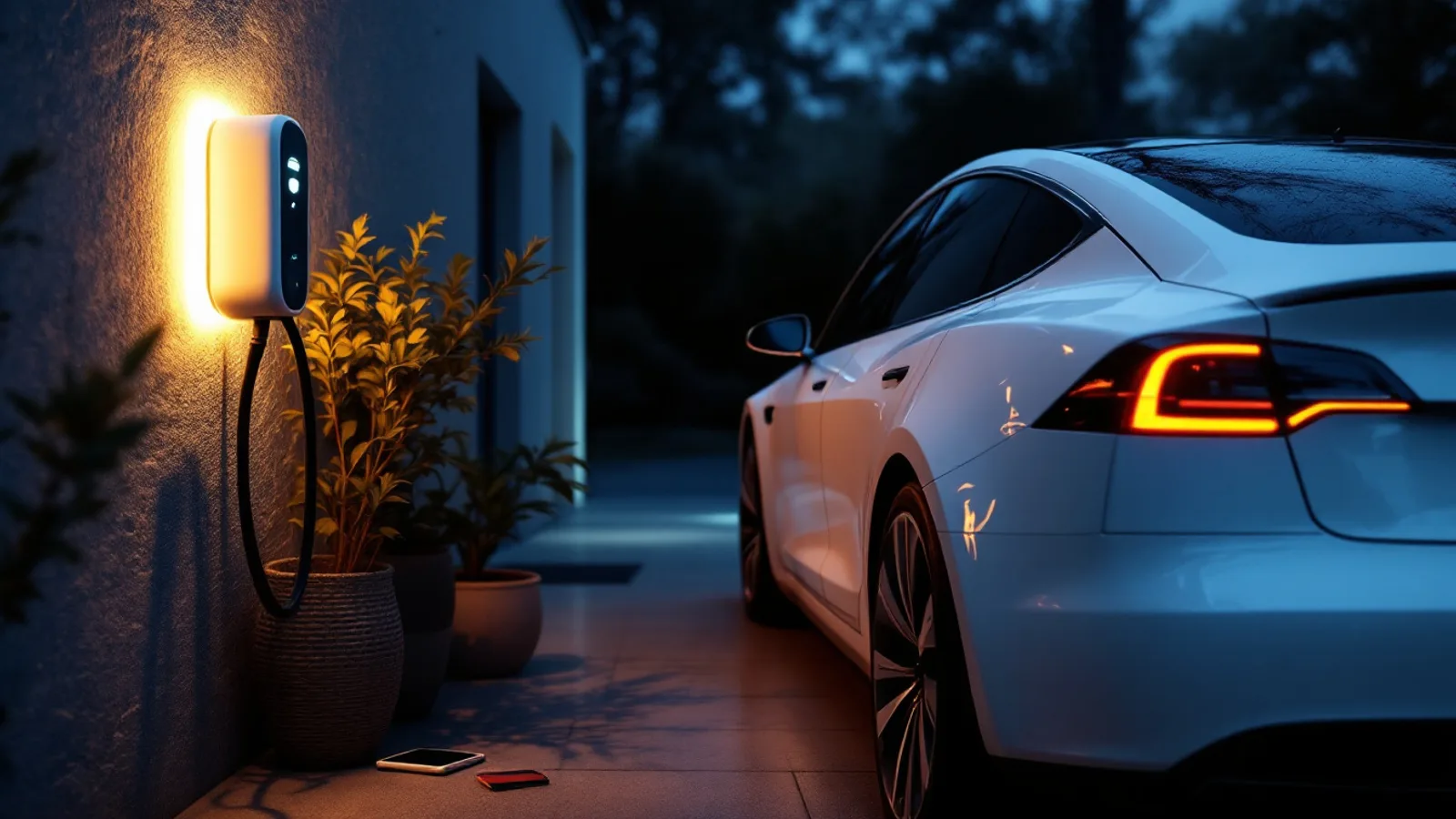
Tesla Locksmith Services in Dallas
NFC key card pairing, phone-as-key setup, used-Tesla audits — Model 3, Y, S, X. Honest triage on what we can and can't do.
Quick Answer
Partly — and any locksmith who says otherwise is being dishonest. Tesla sells NFC key cards direct for $35, and we pair them on-site for $80–$150 (total $115–$185); key fobs land in the $250–$500 band with hardware, or $150–$300 to pair a fob you supply. Every pairing happens on the car's own touchscreen and requires you present with your Tesla account — there is no scan-tool workaround, and true all-keys-lost is a Tesla-support workflow no third party can bypass. Dallas Locksmith Pros handles the pairing, used-Tesla key audits, and lockouts at (469) 896-4128.
Tesla rewrote the playbook on automotive key pairing. There's no dealer scan-tool, no NASTF SDRM event, no immobilizer database to authenticate against — pairing happens entirely on the vehicle's own center-console touchscreen by an authorized driver logged into the Tesla account. Dallas Locksmith Pros' value on Tesla work is in the adjacent workflows: pairing time, family key allocation cleanup, used-Tesla pre-purchase key audits, and honest Tesla-Service-Center triage. Tesla sells NFC cards direct for $35 — we add the convenience, audit work, and family setup that Tesla Service Centers don't offer as standalone services.
Tesla Key & Ignition Pricing in Dallas
Ranges current as of July 2026. Final price depends on model year, key type, and whether a working key still exists — confirmed on the phone before dispatch.
| Service | Typical range | What drives it |
|---|---|---|
| NFC key card — pairing on-site | $80–$150 | The card itself is $35 direct from Tesla; you must be present with your Tesla account, since pairing happens on the vehicle touchscreen. Total typically $115–$185. |
| Key fob — hardware plus pairing | $250–$500 | Accessory fob for Model 3/Y or replacement fob for S/X, paired via the touchscreen with the owner authenticated. No pairing without your Tesla account and the vehicle present. |
| Key fob pairing only (customer-supplied fob) | $150–$300 | You bring the fob, we handle the pairing session and verify every paired key afterward — mostly older Model S/X. |
| Phone-as-key setup and walkthrough | $60–$120 | Bluetooth pairing, app permissions, approach-unlock testing across multiple drivers' phones. |
| Used-Tesla pre-purchase key audit | $150–$250 | We review the paired-key list and remove the previous owner's cards, fobs, and phone registrations — the Tesla equivalent of re-keying a house you just bought. |
| Tesla lockout — opening only | $90–$175 | Damage-free opening when you're locked out with no working key on you. No key work included. |
Tesla Models We Service in Dallas
Model 3
2017–presentNFC key card and phone-as-key from launch; the optional accessory fob pairs the same way — on the touchscreen, by an authenticated driver with Tesla account access.
Model Y
2020–presentIdentical key architecture to the Model 3 — card, phone, optional fob — and the most common used-Tesla key-audit request we get in Dallas.
Model S
2012–2021Pre-refresh cars are fob-based with no key card; a lost-fob situation still routes through Tesla for de-authorization before a replacement can be paired.
Model S / Model X (Refresh)
2021–presentRefresh cars adopted the card + phone-as-key scheme; the fob becomes an optional accessory paired via the touchscreen.
Model X
2015–2021Pre-refresh fob-based like the contemporary Model S — pairing and de-authorization both gated by Tesla account access.
Cybertruck
2023–presentPhone-as-key plus NFC card, newest platform — we treat every request here as a verify-first job and are upfront about what is Tesla-Service-Center territory.
Tesla Key Types
- NFC key card (credit-card-shaped, Model 3/Y/S Refresh/X Refresh)
- Phone-as-key (Tesla mobile app, all current models)
- Traditional key fob (Model S pre-Refresh, Model X pre-Refresh, optional accessory for Model 3/Y)
Tesla Module Types
- Center console NFC reader
- Bluetooth gateway (phone-as-key)
- MCU (Media Control Unit) — software-side faults are Tesla SC work
- BCM-equivalent processing handled by Tesla's vehicle compute
Common Tesla Issues We Fix
Symptoms to Watch For
Our Tesla Services
About Tesla Key & Module Systems
Three structural differences set Tesla apart from BMW, Mercedes, Audi, Porsche, and the legacy automakers. First, there's no immobilizer database to authenticate against. Traditional automotive key work routes through manufacturer-specific authentication (VW Group Component Protection via NASTF SDRM, BMW ISTA + ICOM, Mercedes SCN coding). Tesla doesn't expose an equivalent authenticated channel because pairing is owned by the vehicle itself, gated by Tesla account credentials and physical access to the touchscreen. Second, no scan-tool requirement. AVDI, Autel IM608, and Xtool D9 — the platforms that handle 95% of independent automotive locksmith work — do not pair Tesla keys. The 'tool' is the car. The 'credential' is account access. Third, no transponder cloning. Tesla NFC cards and fobs don't carry rolling-code transponders in the legacy sense — they're cryptographically registered to the vehicle through the touchscreen pairing flow. The practical consequence: there's no scenario where a third-party operator legitimately programs a Tesla key without the customer being physically present with account access. Any operator claiming otherwise is misrepresenting the procedure. Our Tesla work focuses on the highest-value services that Tesla Service Centers don't offer as standalone: used-Tesla pre-purchase key audits (essential for the Dallas-area used-Tesla market that's exploded since 2022 — previous-owner NFC cards and phone-as-key registrations often stay paired through resale, creating a real security gap), phone-as-key setup with multi-driver testing across approach scenarios, family key allocation cleanup, and on-site convenience that beats the typical 5-14 day Tesla Service Center wait for non-warranty appointments. We're explicit about when you should NOT use us: true all-keys-lost requires Tesla support to remotely de-authorize, NFC reader hardware failure is a Tesla parts diagnostic, account-level lockouts are a Tesla support issue, and active-warranty work where preservation matters is best handled by Tesla SC for documentation continuity.
Where the honest limit is
Tesla key-card and fob pairing can only happen on the vehicle's own touchscreen with the owner present, logged into their Tesla account, and with physical access to the car — no scan tool, ours or anyone's, bypasses that. True all-keys-lost is therefore not something we or any third-party locksmith can promise on any Tesla: Tesla support must remotely de-authorize the old keys first, which is a Tesla Service Center or mobile-service workflow. Tell us your VIN and situation before we dispatch and we will say plainly whether it's a job for us — pairing, audit, or lockout — or a job for Tesla.
Need Tesla Key Service in Dallas?
Dealer-level tools. Mobile service. Same-day response.
Why Owners Choose a Mobile Specialist
Same dealer-level programming result — without the flatbed or the service queue.
Dallas Locksmith Pros
Mobile · dealer-level · same-day
- Where the work happensAt your location — home, work, roadside
- Tow requiredNever — we come to the car
- TurnaroundSame day, most jobs 30–90 minutes
- ToolsDealer-level: ISTA, Xentry, ODIS, Techstream
- Typical all-in costUsually 40–60% less, no tow fee
- After-hours24/7, including nights and holidays
The Dealership
Fixed location · service queue
- Where the work happensTow to the dealership, then wait
- Tow requiredUsually, on an all-keys-lost job
- TurnaroundOften days in the service queue
- ToolsSame tools, franchise labor rates
- Typical all-in cost$700–$1,100+ once towing is added
- After-hoursBusiness hours only
Tesla Guides & Cost Breakdowns
Tesla Locksmith Service Areas
Frequently Asked Questions
Yes. Tesla sells NFC key cards direct for $35. We pair the card on-site for $80-$150 — total $115-$185. Tesla Service Centers also pair customer-supplied cards (often free) but Dallas appointment wait times can run 5-14 business days.
No. Tesla key pairing happens on the vehicle's own touchscreen by an authenticated driver logged into the Tesla account. There's no scan-tool workflow that bypasses this. The customer must be physically present with account access during the appointment.
Yes, almost always. Used Teslas frequently ship with the previous owner's NFC cards, fobs, and phone-as-key registrations still paired. Combined with the GPS-locatable nature of the vehicle, unknown paired keys represent a meaningful security gap. Our audit runs $150-$250 and is structurally analogous to re-keying a house after buying it.
Try basic troubleshooting first: phone Bluetooth on, Tesla app running with location permission, phone-as-key enabled in app settings. If basic troubleshooting fails, we can walk through re-pairing setup on-site for $60-$120. If the vehicle's Bluetooth module has failed, that's a Tesla Service Center diagnostic.
True all-keys-lost requires Tesla support to remotely de-authorize the old keys before any new key can be paired. This is a Tesla Service Center or Tesla mobile-service workflow — third-party locksmiths cannot bypass it. Prevention: always maintain at least two paired keys (NFC card + phone-as-key minimum).
Generally no. Tesla key pairing performed through normal touchscreen workflows is structurally identical to what Tesla mobile-service technicians perform — no invasive module access, no firmware modification, no aftermarket parts swap. The credentialed shop should still walk through warranty implications during the booking call for any active-warranty Tesla.
Tesla Key Problems? We Can Help.
Expert Tesla locksmith service in Dallas. Mobile, fast, dealer-level.