
Dead Key Fob Battery vs. No-Start: What's Wrong in Dallas Heat
2026 Dallas guide: dead key fob battery vs. real no-start immobilizer fault. Coin-cell fix, backup start method, and $85-$500 repair pricing.
The Two Very Different Problems That Look Identical
As of August 2026, one of the most common calls a Dallas mobile locksmith gets sounds exactly the same whether the fix costs $10 or $500: "My car won't start and the fob isn't working." That single symptom — a push-to-start vehicle that refuses to recognize its key — can mean a $4 coin-cell battery died, or it can mean a genuine immobilizer, body control module, or antenna fault that needs real diagnostic work. Telling the two apart before you spend money (or call a tow truck) is the entire point of this guide.
Texas summers make this worse. A key fob left in a hot cabin, on a dashboard, or in a pocket during a 100-degree DFW afternoon ages its internal battery faster than the same fob in a moderate climate, so Dallas drivers see a disproportionate share of fob-battery failures clustered in June through September. Knowing the difference between "the battery died a little early because of the heat" and "something in the car itself is failing" saves both money and a wasted service call.
How to Tell a Dead Fob Battery From a Real No-Start
A dead key fob battery has a distinct signature: the fob's buttons stop working from a distance (you have to stand right next to the door to lock or unlock it), the interior dome light or dash may still flicker faintly when you press start, and — critically — the car can still start using the fob's backup method (covered below). A dead coin-cell battery does not disable the immobilizer; it just stops the fob from broadcasting its signal reliably.
A genuine no-start or immobilizer fault looks different. The dash typically shows an explicit warning — "Key Not Detected," "Insert Key," or a flashing security-light icon — even when the fob is pressed directly against the backup sensor. The car may crank without firing, or may not crank at all. Multiple fobs (if you own a spare) fail identically, which rules out a simple dead battery in one fob. If replacing the coin cell and trying the backup start method both fail, you are looking at a module, antenna, or programming issue rather than a battery.
Step One: Try the Coin-Cell Swap First
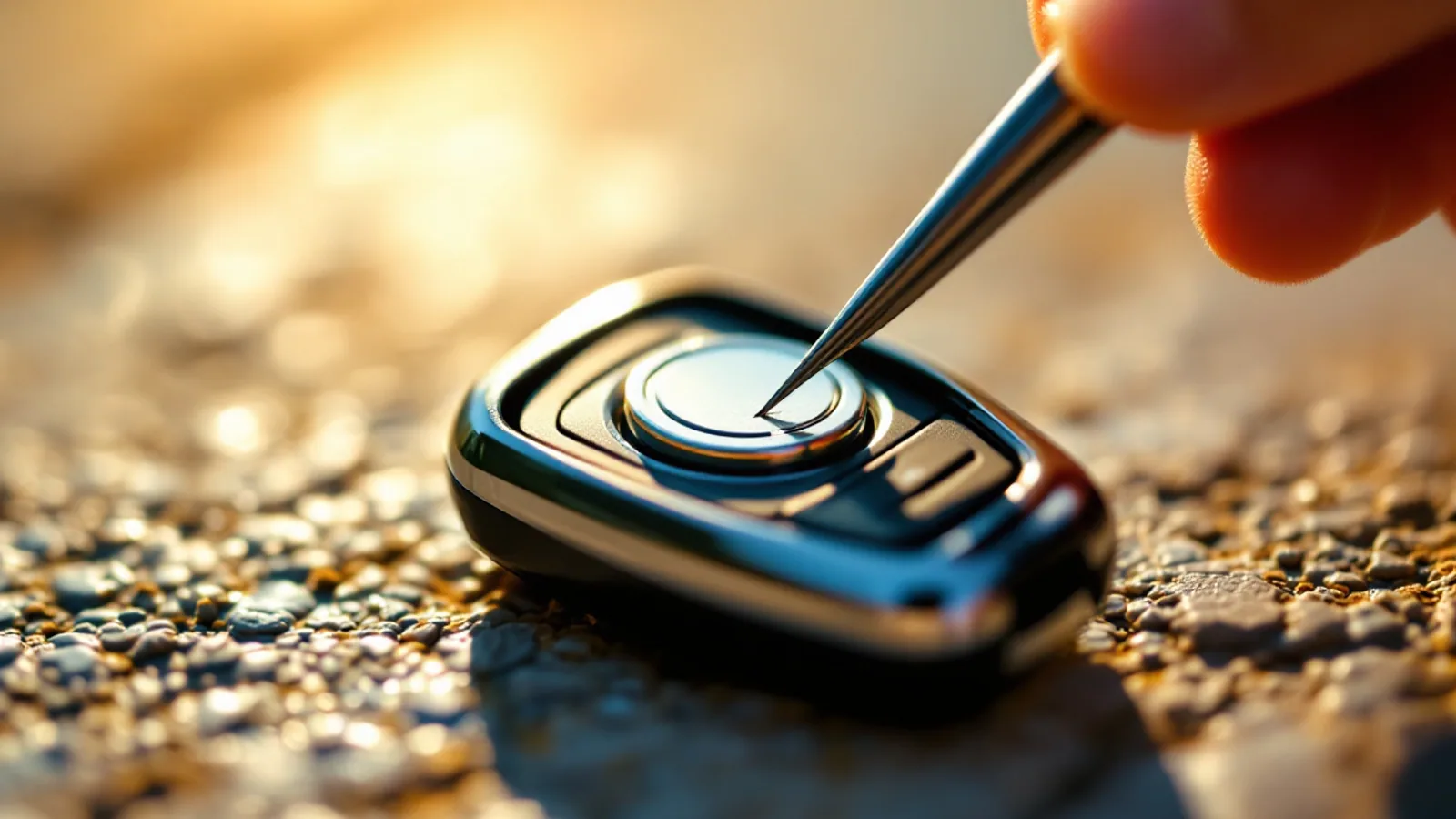
Most proximity fobs use a widely available CR2032 or CR2025 coin-cell battery, sold at any pharmacy or hardware store in Dallas for a few dollars. The fob body typically pries open with a small flathead screwdriver or a coin along a seam near the mechanical key blade — consult your specific model, since exact opening points vary by brand. Swap the battery, reassemble the fob, and try locking and starting the car from a normal distance.
If the fob works normally again, the problem was simply a dead battery, and the fix cost you a few dollars and five minutes. This resolves the large majority of "car won't start" calls that turn out to have nothing to do with the vehicle itself.
Step Two: If the Battery Swap Doesn't Fix It, Use the Backup Start Method
Nearly every push-to-start vehicle has a documented "dead fob" backup procedure built in for exactly this situation — a hidden slot near the start button, cup holder, or steering column where you hold the fob directly against a low-power antenna coil, allowing the car to read the fob's chip even with a weak or replaced-but-still-low battery. Consult your owner's manual for the exact location, since it varies by manufacturer — some are behind a plastic panel near the start button, others are inside the center console.
If the backup method starts the car successfully, that confirms the fob's transponder chip and the vehicle's immobilizer are both working correctly — you were dealing with a weak signal, not a real fault. If the backup method also fails to start the car, the problem is not the battery at all, and you are now looking at a genuine immobilizer or module issue that a battery swap cannot fix.
When It's Actually a Module or Immobilizer Fault
A handful of specific patterns point away from a battery and toward real vehicle-side electronics:
- Every fob you own fails the same way, including a spare that has never lost its battery.
- The backup start slot doesn't work either, even with a known-good fob held directly against it.
- The dash shows a persistent "Key Not Detected" message rather than intermittent trouble.
- The problem appeared suddenly after a battery jump-start, aftermarket alarm install, or electrical work, which can disrupt a body control module's communication with the immobilizer.
- The car cranks but never fires, rather than failing to crank at all — often a sign the security system is actively blocking ignition rather than a dead 12-volt battery in the car itself.
These situations call for the same diagnostic tools a dealer uses — BMW ISTA, Mercedes Xentry, VW/Audi ODIS, Toyota Techstream, and equivalents for domestic brands — to read the immobilizer's fault codes and confirm whether the fix is a reprogram, a replacement antenna ring around the ignition, or a body control module issue. Per the National Highway Traffic Safety Administration's vehicle theft prevention data, immobilizer systems are designed to fail safe — meaning they deliberately block ignition when they cannot positively verify a registered key, which is exactly the behavior you see in a genuine module fault rather than a dead battery. Our no-key-detected and immobilizer diagnostic page covers this specific fault category in more depth, and for deeper module-level repairs, module programming and repair in Dallas explains what a BCM or immobilizer module replacement involves.
Real Pricing: Battery vs. Diagnosis vs. Replacement
Here is how the cost breaks down depending on what is actually wrong:
| Situation | What's involved | Typical cost |
|---|---|---|
| Coin-cell battery only | DIY swap, no locksmith needed | $3 – $10 (battery only) |
| Fob won't sync after battery swap | Re-sync/re-pair existing fob to vehicle | $85 – $150 |
| Lost or non-functional fob, replacement needed | New transponder key or basic fob | $120 – $200 |
| Replacement smart proximity fob (domestic/Asian) | Cut and programmed on-site | $250 – $500 |
| European smart fob (BMW, Mercedes, Audi, Porsche, Jaguar, Land Rover) | More complex immobilizer access | $350 – $600+ |
| Module/immobilizer-level diagnosis and repair | Antenna, BCM, or programming fault | Diagnosis plus repair, quoted after inspection |
If your existing fob still works but simply needs re-syncing after a battery change on some vehicle platforms, that is a much smaller job than a full replacement — always start there before assuming you need a brand-new fob. Our key fob programming page breaks down programming versus outright replacement pricing, and car key replacement in Dallas covers the full key-type pricing scale.
Why Dallas Heat Accelerates Fob Battery Failure
Lithium coin-cell batteries lose capacity faster at sustained high temperatures, and a car cabin in Dallas summer routinely exceeds 130-150°F on a parked vehicle with direct sun exposure. A fob left on a dashboard, in a cup holder, or in a pocket against a hot body all day during a DFW summer ages the cell meaningfully faster than the same fob in a temperate climate. This is a well-documented pattern in seasonal vehicle-readiness guidance — the AAA seasonal vehicle maintenance recommendations routinely flag summer heat as accelerating wear on small electronics and batteries throughout a vehicle, key fobs included, alongside the more commonly discussed effects on the 12-volt starting battery.
Practical takeaway: Dallas drivers should expect to replace a fob's coin-cell battery somewhat more often than the national average interval, particularly for fobs habitually left in a hot cabin rather than carried on a keyring in a pocket or bag.
Real-World Example
Driver: Dallas suburb commuter, mid-size crossover with push-to-start, anonymized. Car would not start on a July morning; dash read "Key Not Detected."
What happened: The driver first swapped the fob's coin-cell battery, which resolved the low-buttons-range symptom but did not fix the no-start — the dash warning persisted. Using the vehicle's documented backup start slot near the console with the freshly-battery-swapped fob, the car started normally.
Diagnosis: The original battery had been dead long enough that the fob's stored programming had not actually been lost — it was purely a signal-strength issue from the depleted battery, confirmed the moment the backup slot worked with the same fob.
Result: Total cost was a $6 battery from a nearby pharmacy and about ten minutes using the owner's manual's backup-start instructions. No locksmith dispatch was needed, because the fault was confirmed to be battery-only before any service call was placed.
Contrast case: A separate Dallas driver with an identical symptom found the backup start slot did not work even with a confirmed fresh battery in a spare fob — pointing to an immobilizer antenna fault around the ignition, which required a mobile locksmith's diagnostic equipment to confirm and repair on-site.
When to Call a Mobile Locksmith Instead of Troubleshooting Further
If you've swapped the battery, tried the backup start method exactly as described in your owner's manual, and the car still won't recognize any fob, stop troubleshooting and call a mobile automotive locksmith with real diagnostic tools. Per Associated Locksmiths of America (ALOA) professional standards, a qualified automotive locksmith diagnoses the fault with proper equipment before quoting a repair — never guessing at a part swap without confirming the actual cause first. Continuing to crank the starter on a car with an active immobilizer fault does not help and can drain your 12-volt battery on top of the original problem. This applies whether you're in Dallas, Plano, Frisco, Southlake, or University Park — a mobile locksmith brings the same dealer-level diagnostic equipment to your driveway rather than requiring a tow.
For total loss of all working keys rather than a single dead battery, see our car key replacement pricing guide, and for a broader look at ignition and immobilizer symptoms that mimic each other, our ignition repair versus replacement guide and the Frisco immobilizer repair guide cover related fault patterns in more detail.
Two Cases This Guide Did Not Originally Cover (Updated August 2026)
As of August 2026, two specific situations account for a growing share of these calls, and both change the diagnosis meaningfully.
The fob has been in water. A wet fob does not usually fail cleanly. It produces intermittent detection that wanders for days or weeks — working at the shops, failing at home — because corrosion is progressively eating the board. Owners read that as a car-side fault and book module diagnosis. The tell is a history involving a pool, a lake, a washing machine or a storm, and the fix is often a $40 to $95 shell-and-board inspection rather than anything electronic. What to do when your key fob gets wet covers the first ten minutes, which decide most of the outcome.
The car starts only when the fob touches the start button. This deserves its own treatment because it is so frequently misread. It is not a workaround you have discovered — it is the car's low-power backup reader working while the wireless path fails, and it narrows the cause to four possibilities you can separate in two minutes. Living with it is the expensive choice, because the path from there to a genuine all-keys-lost job is short. The full diagnostic tree is in why your car only starts with the fob against the button.
On premium European cars, the same symptom set overlaps with genuine drive-authorization faults, and the generational split that decides whether the work is a driveway job or a dealer job is set out in our guide to Mercedes FBS4 key replacement without the dealer.
Frequently Asked Questions
Q: How do I know if my key fob just has a dead battery or if it's a bigger problem? A: A dead battery usually still lets the car start using the vehicle's documented backup start slot (check your owner's manual), while a real immobilizer fault fails even with a fresh battery held directly against that slot. If the backup method works, it's the battery; if it doesn't, it's a module or antenna issue that needs diagnostic tools.
Q: What kind of battery does my key fob use, and where do I get one? A: Most proximity fobs use a CR2032 or CR2025 coin-cell battery, available at any Dallas pharmacy, hardware store, or big-box retailer for a few dollars. Check your specific fob model, since the exact size varies slightly by manufacturer.
Q: Does Texas summer heat really kill key fob batteries faster? A: Yes. Lithium coin-cell batteries lose capacity faster at sustained high temperatures, and a Dallas car cabin routinely exceeds 130°F in direct summer sun. Fobs left on a dashboard or in a hot cabin rather than carried on a person age noticeably faster than the same fob in a moderate climate.
Q: How much does it cost to replace a key fob completely in Dallas? A: A replacement smart proximity fob for a domestic or Asian vehicle runs $250-$500 cut and programmed on-site. European smart fobs for BMW, Mercedes, Audi, Porsche, Jaguar, or Land Rover run $350-$600+ due to more complex immobilizer access. A basic replacement transponder key without proximity features runs $120-$200.
Q: My car cranks but won't fire — is that the fob battery? A: Usually not. A dead fob battery typically prevents the car from detecting the key at all rather than allowing a crank without ignition. A car that cranks but doesn't fire, especially alongside a "Key Not Detected" message, more often points to an active immobilizer fault blocking fuel or ignition rather than a simple battery problem.
Q: Should I keep jump-starting or cranking the car if the fob isn't working? A: No. Repeated cranking on a vehicle with an active immobilizer fault does nothing to fix the underlying issue and risks draining the 12-volt starting battery on top of the original problem. Try the coin-cell swap and the documented backup start method once each, and if both fail, call a mobile locksmith with real diagnostic equipment rather than continuing to crank the starter.
The Bottom Line
A dead key fob battery and a genuine no-start immobilizer fault produce the same panic but have almost nothing else in common. The fastest, cheapest diagnostic step is always the coin-cell swap followed by your vehicle's documented backup start method — together they take under ten minutes and cost a few dollars, and they conclusively separate a battery problem from a real vehicle fault. If both steps fail, stop troubleshooting on your own and call a mobile locksmith with dealer-level diagnostic tools before you drain your car's actual starting battery.
Next Steps
If the coin-cell swap and backup start method both fail, our no-key-detected and immobilizer diagnostic service brings the same tools a dealer uses directly to your Dallas driveway, and emergency locksmith service in Dallas covers same-day and after-hours dispatch if the car won't start when you need it most.
Talk to a Dallas Automotive Locksmith
Dallas Locksmith Pros runs mobile automotive service across the Dallas metro, 24/7. Give us the year, make, and model on the phone and you get a firm all-in price before anyone is dispatched — no surprise add-ons at the curb. Call (469) 896-4128 to get a technician moving, or browse the automotive locksmith service and the Dallas service area for what we cover.
Related articles
Push-Button Start Not Working in Dallas? 2026 Fix Guide
2026 Dallas guide: why push-button start won't work. Most fixes are cheap (dead fob battery); a new smart fob runs $250-$500. Backup-start trick inside.
Read moreTexas Summer Heat & Car Key Fob Failures in Dallas (2026)
2026 Dallas guide: how Texas summer heat kills key-fob batteries and triggers no-start 'no key detected' events — plus dead-battery, lockout, and fob costs.
Read moreChevrolet Corvette C7 & C8 Key Replacement in Dallas: The Body Module Decides
As of August 2026, a Corvette C7 or C8 smart proximity fob in Dallas runs $250-$500, plus $75-$250 when every key is gone.
Read moreNeed a Dallas locksmith right now?
Licensed mobile automotive locksmith. Same-day response across DFW.
Call (469) 896-4128