
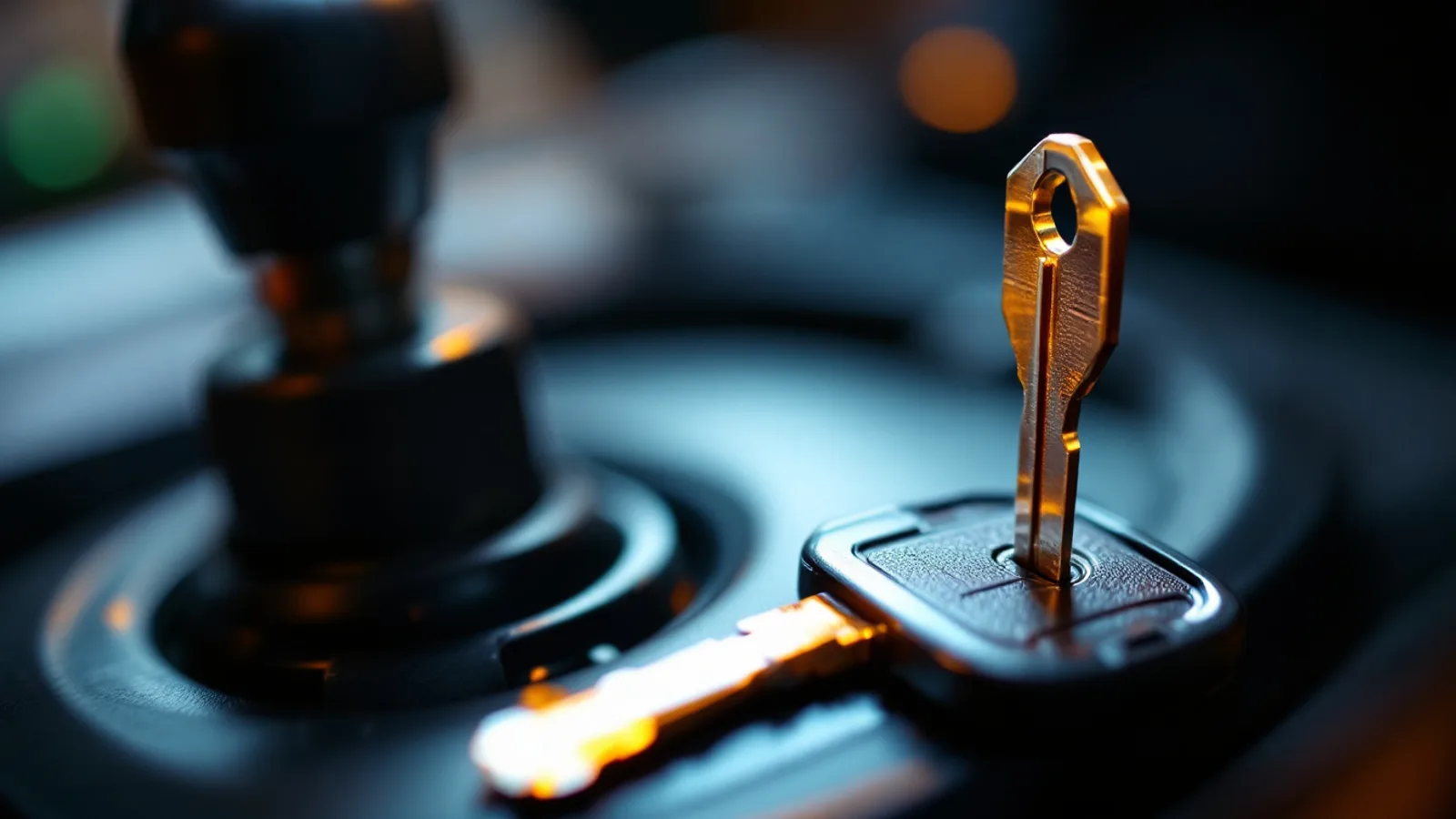
Key Stuck in the Ignition in Dallas? 2026 Causes & Fix Cost
2026 Dallas guide to a key stuck in the ignition: why it won't turn or come out, DIY checks that work, and whether it's the cylinder or the key.
When the Key Won't Turn — or Won't Come Out
As of July 2026, a key stuck in the ignition is one of the most stressful problems a Dallas driver can hit, precisely because it strands you in place with no obvious next move. There are really two versions of it, and they feel like opposite problems: a key that goes in but will not turn to start the car, and a key that started the car fine but now refuses to come back out. Both are common, both are usually fixable without a tow, and — this is the good news — a surprising share of them are solved in under a minute by a simple check you can do yourself before calling anyone.
The reason both symptoms land in the same article is that they trace back to the same short list of causes: a steering-column lock that has clamped onto the ignition, a gear selector that is not fully in Park, a worn ignition cylinder, a worn key, debris inside the cylinder, or a seized wafer inside the lock. Knowing which one you are dealing with tells you whether this is a free fix, a cheap new key, or a cylinder repair — and this guide walks through all of it, including honest 2026 Dallas cost ranges so you are not guessing when the quote comes in.
Try These DIY Checks First (They Fix It More Often Than You'd Think)
Before assuming anything is broken, run through these in order. On a key that won't turn, the top two causes are not mechanical failures at all — they are safety interlocks doing exactly what they were designed to do.
1. Wiggle the steering wheel while turning the key. This is the number-one fix for a key that won't turn. When you park and remove pressure from the wheel, the steering-column lock can engage against a slight load — and that same bind clamps the ignition so the key can't rotate. Apply gentle left-and-right pressure to the steering wheel while you turn the key at the same time. When the wheel lock releases, the key turns freely. Do not force the key; let the wheel do the work.
2. Confirm the transmission is fully in Park (automatic) or neutral (manual). Automatic vehicles will not release the key from the ignition unless the shifter is seated completely in Park — and "close to Park" is not Park. Push the shifter firmly into the Park detent, rock it slightly, and try again. This is the single most common reason a key will not come out. On a manual, make sure it is in neutral with the clutch behavior your car expects.
3. Press the brake and jiggle the key gently. Some vehicles tie the ignition interlock to the brake pedal. Press the brake fully, then apply light in-and-out and side-to-side motion on the key — never a hard yank. You are trying to help worn wafers reseat, not muscle the lock.
4. Check for a dead battery. On many push-to-start and some keyed vehicles, a dead or dying 12-volt battery disrupts the shift interlock solenoid or the ignition electronics, trapping the key. If your dash lights are dim or the car cranked slowly, a jump or battery service may release it.
5. Inspect the key itself. If the key is visibly bent, worn smooth, or is a copy of a copy, the fault may be the key rather than the lock. A worn key can turn intermittently for months before it stops entirely — often the cheapest fix on this whole list.
If none of these free checks work, stop forcing it. Continuing to crank on a stuck key is how a $150 problem becomes a broken key snapped off inside the cylinder — a genuinely harder job.
Is It the Cylinder or the Key? How to Tell
Once the interlocks are ruled out, the question narrows to two suspects: the key or the ignition cylinder. Telling them apart before you pay for anything saves real money.
It's probably the key when: the key is visibly worn, bent, or a well-used duplicate; a known-good spare key works fine in the same ignition; or the problem is intermittent and worse with one particular copy. A worn key rounds off the peaks that are supposed to lift the lock's internal wafers to the right height. When they no longer lift cleanly, the key drags, catches, or refuses to turn. The fix here is simply a freshly cut key to the vehicle's original code — the least expensive path.
It's probably the cylinder when: every key you own has the same trouble; the problem came on gradually and now affects starting and key removal both; you feel grinding, gritty resistance, or the key flops loosely without engaging; or there is visible debris in the keyway. Ignition cylinders wear out — the internal wafers and springs fatigue over tens of thousands of cycles, and Dallas summer heat and dust do not help. A worn or seized cylinder needs to be repaired or replaced, which is a diagnostic job rather than a fixed part-swap.
The clean test is the spare-key test: if a different, less-worn key operates the ignition normally, your problem is the key and a fresh cut solves it. If the spare struggles exactly the same way, the cylinder is the culprit. Our ignition repair service in Dallas diagnoses this on-site, and the ignition repair versus replacement cost guide breaks down when a cylinder can be rebuilt versus fully replaced.
Why Ignition Cylinders Wear Out in Dallas
Ignition cylinders are one of the highest-cycle mechanical parts in your car — every start, every shutoff, every accessory turn. Over a vehicle's life that is tens of thousands of rotations, each one dragging metal wafers across the cut edges of a key. They wear. What accelerates it locally is a combination of Texas heat, dust, and the everyday habits that stress the lock: a heavy keychain hanging off the ignition acts like a constant lever, pulling the cylinder out of alignment and wearing the tumblers unevenly. Grit and pocket debris work their way into the keyway. And a worn key grinds the cylinder faster while the worn cylinder grinds the key back — a feedback loop that ends with a no-turn or no-release failure.
Because the cylinder ties directly into the vehicle's anti-theft and ignition-switch systems, a proper repair is not just yanking the lock out. On many vehicles the cylinder has to be removed with the steering column partially accessed, a new or rebuilt cylinder fitted, and — critically — the vehicle's immobilizer taught to recognize the keys against any changed lock components. That is why ignition work is quoted after a diagnosis rather than as a flat catalog price: the labor and the anti-theft steps vary by make and model.
Dallas Fix Costs: Key, Cylinder, and Related Work
Here is what the fixes cost in the Dallas market in 2026. The key-cutting numbers are firm ranges; ignition-cylinder work is diagnostic, meaning the technician confirms the failure and quotes the specific repair once the cause is known.
| Situation | Dallas cost range (2026) |
|---|---|
| Fresh-cut transponder / metal key (worn-key fix) | $120 – $200 |
| Remote head key (worn-key fix) | $160 – $280 |
| Extract a broken key from the cylinder | Quoted on diagnosis |
| Ignition cylinder repair / replacement | Diagnostic — quoted on-site |
| Car lockout (key locked in vehicle) | $85 – $200 daytime / $125 – $275 after-hours |
| All-keys-lost surcharge (if no working key exists) | Add $75 – $250 |
If the fix turns out to be nothing more than a fresh key cut to your original code, you are at the low end of this table — a worn-key problem is often the cheapest realistic outcome. A cylinder repair is more involved and is quoted after the on-site diagnosis, because the labor to reach the lock and the anti-theft relearn differ across vehicles. You can see the broader key-pricing picture on our car key replacement page and in the 2026 Dallas price guide.
What NOT to Do (It Turns a Small Job Into a Big One)
A stuck key tempts drivers into forcing it, and force is exactly what converts a quick fix into an expensive one. Do not crank the key with pliers or a tool for leverage — that is how keys snap off flush inside the cylinder, and extracting a broken key is harder than the original problem. Do not spray household lubricants like WD-40 into the keyway — general-purpose oils attract dust and gum up the wafers over time, and the wrong lubricant can make a marginal cylinder worse. Do not repeatedly slam the shifter or stomp the brake hoping to break something loose; if the interlock is not releasing, you have a diagnosis to make, not a lock to beat. And do not keep trying the same worn key once you suspect the key is the problem — every forced turn wears both the key and the cylinder a little more.
If the free interlock checks did not solve it, the right move is a diagnosis, not more force. A trained automotive locksmith can often extract a broken key, rebuild or replace the cylinder, and cut a fresh key on-site in a single visit — no tow to a dealership.
When to Call a Locksmith vs a Tow
The strong majority of stuck-key and ignition-cylinder jobs are handled on-site by a mobile automotive locksmith, no tow required. A locksmith can extract a broken key, diagnose whether the key or cylinder is at fault, cut a new key to the original code, repair or replace the cylinder, and reteach the immobilizer where needed — all in your driveway or a parking lot. That is faster and usually cheaper than towing to a dealer and waiting on a service appointment.
The main exception is the newest gateway-locked vehicles, where adding or reprogramming keys after certain cylinder work may require online manufacturer authorization through the NASTF Secure Data Release framework. A good locksmith will flag that when you give the year, make, and model, so there are no surprises. If your key is genuinely locked inside the car rather than stuck in the ignition, that is a lockout, not an ignition job — see our lost car keys service and the broader automotive locksmith page for Dallas. And if you are weighing a tow, the AAA breakdown of typical towing costs is a useful reality check against an on-site repair.
Drivers across the metroplex hit this — from Dallas proper to Plano, Garland, and Mesquite — often in a parking lot at the worst possible time. A mobile locksmith comes to the vehicle, which is the whole point when the car cannot move.
Frequently Asked Questions
Q: Why won't my key turn in the ignition even though it goes in? A: The most common cause is the steering-column lock binding against the ignition — gently rock the steering wheel left and right while turning the key and it usually releases immediately. If that does not work, a worn key or a worn ignition cylinder is the likely culprit, and the fix is either a fresh-cut key at $120 to $200 or a diagnostic cylinder repair quoted on-site.
Q: Why won't my key come out of the ignition? A: On an automatic, the number-one reason is that the shifter is not fully seated in Park — push it firmly into the Park detent, rock it slightly, and the key should release. A dead 12-volt battery can also trap the key by disrupting the interlock solenoid, and a worn cylinder can prevent removal; if the interlock checks do not free it, avoid forcing it and get a diagnosis before the key snaps off.
Q: How do I know if it's the key or the ignition cylinder? A: Try a different, less-worn spare key in the same ignition — if the spare works normally, your original key is worn and a fresh cut solves it for $120 to $200. If every key struggles the same way, or you feel grinding and looseness, the cylinder itself is worn or seized and needs a diagnostic repair rather than just a new key.
Q: How much does it cost to fix a key stuck in the ignition in Dallas? A: If the fix is a fresh-cut key for a worn-key problem, it runs $120 to $200 for a transponder or metal key. Ignition cylinder repair or replacement and broken-key extraction are quoted on-site after a diagnosis, because the labor to reach the lock and the required anti-theft relearn vary by make and model — a mobile locksmith handles all of it without a tow.
Q: Can I spray WD-40 in the ignition to free a stuck key? A: No — general-purpose lubricants like WD-40 attract dust and gum up the wafers inside the cylinder over time, and the wrong lubricant can make a marginal ignition worse. If a key is sticking, the real fix is a fresh cut (if the key is worn) or a cylinder repair (if the lock is worn), not a spray that masks the problem for a few days.
Q: Will forcing a stuck key break it, and what happens if it snaps off? A: Yes — cranking a stuck key with pliers or a tool is the most common way keys snap off flush inside the cylinder, which turns a simple job into a harder extraction. A mobile automotive locksmith can extract the broken piece, cut you a fresh key to the original code, and repair the cylinder if needed on-site, so stop forcing it the moment it resists and get a diagnosis instead.
The Bottom Line
A key stuck in the ignition looks like an emergency but is usually a quick fix once you know which cause you are dealing with. Start with the free checks — rock the steering wheel to release the column lock, seat the shifter fully in Park, press the brake, and rule out a dead battery. If those do not solve it, the spare-key test tells you whether you need a cheap fresh-cut key or a diagnostic cylinder repair. Whatever it turns out to be, stop forcing the key before it snaps, and let a mobile automotive locksmith diagnose and fix it on-site — no tow. Call or text Dallas Locksmith Pros at (469) 896-4128 for a straight diagnosis and flat pricing before any work begins.
Related articles
Dallas Ignition Repair vs Replacement: 2026 Cost Guide and How to Tell Which You Need
Ignition repair in Dallas runs $250-$350; replacement $180-$550. A 2026 guide to telling them apart — and why a mobile locksmith beats the dealer and the tow.
Read moreThe Emergency Key Won't Turn in My Car Door — Dallas Diagnosis Guide
A hidden blade that won't turn usually means a seized cylinder or an uncut blade. As of September 2026, Dallas cylinder service runs $95-$180. Don't force it.
Read moreSubaru Outback and Forester Ignition Repair in Dallas: Why the Key Stopped Turning
As of August 2026, most Subaru key-won't-turn calls in Dallas are a bound steering lock or a worn cylinder, not a failed ignition. What it really costs.
Read moreNeed a Dallas locksmith right now?
Licensed mobile automotive locksmith. Same-day response across DFW.
Call (469) 896-4128