
Car Key Programming Near Me: What That Actually Means in Dallas
As of August 2026, car key programming in Dallas runs $120-$600+ by key type. What cutting, pairing, and module work each mean, and what sets the price.
Quick Answer
Car key programming means electronically pairing a key's credential to your vehicle's immobilizer so the car will authorize the engine to run. As of August 2026 it costs $120 to $200 for a basic transponder, $160 to $280 for a remote head key, $180 to $320 for a flip key, $250 to $500 for a smart proximity fob, and $350 to $600+ on European platforms, with $75 to $250 added when no working key survives. It has to happen at the vehicle — there is no way to do it remotely, by mail, or "over the phone." Call (469) 896-4128 with a VIN for a firm number.
Three Different Jobs Wearing One Name
When people search for key programming near them, they are usually picturing one operation. It is actually three, and understanding which one your car needs is how you avoid paying for the wrong thing.
Cutting is mechanical. A blade is milled to match your lock's wafer pattern, either by decoding an existing key or by generating the pattern from the vehicle's key code. On a push-to-start car, the blade may only exist as an emergency backup hidden inside the fob body — but it still has to be cut correctly, and it still has to be tested in the actual door lock rather than assumed.
Pairing is electronic. Inside every modern key is a transponder or a rolling-code transmitter that holds a credential. Pairing writes that credential into the vehicle's list of accepted keys. Until that write happens, the key opens the door and turns the cylinder and the car still will not start, which is the single most misunderstood thing about modern vehicles. Our key fob programming page covers the standard flow; the older chip-in-the-head jobs live under transponder key programming.
Module work is the deep end. Sometimes the vehicle cannot accept a new key because the module holding the key list is faulty, locked, or was replaced with a used unit still bonded to another car. Now you are not programming a key at all — you are programming a computer. That is module programming and repair, and most shops advertising key programming do not do it.
A shop that only cuts keys will happily cut you a key. It will not start your car.
Why It Has to Happen at the Car
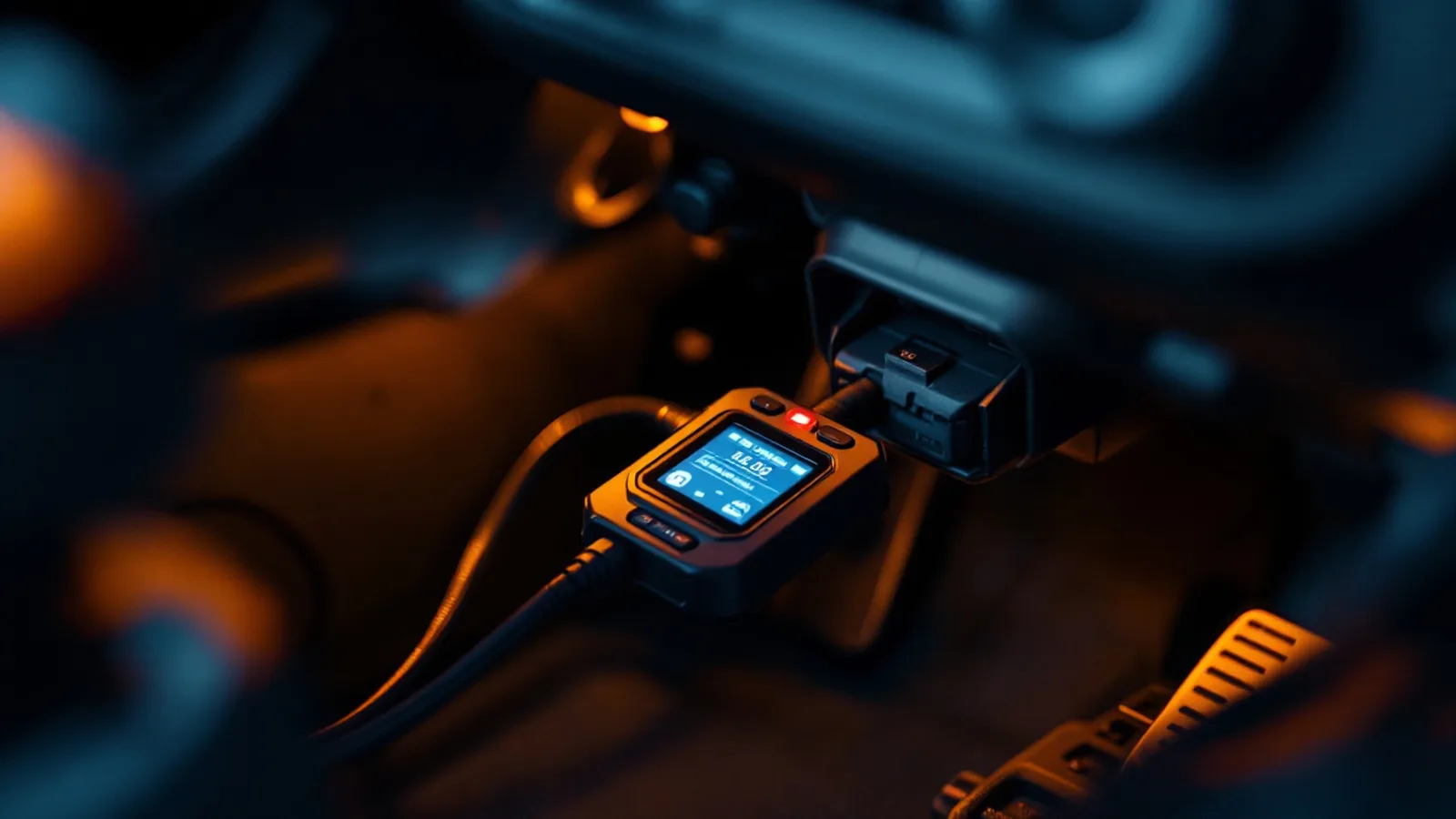
The credential exchange is a live conversation between the key and a security module inside the vehicle, mediated through the diagnostic port and the car's internal network. The vehicle has to be present, powered, and awake. Several manufacturers also enforce a security-access delay — a mandatory waiting period, sometimes ten to thirty minutes and occasionally longer, during which the car verifies that whoever is asking is not brute-forcing it.
Three practical consequences follow.
Nobody can program your key before arriving. Any listing promising a pre-programmed key that will simply work when it lands in your mailbox is selling you a shell. We cover that trap in detail in our comparison of aftermarket and OEM key fobs.
The car's battery matters. A vehicle with marginal voltage can drop off its own network mid-procedure, and interrupting a security write is not a risk any competent technician takes casually. Voltage support is standard practice, not an upsell.
Time on site is real. A ten-minute quote on a car with a thirty-minute security delay is a quote from someone who has never done the job.
Car Key Programming Costs in Dallas
| Key type | How it pairs | What drives the price | Dallas range (2026) |
|---|---|---|---|
| Basic transponder / chip key | Chip in the key head writes to the immobilizer | Blade cutting plus a short pairing session | $120 – $200 |
| Remote head key | Transponder plus rolling-code remote in one unit | Two credentials to sync, one housing | $160 – $280 |
| Flip / switchblade key | Same as remote head, folding blade | Blade and housing cost more; VW group and Chrysler common | $180 – $320 |
| Smart / proximity fob | Passive credential read by in-car antennas | Passive-entry calibration, more antennas to verify | $250 – $500 |
| European smart fob | Manufacturer-specific security module | Deeper access, longer procedures, pricier blanks | $350 – $600+ |
| All keys lost | Rebuild the key list from nothing | Security access, list rebuild, sometimes module work | Add $75 – $250 |
Two things move a job inside its band more than anything else: whether a working key exists, and how new the vehicle is. Everything else is noise by comparison.
By Key Type: What Actually Happens
The transponder key ($120 – $200)
This is the workhorse of the 1998-to-2012 fleet — a plain-looking metal key with a glass or ceramic transponder buried in the plastic head. There is no battery. The vehicle's antenna ring around the ignition cylinder energizes the chip inductively and reads it in the instant before crank.
Programming is usually the shortest procedure in this trade, and the failure mode owners hit most often is a hardware-store copy: correctly cut, mechanically perfect, electronically blank. It turns the cylinder and the car cranks and dies, or refuses to fire at all, with a security lamp on the dash. That is not a broken car. That is an unpaired key.
The remote head key ($160 – $280)
Combine the transponder with a lock-unlock remote in a single molded head and you have the dominant key of the late 2000s. There are now two separate credentials living in one piece of plastic — an immobilizer chip and a rolling-code radio transmitter — and they are paired by different procedures.
That separation explains a symptom people find bizarre: the buttons stopped working but the car still starts, or vice versa. Those are two different systems failing independently. A dead coin cell kills the remote and leaves the transponder untouched, because the transponder never needed a battery in the first place.
The flip key ($180 – $320)
Mechanically a remote head key with a spring-loaded blade. Common across the Volkswagen and Audi range, the Chrysler group, and many Hyundai and Kia models. The premium over a fixed-head key is housing and blade cost, not programming difficulty — though the VW group's component-protection layer on newer platforms adds real work that has nothing to do with the folding hinge.
The smart proximity fob ($250 – $500)
Push-to-start changes the geometry of the problem. Instead of one antenna at the ignition cylinder, the vehicle has several low-frequency antennas distributed around the cabin and door handles, and the fob is read passively while it sits in your pocket. Pairing must be verified at every one of those read zones, not just at the start button.
This is where "programming" and "diagnosis" blur. A car that reads the fob at the start button but not at the door handle is almost always telling you about a weakening coin cell rather than a pairing failure, and a technician who sells you a fob without checking that first is selling you the wrong part. The general triage path is on our no key detected and immobilizer issues page. Luxury Japanese platforms illustrate the pattern well — the Infiniti QX60 and Q50 key replacement walkthrough shows how a proximity job runs on a body-control-module-centric car.
The European smart fob ($350 – $600+)
BMW, Mercedes, Audi, Porsche, Jaguar, Land Rover, and Volvo occupy their own band because their security modules are their own designs, their procedures are longer, and their blank keys cost more before anyone touches a tool. Generation matters enormously here — a BMW's CAS-era car and its FEM-era successor are different jobs with the same badge, which is exactly the distinction drawn in our BMW key fob programming guide. Tesla is its own category again: fob pairing and card replacement are real services, but anything touching account-level credentials requires the owner's own Tesla account, as described in Tesla key fob programming.
How to Tell Real Capability From a Wasted Trip
The gap between shops in this trade is enormous and almost entirely invisible from a search result. Four tells, in order of usefulness.
They ask for the VIN before quoting. A shop that gives you a firm price for "a 2019 SUV" without a VIN is guessing. Key generation, market configuration, and security module all live in that number.
They ask whether a working key exists. This is the single largest cost variable in the entire trade. Anyone who does not ask is not thinking about your job.
They can name the module. A tech who says "your car uses a body control module for key acceptance, so if it will not take a key we may be looking at the module rather than the key" is describing a real diagnostic tree. Vagueness here is diagnostic.
They will say no. The most reliable signal of a capable shop is a willingness to tell you a specific vehicle is out of scope. Everything is possible right up until you need it to actually be true. Our piece on why most locksmiths cannot do smart key programming on site goes deeper on the equipment gap behind that.
The Honest Boundary
The newest vehicles are the hardest. Cars from the last two or three model years carry the most recent authentication layers, and on several European platforms key generation is gated behind manufacturer-side authorization that no independent shop legitimately bypasses. When that is your car, the dealer is the correct answer and we will say so.
A replaced module changes the job. A used security module bought online is usually still bonded to the vehicle it came from. Making it accept your car is module programming, not key programming, and it is priced accordingly.
Proof of ownership is required. Photo ID plus registration or title, checked on site, every time. Creating a credential from nothing is exactly what an immobilizer exists to prevent.
A technician confirms your exact setup from the VIN before anyone is dispatched. No exceptions, and no promises made before that check.
What a Programming Visit Looks Like in Dallas
- VIN and key status by phone. Year, make, model, VIN, whether any key works. Price band and serviceability are established here.
- Ownership check on arrival.
- Battery and voltage sanity. The fob's coin cell and the car's own battery get evaluated before anything is written.
- Cut, if applicable. Blade milled and physically tested in the door lock, not assumed.
- Pair. Credential written to the vehicle's key list, security delay observed where the manufacturer enforces one.
- Verify everything. Start, passive entry at every door, remote lock and unlock, trunk, panic. Then the tech leaves.
We run this daily across Plano, Richardson, Carrollton, and Addison, and a straightforward lost-key job usually starts at car key replacement or, if you still have one working key, at spare car key.
Frequently Asked Questions
Q: How much does car key programming cost near me in Dallas? A: Between $120 and $600+ depending on the key type your vehicle uses. Basic transponder keys run $120 to $200, remote head keys $160 to $280, flip keys $180 to $320, smart proximity fobs $250 to $500, and European smart fobs $350 to $600+. If no working key survives, add roughly $75 to $250 because the vehicle's key list has to be rebuilt from scratch rather than added to.
Q: Can a key be programmed without the car being there? A: No, and nobody can legitimately claim otherwise. Programming is a live exchange between the key and a security module inside the vehicle, conducted through the diagnostic port while the car is powered and awake. Several manufacturers also enforce a mandatory security-access delay of ten to thirty minutes or more during the procedure. A key sold as pre-programmed and shipped to you is an unpaired shell.
Q: I bought a fob online. Can you just program it? A: Sometimes, and it depends entirely on whether the part actually matches your VIN. Frequency, key generation, chip type, and button configuration all have to line up, and a mismatched fob cannot be made to work by any amount of programming. Have the part number verified against your VIN before you buy, because the money spent on the wrong fob is not recoverable.
Q: Why does my key open the doors but not start the car? A: Because the blade was cut but the transponder was never paired to the immobilizer. Mechanical cutting and electronic pairing are two separate operations, and a hardware-store copy only gets the first one. The car recognizes the physical key well enough to turn the cylinder, then refuses to authorize fuel or spark because the credential is not on its accepted list — usually with a security lamp on the dash.
Q: How long does key programming take? A: Usually 20 to 45 minutes on site for a straightforward job with a working key present, and longer when the vehicle enforces a security-access delay or when every key is lost. All-keys-lost recoveries on European platforms can run well past an hour because the security module has to be accessed and the key list rebuilt rather than simply appended to.
Q: Is a dealer better at programming than a mobile locksmith? A: Not better, just different in cost and logistics. The dealer has manufacturer access that matters on the newest and most gated vehicles, and for those cars it is the right call. For the large majority of vehicles on Dallas roads, a properly equipped mobile technician performs the identical pairing at your location, without a tow, typically 40 to 60 percent below the all-in dealer path.
The Bottom Line
Programming is not a mystery and it is not a formality — it is the step that turns a piece of cut metal into something your car will obey. The price you pay is set almost entirely by what kind of credential your vehicle expects and whether it still trusts one. Have your year, make, model, VIN, and an honest answer about whether any key still works, then call (469) 896-4128. Dallas Locksmith Pros runs 24/7 mobile service, quotes flat-rate before dispatch, and will tell you plainly when your vehicle belongs at the dealer instead.
Written by the Dallas Locksmith Pros mobile automotive team, programming keys and modules across the Dallas metroplex 24/7.
Related articles
What It Costs to Program a Key You Already Bought in Dallas (2026)
As of September 2026, programming a fob you supplied costs $75-$250 in Dallas with a working key, $150-$400 without. Full labor table and what we can't program.
Read moreExotic & Ultra-Luxury Car Key Replacement Cost in Dallas (2026)
As of September 2026, an exotic car key in Dallas runs $350-$600+ before module work, and some marques are factory-order only. Here is the real breakdown.
Read moreYour Car Only Starts When You Hold the Fob Against the Start Button (Dallas, 2026)
As of August 2026, this symptom has four causes in Dallas costing $5 to $600+. It is a warning, not a workaround — here is how to tell which one you have.
Read moreNeed a Dallas locksmith right now?
Licensed mobile automotive locksmith. Same-day response across DFW.
Call (469) 896-4128