
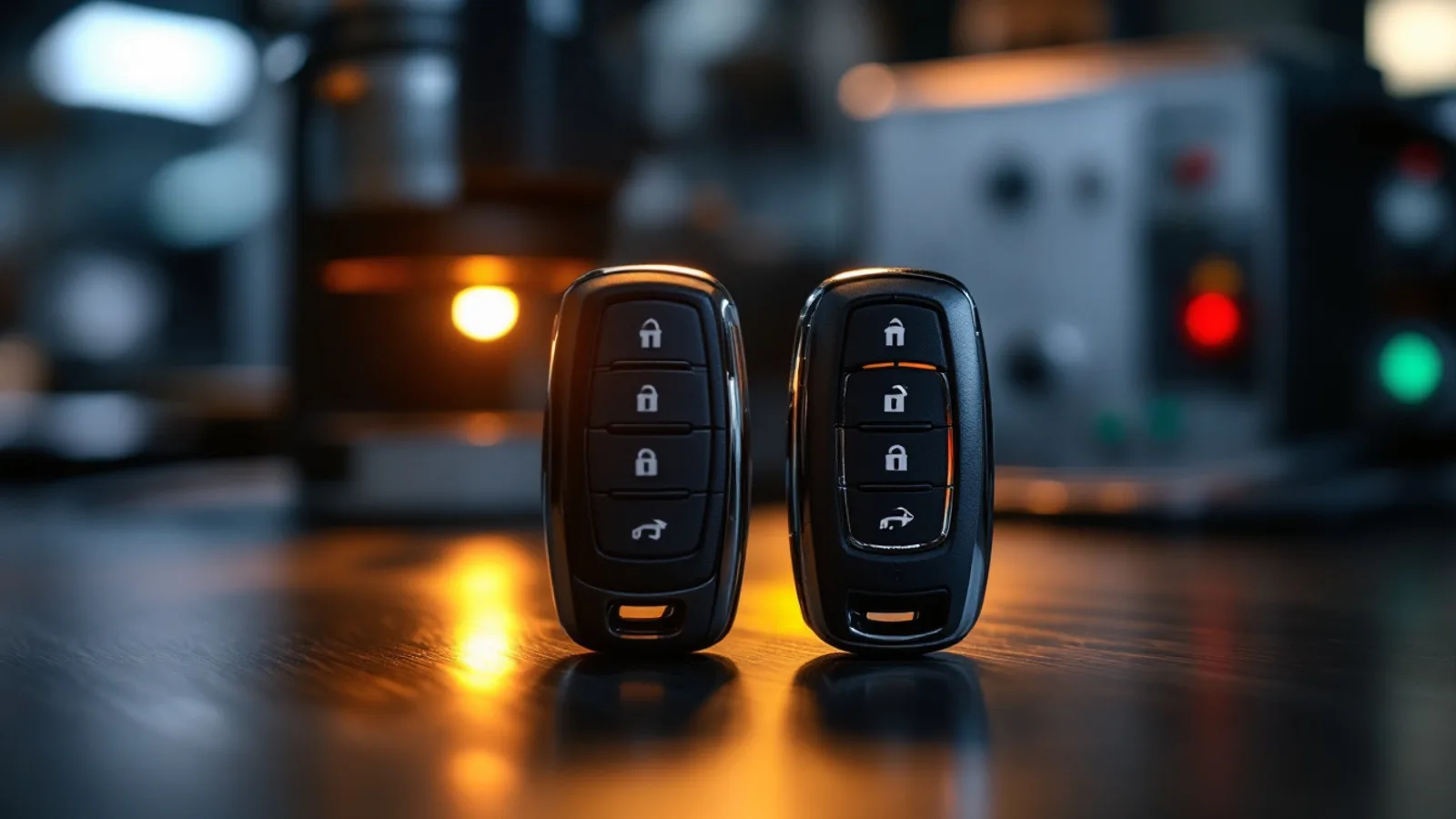
Spare Car Key in Dallas
Add a second key while one still works — cheaper and faster than all-keys-lost.
A spare car key is a second working credential cut and programmed while your original still starts the car. That timing is the whole point: the vehicle already trusts a live key, so enrollment is quick and cheap. Dallas Locksmith Pros makes spare transponder keys, remote fobs and European smart keys on-site across Dallas, before a lost key turns a $150 errand into a towed emergency.
Quick Answer
A spare car key in Dallas runs $120-$200 for a transponder, $250-$500 for a smart proximity fob, and $350-$600+ for European brands — cut and programmed at your location in 20 to 45 minutes. The economy is in the timing: with a working key present the car enrolls the spare quickly, so you avoid the all-keys-lost surcharge of $75-$250 and a possible tow later. Dallas Locksmith Pros quotes an exact price from your VIN before dispatch.
What This Costs in Dallas
Ranges current as of July 2026. Final price depends on year, make, model, and whether a working key exists — confirmed on the phone before dispatch.
| Service | Typical range | What drives it |
|---|---|---|
| Spare transponder key (working key present) | $120-$200 | Cut and enrolled on-site in minutes |
| Spare remote head or flip key | $160-$320 | Adds integrated lock and unlock remote |
| Spare smart proximity fob | $250-$500 | Push-to-start vehicles, enrolled keyless |
| Spare European smart key | $350-$600+ | BMW, Mercedes, Audi, VW, Jaguar, Land Rover |
| All-keys-lost surcharge (avoided by a spare) | +$75-$250 | What you skip by making a spare early |
| Immobilizer relearn if required | $120-$280 | Re-syncing keys after other module work |
Why a Spare Costs a Fraction of All-Keys-Lost
The single biggest lever on car-key cost is whether a working key still exists when we arrive. With one in hand, the immobilizer is already in a trusted state and the new key is simply appended to its memory — a $120-$200 job on most transponder cars. Lose every key and the same vehicle becomes an all-keys-lost job: the security system has to be accessed the hard way and rewritten from nothing, adding a $75-$250 surcharge and often an hour of extra labor. Cutting a spare today is the cheapest insurance in automotive locksmithing, and it removes the tow truck from the equation entirely.
The Working Key Is Doing Half the Work
When you hand us a live key, the car does most of the authentication for us. The existing key proves to the immobilizer that a legitimate owner is present, which puts the module into the programming state where a new transponder can be enrolled in seconds rather than forced open. On push-to-start vehicles the same principle lets a fresh smart fob join the keyless network without a full security reset. That cooperation is exactly what disappears in an all-keys-lost scenario, where nothing on the car trusts anything you plug in, and every step has to be earned through a longer secure procedure. A spare captures that easy path while it is still available.
Which Key Type Your Car Actually Takes
Spare-key pricing follows the credential your vehicle uses, not a flat rate. A basic transponder key hides a chip in the head and runs $120-$200. Remote head and flip keys add integrated lock and unlock buttons at $160-$320. Push-to-start vehicles use a smart proximity fob — the pocket credential the car senses without insertion — at $250-$500. European marques such as BMW, Mercedes, Audi, VW, Jaguar and Land Rover run $350-$600+ because their keys enroll through brand-specific security modules. We identify your exact type from the VIN before quoting, so the price you hear is the price for your car, not a range that balloons on arrival.
The On-Site Process, Start to Verified Start
A spare-key visit is short and done where the car sits. The technician confirms the vehicle against the VIN, cuts a blade to the factory lock code or by decoding the existing key, and enrolls the electronic credential into the immobilizer with the working key present. Then comes the part careless operators skip: verifying that the new key starts the car, that its remote functions work, that the emergency blade opens the door with a dead fob battery, and that your original key still behaves. Sloppy enrollment can orphan the very key you handed over, so a clean start on every key is what ends the visit.
Second Drivers, Families and Small Fleets
The reason to hold more than one key is rarely just loss. A two-driver household needs a key each so a shared car is not a daily negotiation. A teenager, a spouse or a valet needs their own credential. Small vehicle fleets — a few work trucks or a family's cars kept in one driveway — run smoother when every unit has a documented spare rather than a single fob that strands the whole operation when it fails. Programming several vehicles in one visit is cheaper per key than separate call-outs, and it leaves you with a backup for each vehicle instead of a single point of failure.
Proof of Ownership and Why We Ask
Cutting and programming a key gives whoever holds it the ability to start and drive a vehicle, so we only make spare keys for the person who owns the car or is clearly authorized on it. On arrival the technician checks the vehicle against your registration, title or insurance, along with a matching photo ID. It is a quick step that protects you as much as anyone: it keeps a stranger from having a working key to your car cut behind your back. If the vehicle is a company or rental unit, we simply need documentation showing you are authorized to have keys made for it.
When a Spare Is Not the Right Call
A spare is the easy, cheap job — but only when a working key truly exists. If your one remaining fob is intermittent, dying, or throwing a not-detected message, adding a spare on top of a failing key can enroll against an unstable state and leave you with two unreliable keys. In that case the honest move is to diagnose the existing key or its antenna first. Likewise, if the car already has zero working keys, this is not a spare job at all — it is all-keys-lost, priced and scheduled differently. We tell you which situation you are actually in during the phone call, not after arriving.
How Spare Car Key Works, Step by Step
- 1
VIN quote and key type
We identify your exact credential — transponder, remote, smart fob or European smart key — from the VIN by phone and quote a firm price before dispatch.
- 2
Verify ownership on arrival
The technician checks the vehicle against your registration, title or insurance and a matching photo ID, so no stranger can have a working key cut behind your back.
- 3
Cut the spare blade
The blade is cut to the factory lock code or by decoding your existing key while your working original stays trusted by the immobilizer.
- 4
Enroll with the working key present
The new transponder or smart fob is appended to the immobilizer's memory using the live key, the quick trusted-state path that avoids all-keys-lost work.
- 5
Verify every key still starts
We confirm the spare starts the car and its remotes work, the emergency blade opens the door on a dead battery, and your original still behaves.
Where the honest limit is
A spare key depends on a genuinely working original being present; a few of the very newest platform-gated smart keys tie enrollment to a manufacturer online session even with a key in hand, which we flag rather than discover in your driveway. On those cars a spare may still be a dealer-side operation. A technician confirms your exact setup from the VIN before dispatch.
Need This Service?
Same-day mobile service across Dallas & DFW. Call or text us now.
Where the Dealer's Extra Cost Goes
Same programming result — but the dealership path stacks a tow, a bench-time charge, and franchise labor on top. Here is the line-item difference.
| Cost line | At the dealership | Dallas Locksmith Pros |
|---|---|---|
| Tow to the dealership | $120–$250 | $0 — we come to you |
| Diagnostic / bench time | $120–$200 | Included |
| Key or module (part) | Retail markup | Fair, quoted upfront |
| Programming labor | Franchise rate | Included |
| Days without the car | Often 2–5 | Same day |
| All-in, typical | $700–$1,100+ | Usually 40–60% less |
Ranges as of July 2026. Your exact price is confirmed from the year, make, and model before dispatch.
Reviewed by the Dallas Locksmith Pros team
Licensed Texas automotive locksmiths · DPS Private Security #B32279201
Related Services
Specialist Programming Services



































Frequently Asked Questions
A spare runs $120-$200 for a standard transponder key, $160-$320 for a remote or flip key, $250-$500 for a smart proximity fob, and $350-$600+ for European brands. The price covers cutting, programming and a full function test at your location, quoted firm from your VIN before we roll.
Because a working key puts your immobilizer in a trusted state, so the new key is simply added to its memory. With zero keys the security system must be accessed and rewritten from nothing, adding a $75-$250 surcharge plus labor and often a tow — which a spare made in advance avoids completely.
Most spare-key visits finish in 20 to 45 minutes at your location. Transponder and remote keys are quickest; European smart keys and push-to-start fobs sit at the longer end because they enroll through brand-specific security modules. We give you a real time window once the VIN confirms the key type.
No — enrollment adds a key to the immobilizer's list rather than erasing it, so your original keeps working exactly as before. The only exception is when you ask us to disable a lost or stolen key, which we do deliberately during the same visit so the missing key can never start the car.
Yes. With a working fob present we enroll a fresh proximity key into the keyless network on-site, then verify start, passive entry and remote functions before leaving. Smart fobs run $250-$500, or $350-$600+ on European vehicles, because they program through the car's security module rather than a simple chip write.
Yes. We only cut and program keys for the vehicle's owner or someone clearly authorized on it, so the technician checks your registration, title or insurance against a matching photo ID on arrival. It is a fast step that keeps anyone from having a working key to your car made without your knowledge.
Get Expert Help Today
Mobile service across Dallas & DFW. Dealer-level tools. No guesswork.