
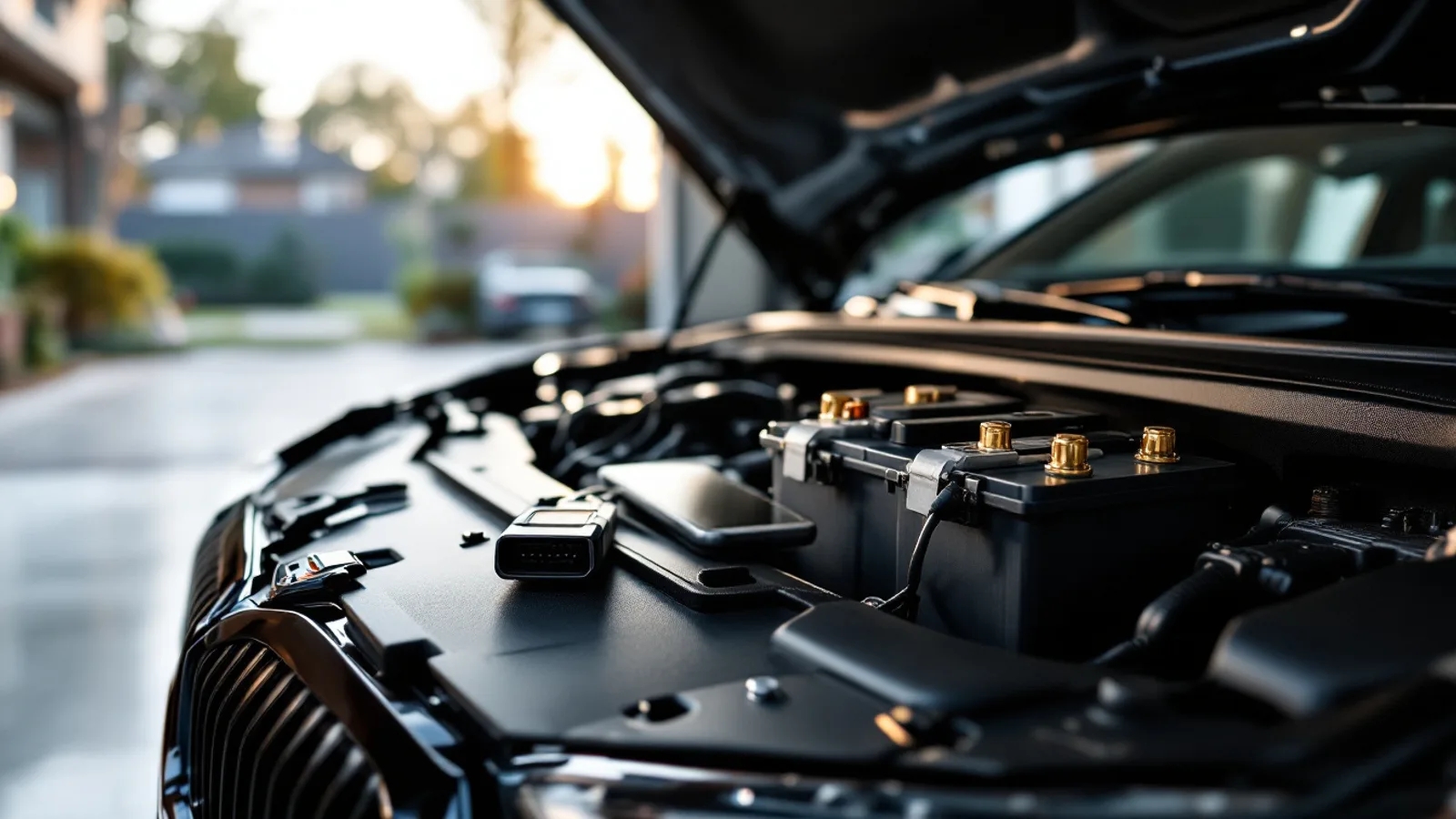
European Car Won't Start After Battery Replacement: Causes and Fixes in Dallas
BMW, Mercedes, Audi or VW won't start after a new battery? Terminals, battery type, module wake-up, steering lock, key relearn. 2026 Dallas costs $40-$600.
Quick Answer
A BMW, Mercedes, Audi, VW, Volvo or MINI that will not start right after a new battery is rarely a bad battery. As of November 2026, the usual causes are a loose or poorly seated terminal, a battery of the wrong type, modules that need time to wake up after power loss, an electronic steering lock that did not release, or a key list that fell out of sync. Do not keep pressing the start button. Check the terminals, let the car sit with the doors locked and unlocked once, and try again. If it still fails, a diagnosis is $40 to $95 in Dallas, a relearn with no new part is $120 to $280, and a steering lock or security module repair typically runs $250 to $600. Call (469) 896-4128.
Why a New Battery Can Make a European Car Worse
Swapping a battery in an older car is a ten-minute job. In a modern European car it is closer to a controlled power cycle of a dozen computers. Each module has a state it was in when the power died. When the new battery goes in, they all wake up at once, some of them not in the order they expect, and each one checks whether the others are present and trustworthy.
Usually that goes fine. When it does not, the symptoms are familiar: the car does nothing when you press start, or says the key is not detected, or flashes a security light, or cranks and refuses to fire. Owners understandably blame the battery they just paid for, or blame the fob. It is often neither.
This guide walks through the causes in order of how often we see them in Dallas, from the quick fixes you can try yourself to the ones that need a technician with the right tools.
Cause by Cause: What We Find
| Cause | What it looks like | Try this first | Typical Dallas cost |
|---|---|---|---|
| Loose or dirty terminal clamp | Dash lights flicker, car clicks or does nothing | Re-seat and tighten both clamps, clean the contact faces | $40 – $95 diagnosis |
| Wrong battery type or undersized battery | Starts then dies, or cranks slowly | Confirm the type fitted matches the original specification | Battery separate, $40 – $95 diagnosis |
| Modules still waking up | Car dead for several minutes, then works | Lock, unlock, wait ten minutes, try again | Free to try |
| Steering lock did not release | Start button does nothing, dash shows a steering message | Check for a steering-related warning, try the backup position | $250 – $600 if the lock module is at fault |
| Key list out of sync | Doors unlock but car will not start, or reverse | Try the second fob, then relearn | $120 – $280 |
| Component protection or immobilizer lock | Security light stays on, engine will not fire | Do not retry repeatedly, call a technician | $120 – $280 relearn, module more |
| Fob failed at the same moment | Nothing responds to the fob | Replace the coin cell, test the second fob | $350 – $600+ for a new fob |
Prices as of November 2026 for the Dallas metro, from the same published bands used on every page of this site. Your VIN decides the exact procedure.
Step 1: Check the Terminals Before Anything Else
The most common real cause is the least interesting one. A terminal clamp that is hand-tight but not fully seated, a clamp with paint or corrosion on the contact face, or a negative cable that was not reconnected fully. The car powers up enough to light the dash, then loses voltage the moment the starter draws current. Modules see the voltage dip and some of them reset or lock out.
Re-seat both clamps, check that the contact faces are clean, and make sure nothing is pinching a cable. Do not overtighten. A good test is to try the headlights while pressing the start button. If the lights dim sharply, you have a connection or capacity problem, not a key problem.
Step 2: Is the Battery the Right One?
European cars are fussy about battery type. Many are fitted with an AGM battery from the factory, particularly cars with stop-start, and swapping in a cheaper flooded battery can cause charging and monitoring problems. A battery that is too small in capacity may crank the engine in daytime and fail on a cold Dallas morning.
If the car came from the factory with AGM, an AGM replacement is the safe choice. If you are not sure, check the label on the old battery or ask the shop that fitted the new one to confirm. A wrong battery will not always stop the car starting on day one, but it can set off warnings and strange behaviour later.
Many BMW and MINI models also expect a new battery to be registered with the car's electronics so the charging strategy matches the battery's age and size. Registration is a coding step. Skipping it does not usually stop the car from starting, but it can cause the battery to be undercharged or overcharged, which shortens its life. Our BMW CAS3, CAS4 and FEM/BDC programming guide describes the modules involved.
Step 3: Give the Car Ten Minutes
After a power loss, some modules take time to restore their state. Close all the doors, lock the car with the fob, unlock it again, and then leave it alone for ten minutes with nothing running. Do not press start repeatedly in that window. Each attempt resets some of the same checks, and repeated attempts can drain a freshly installed battery that has not yet been fully charged.
After ten minutes, get in, close the door, and try once. If the dash wakes up normally and the car starts, nothing was wrong. A surprising number of calls end here.
Step 4: Steering Lock and Start Button
Many Mercedes, some Audi and a number of other European models use an electronic steering lock. If the lock was engaged when the battery was disconnected, and the power returned low or erratic, the lock may not release. The car then looks dead even though the battery is healthy and the fob is fine. The dash may show a steering-related message, or nothing at all.
Do not force the steering wheel. Our Mercedes steering lock ESL fault guide explains the symptom, and our Mercedes no key detected guide covers the closely related message. Steering lock module repair typically runs $250 to $600 depending on the vehicle, and we diagnose before replacing anything.
Step 5: The Key List and the Immobilizer
Every European car keeps a list of keys it trusts. A power interruption at the wrong moment can leave that list or the link between modules out of sync. The symptom is a car that unlocks with the fob but will not start, or a security light that stays lit, or an immobilizer message.
This is the stage at which owners start to worry about an all-keys-lost situation. In most cases it is not. The key is fine, the list is fine, and the car simply needs a relearn, which is $120 to $280 without a new part. Our VW immobilizer active won't start guide shows how this looks on a Volkswagen, and our Volvo key not found guide shows the Volvo version, where a central module relearn is the usual answer.
Repeated start attempts can make this worse on some cars, because some security systems count failed attempts. If the immobilizer light is on and the car will not start, stop and call.
Step 6: The Fob May Have Failed at the Same Time
Coincidence is real. A fob with a fading coin cell may work for months with a weak signal, and the added electrical stress of a battery change may be the moment the car stops noticing it. Try the second fob. If you do not have one, consider that a risk: a car with a single fob is one fault away from an all-keys-lost job at $75 to $250 above the normal fob price, and the dealer route commonly runs $700 to $1,100+ once a tow is included. Our dead key fob battery guide explains how to rule the coin cell in or out. For the MINI version of this question, see our MINI key not detected guide.
When to Stop and Call
Stop if any of these is true: the immobilizer or security light stays lit after a ten-minute wait; the steering wheel will not move and the dash shows a steering message; a second fob also fails; the car starts and immediately dies; or you have already pressed start a dozen times. At that point further attempts can only make the diagnosis harder.
When you call (469) 896-4128, tell us the make, model and year, what the dash shows, whether the battery was replaced by a shop or at home, and whether the car has start-stop. We will tell you what is likely before dispatching and give one flat price. Our no key detected and immobilizer service page describes the process, and the security module programming cost page lists what module work costs if it turns out to be needed.
Where These Calls Come From in Dallas
Battery-related no-starts show up wherever European cars sit. In Addison and Plano they are often home-garage battery swaps that went sideways. In Frisco and Southlake they are commonly cars that sat unused for a few weeks and then failed to start. In Highland Park it is frequently a second car that gets driven rarely. We come to you at any of these in 24 hours, and the price does not change with the zip code.
Frequently Asked Questions
Q: Why will my BMW, Mercedes or Audi not start after I replaced the battery? A: Usually a loose terminal, a wrong-type battery, modules still waking up, a steering lock that did not release, or a key list out of sync. Check the clamps, wait ten minutes with the doors locked and unlocked once, and try one start. If it still fails, a diagnosis is $40 to $95 in Dallas.
Q: Do I need to register a new battery on a European car? A: On many BMW and MINI models, yes, so the charging system matches the battery. Skipping registration rarely stops the car from starting, but it can shorten battery life. Other brands handle it differently, so confirm the procedure for your VIN. Coding the battery is separate from key work.
Q: Is it safe to keep pressing the start button? A: No. Repeated attempts can drain a new battery that is not yet fully charged and, on some cars, trigger immobilizer counters. Try once after a ten-minute wait. If the car does not start and a security light is on, stop and call for a diagnosis rather than trying again.
Q: How much does it cost to fix a no-start after a battery change? A: A diagnosis is $40 to $95. A relearn with no new part is $120 to $280. A steering lock or security module repair typically runs $250 to $600. A new fob, if the fob has failed, is $350 to $600+, and all keys lost adds $75 to $250.
Q: Could the key be the problem rather than the battery? A: Sometimes. A fob with a weak coin cell can fail at the same moment as a battery change. Try the second fob first. If both fail, the fault is in the car. If only one fails, replace its coin cell before assuming it needs a new $350 to $600+ fob.
Q: Will a mobile locksmith come to my home if the car will not start? A: Yes. Our technicians come to your driveway or garage in Dallas and the surrounding suburbs, 24 hours a day. We test the battery, read the modules and relearn the key list on site, so the car does not need a tow to a dealer, where the same work typically runs $700 to $1,100+.
The Bottom Line
A European car that will not start after a battery change is rarely a bad battery or a dead key. Check the terminals, make sure the battery is the right type, give the modules ten minutes, and try once. If it still refuses, the answer is usually a $120 to $280 relearn or a $250 to $600 steering lock or module repair, not a new car.
Call (469) 896-4128 and we will tell you what we suspect before we come, and give one flat price.
Related articles
European Key Fob Still Dead After a New Battery: Causes and Fixes in Dallas
New battery but your BMW, Mercedes, Audi or VW key fob is still dead? Wrong cell, contacts, lost pairing or damage. 2026 Dallas diagnosis $40-$95.
Read moreDealer vs. Mobile Locksmith for European Car Keys in Dallas
2026 Dallas comparison: dealer vs mobile locksmith for BMW, Mercedes, Audi, Porsche keys. $350-$600 mobile vs $700-$1,100 dealer, tow costs, and queues.
Read moreDealer-Level Diagnostic Equipment for Car Keys in Arlington, TX: What It Buys You
As of August 2026, dealer-level equipment is what makes Mercedes, BMW, and Volvo keys possible curbside in Arlington. What it does, and what it still cannot.
Read moreNeed a Dallas locksmith right now?
Licensed mobile automotive locksmith. Same-day response across DFW.
Call (469) 896-4128