
Lexus RX and ES No-Start in Dallas: Immobilizer Fault, Key Detection, or Just a Flat Battery?
As of August 2026, most Lexus RX and ES no-start calls in Dallas are not immobilizer failures. The correct triage order, and what diagnosis costs.
Four Different Faults, One Sentence on the Phone
"My Lexus won't start" is the least useful sentence in this trade, and Lexus owners say it more precisely than most — which is exactly the problem. A Lexus RX or ES that refuses to go is usually one of four unrelated failures, and three of them have nothing to do with the key. Guessing wrong costs you a fob you did not need, or a tow you could have avoided, or both.
As of August 2026, a genuine Lexus smart key replacement in Dallas runs $250 to $500 programmed on site, with all-keys-lost adding $75 to $250 on top. But the honest starting point for most of these calls is diagnosis, not a purchase, because a meaningful share of "immobilizer" complaints on the RX and ES resolve without a new key at all. This article is the triage order we actually follow, in the order we actually follow it. If you are reading it from a parking lot right now, call (469) 896-4128 and we will run the first two steps with you over the phone before anyone charges anything.
Quick Answer
Most Lexus RX and ES no-start calls trace to one of four causes: a flat 12-volt vehicle battery, a dead coin cell in the smart key, a smart-key detection failure at the antennas, or an actual immobilizer or Smart Key ECU fault. Diagnosis runs $120 to $280 and frequently ends the visit right there. If a key genuinely is required, a Lexus smart fob is $250 to $500 programmed on site, plus $75 to $250 when every key is gone. A dealer path commonly lands at $700 to $1,100+ once towing and programming labor are included.
Lexus Diagnosis and Key Costs in Dallas (2026)
| What you actually need | Typical scenario | Dallas price range (2026) |
|---|---|---|
| Immobilizer and smart-key diagnosis | No-start, key-not-detected, security light | $120 – $280 |
| Smart key replacement, programmed on-site | RX, ES, IS, NX, GX 460, LS, UX | $250 – $500 |
| Remote head / transponder key | Older blade-key models such as the GX 470 | $160 – $280 |
| All keys lost (add-on) | Any Lexus, serviceable VIN | +$75 – $250 |
| Coin cell replacement and detection test | Fob works only at the start button | Often resolved during diagnosis |
| Lockout, keys visible inside | Any model | $85 – $200 day / $125 – $275 after-hours |
| Dealer path, all-in | Any model | Commonly $700 – $1,100+ |
Notice what the top row is doing. On a make as reliable as this one, selling a key before diagnosis is how shops make money on cars that did not need parts.
What "Cranks But Won't Start" Actually Means on a Smart-Key Lexus
Precision matters here, so start by separating two very different symptoms that owners describe with the same words.
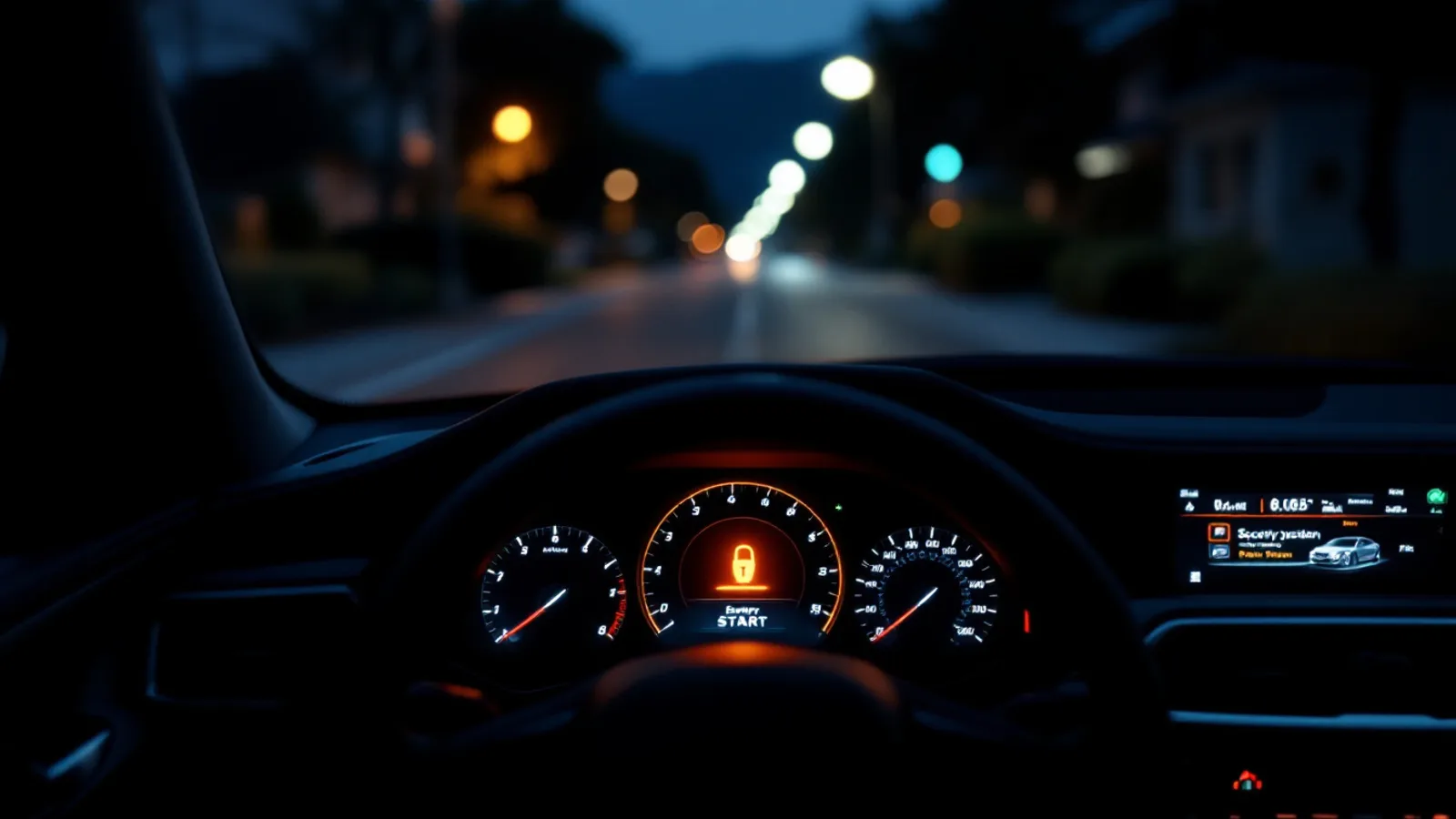
The engine turns over and never fires. The starter is spinning, you can hear it, and the engine refuses to catch. On a smart-key Lexus this is a genuine authorization failure or an engine-side problem — the car has decided you may crank but not run. Look at the dash: a security indicator that flashes or stays lit during the attempt is the immobilizer telling you it rejected the credential.
Nothing happens when you press the start button. No crank, no click, possibly a "key not detected" message. This is not an immobilizer rejection at all. This is a detection failure — the car cannot find a key to evaluate — or a low-voltage condition, or a brake-pedal or shift-position interlock that has not been satisfied.
Those two symptoms send a technician in opposite directions. If you can tell us which one you have before we arrive, we save you time and you save money.
The Triage Order We Actually Use
1. The 12-volt battery, every single time
A weak or flat vehicle battery is the single most common cause of dramatic-looking electronic misbehavior on an RX or ES. Below a certain voltage the car will do genuinely strange things: refuse to detect a perfectly healthy key, throw messages that read like module faults, click at the start button, or start once and then refuse for a week. A dead battery is also the reason a car that "was fine three weeks ago" is unresponsive today.
If your Lexus has been parked at a Richardson office lot through a long stretch of Dallas summer, or sat while you traveled, this is the first thing to rule out and it is free to check.
2. The fob's coin cell — and the near-field backup nobody knows about
A fading fob battery kills long-range detection well before it kills short-range detection. The pattern is diagnostic in itself: the car ignores you at the door handle but starts once you are seated with the fob nearby. That is a coin cell, not an immobilizer.
Every modern Lexus also has a designed-in way home. Hold the fob physically against the start button and press. The car reads the transponder at very close range through a dedicated antenna, and it will start with a completely dead fob battery. If that works, you have proven the key is fine and the battery is not. We wrote up this exact scenario across makes in our guide to a dead key fob battery and no-start, and on Lexus it resolves more calls than any other single test.
3. Detection failure versus immobilizer rejection
If the vehicle battery is healthy and the fob is fresh and the car still will not acknowledge the key, we move to the antenna network. A Lexus smart key system uses multiple antennas — in the doors, the cabin, the trunk area — to establish where the key is before deciding what to permit. Antennas and their wiring fail individually, which produces the maddening pattern of a car that responds at one door and not another, or works from inside but not outside.
This is genuinely different from immobilizer rejection, where the car knows there is a key and has decided it is not an authorized one. Our no key detected and immobilizer issues page covers the full decision tree.
4. Smart Key ECU and Certification ECU
Only here, at step four, does the conversation become a module conversation. Lexus routes authorization through a Smart Key ECU and a Certification ECU, with the engine controller holding the final veto on whether fuel and spark are permitted. When one of those modules is at fault, factory-level access is what reads it, and that is what the diagnosis charge covers. It is also the point at which the job may become module programming and repair rather than key work.
For contrast — and it is a useful contrast — other manufacturers put the immobilizer somewhere else entirely. Ford hosts its PATS key data in the powertrain module, which is why a Ford PATS module programming and PCM relearn job looks nothing like a Lexus one despite producing an identical symptom in the driver's seat. Where the key list lives determines the entire repair path.
Common RX and ES Patterns We See
RX: the family SUV that sat for two weeks
The RX has been proximity-smart-key throughout its recent generations, and it is the Lexus we are called to most. The dominant Dallas pattern is not a failure at all — it is a vehicle that sat long enough for a marginal battery to go flat, in a garage in Plano or a driveway in Garland, and now behaves as though its electronics have come apart. Restore voltage and the "immobilizer fault" evaporates.
The second RX pattern is the household with two drivers and one working fob, where the second key died months ago and nobody mentioned it. That car is one bad afternoon from an all-keys-lost bill.
ES: the sedan with a dash message and a healthy engine
The ES has been smart-key equipped since the generation that arrived in the late 2000s. The typical ES call is a key-not-detected message on a car that is otherwise perfect, and the resolution split is roughly: coin cell, vehicle battery, antenna, module — in that frequency order. Owners are consistently surprised that the cheapest cause is also the most likely one.
The GX and older blade-key cars: a different animal
Not every Lexus is push-button. The GX 470 era ran a conventional transponder blade key through an ignition cylinder, and on those cars a no-start can also be mechanical — a worn cylinder, a key that no longer turns cleanly. That is a different repair on a different price scale, and it is worth naming so owners of older models do not follow a smart-key triage path that does not apply to them.
Any model: the aftermarket remote starter nobody disclosed
Add-on remote start and alarm systems interpose themselves in the starting circuit. When one begins to fail, it produces symptoms that mimic a factory immobilizer fault very convincingly. If your Lexus has aftermarket electronics, tell us before we arrive — it changes where we look first.
What This Is Not
It is not usually a key that "went bad." Smart keys do fail, but far less often than owners assume, and almost never simultaneously across two fobs. If both of your keys stopped working on the same day, the car is the problem, not the keys.
It is not usually the immobilizer. The Toyota-derived security architecture underneath a Lexus is genuinely robust. Treat an actual Smart Key ECU failure as the least likely explanation until the first three steps are exhausted.
A no-start is not automatically a locksmith call at all. If the engine cranks strongly and never fires and no security indicator is showing, you may be looking at a fuel or ignition problem that belongs to a mechanic. We will tell you that rather than sell you a key, and telling you costs you nothing.
The Honest Boundary
Lexus models through the early 2020s are routine on-site work, including all-keys-lost, because factory-level access reaches the Smart Key and Certification ECUs cleanly. The newest smart-code platforms tighten security access year over year, and an all-keys-lost job on a current-model-year Lexus can carry an additional authorization step that we would far rather confirm on the phone than discover in your driveway.
So: a technician confirms your exact setup from the VIN before anyone is dispatched. Model, year, key generation, and whether a working key still exists all move the answer.
Proof of ownership is required for key work and verified at the vehicle — photo ID plus registration or title. And one non-negotiable: if a child or a pet is locked inside a vehicle, call 911 first and us second. Nothing about a key is worth that risk.
What a Dallas Lexus Visit Looks Like
- Phone triage. Which symptom you have — crank-no-fire versus no-response — plus model, year, and VIN.
- Voltage first. Vehicle battery tested before anything else is touched.
- Fob testing, including the near-field start-button method to prove whether the transponder is alive.
- Antenna and detection behavior mapped at each door and inside the cabin.
- Module-level diagnosis only if the first three steps clear, using factory-level access to the Smart Key and Certification ECUs.
- Key work only if a key is actually the fault — cut, programmed, verified, with the emergency blade tested in the driver's lock and lost credentials invalidated on an all-keys-lost job.
We run this service across Plano, Richardson, Garland, and Mesquite, plus the rest of the metroplex 24/7. Programming specifics live on our Lexus smart key programming page, the shared Toyota-family security architecture on Toyota ECU and immobilizer programming, the full model list on the Lexus brand page, and straightforward remote work on key fob programming. If your complaint is specifically that the button does nothing, start with our push-button start not working walkthrough.
Frequently Asked Questions
Q: My Lexus RX cranks but will not start. Is that the immobilizer? A: Possibly, and the dash tells you. If a security indicator flashes or stays lit while the engine is turning over, the immobilizer has rejected the key credential and the car is permitting a crank but blocking fuel or spark. If no security light appears and the engine simply will not catch, you are more likely looking at a fuel or ignition problem that belongs to a mechanic rather than a locksmith.
Q: Why does my Lexus start only when I hold the fob against the start button? A: That is the designed-in backup working exactly as intended, and it means your fob's coin cell is dead or nearly dead. The car reads the key's transponder at very close range through a dedicated antenna at the start button, so a fob with no radio power still authorizes a start when physically touched to it. Replace the coin cell and normal proximity detection should return immediately.
Q: How much does Lexus key replacement cost in Dallas in 2026? A: A Lexus smart key runs $250 to $500 programmed on-site depending on model and generation, and all-keys-lost adds roughly $75 to $250 because the immobilizer has to accept a key it has never seen. Older blade-key models such as the GX 470 take a remote head key at $160 to $280 instead. A dealer commonly lands at $700 to $1,100+ once towing and shop labor are included.
Q: Both of my Lexus keys stopped working on the same day. What does that mean? A: Almost certainly that the car is at fault rather than the keys, because two independent fobs do not fail simultaneously by coincidence. The most common explanation by a wide margin is a flat or failing 12-volt vehicle battery, which can suppress key detection entirely. After that, the suspects are the antenna network and the Smart Key ECU, in that order.
Q: Does a dead 12-volt battery really cause key-not-detected messages? A: Yes, and it is the most under-diagnosed cause we see on the RX and ES. Below a certain voltage the smart-key system cannot reliably power its antennas or complete the authentication handshake, so a perfectly healthy fob gets ignored and the dash reports a key fault. Restoring proper voltage clears the symptom completely, with no programming and no new key required.
Q: Do I need a tow to the dealer for a Lexus all-keys-lost? A: Usually no. On Lexus models through the early 2020s the immobilizer reset and new key registration are performed at your location with factory-level access, so the car never moves. The newest model years can carry an extra authorization step, which is why we confirm feasibility from the VIN before dispatching rather than discovering it after your car is already on a flatbed.
The Bottom Line
The most valuable thing a Lexus owner can hear is that the expensive answer is also the least likely one. Battery, coin cell, antenna, module — that is the order, and the first two account for a large share of the calls we take on the RX and ES. Diagnosis at $120 to $280 frequently ends the visit without a key being sold at all, and when a key genuinely is the fault, a smart fob at $250 to $500 programmed in your driveway beats a tow and a dealer appointment by a wide margin. Tell us which symptom you have and call (469) 896-4128. Dallas Locksmith Pros is mobile 24/7 and diagnoses before it sells.
Written by the Dallas Locksmith Pros mobile automotive team, serving Lexus owners across Dallas and the eastern suburbs 24/7.
Related articles
Push-Button Start Not Working in Dallas? 2026 Fix Guide
2026 Dallas guide: why push-button start won't work. Most fixes are cheap (dead fob battery); a new smart fob runs $250-$500. Backup-start trick inside.
Read moreAnti-Theft Light Flashing and the Car Won't Start in Dallas: A Diagnosis Guide
As of August 2026, a flashing security light with a no-start in Dallas is an immobilizer authentication failure. Diagnosis $40-$95, relearn $120-$280.
Read moreYour Car Only Starts When You Hold the Fob Against the Start Button (Dallas, 2026)
As of August 2026, this symptom has four causes in Dallas costing $5 to $600+. It is a warning, not a workaround — here is how to tell which one you have.
Read moreNeed a Dallas locksmith right now?
Licensed mobile automotive locksmith. Same-day response across DFW.
Call (469) 896-4128