
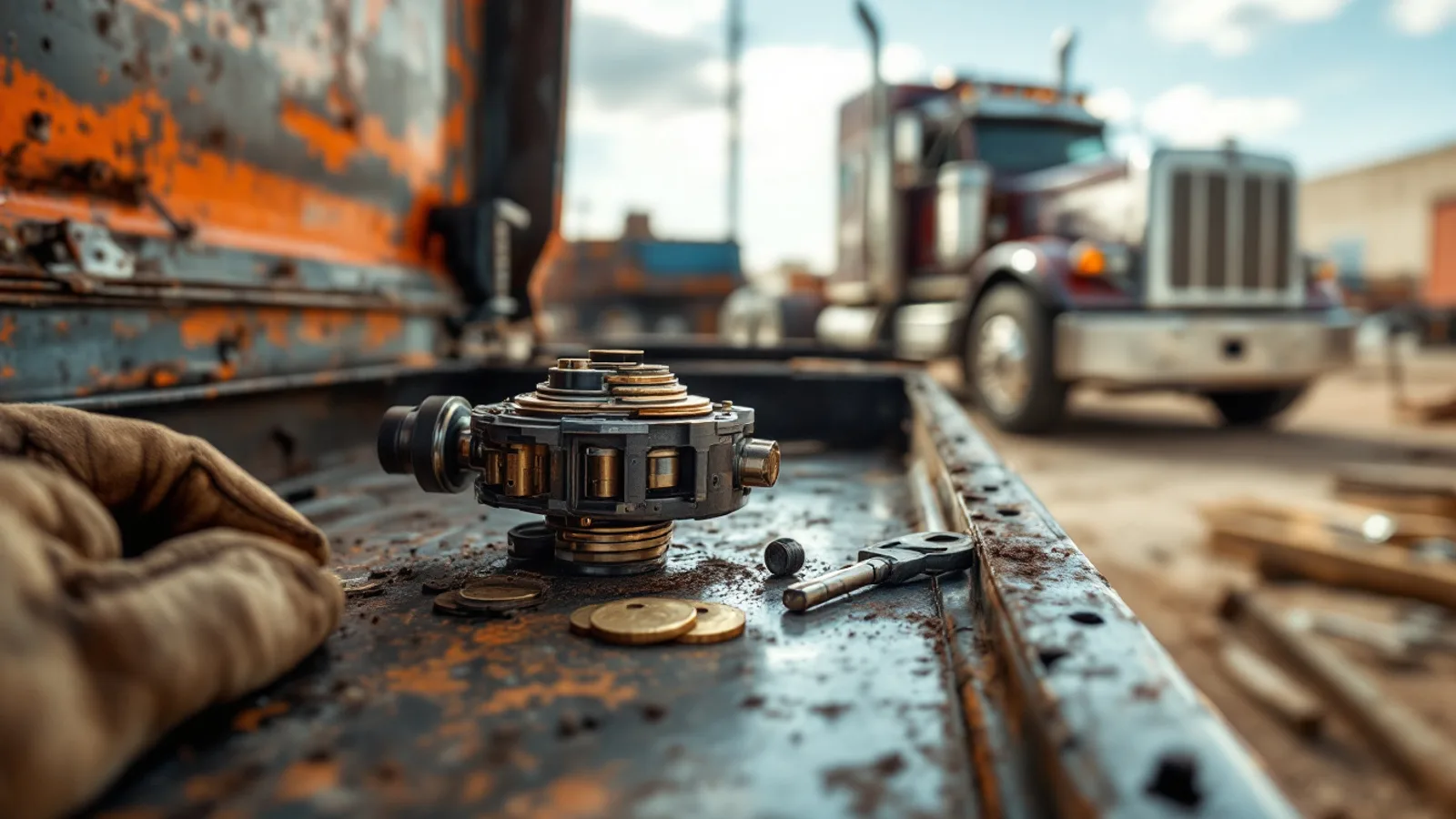
Ram 1500 & 2500 Ignition Repair in Dallas: Worn Wafers, Dead Switch, or a WIN Fault
As of August 2026, Ram 1500 and 2500 ignition repair in Dallas runs $250-$350 — but only after you know whether it is the cylinder, the switch, or the WIN.
Three Different Failures, One Symptom, Wildly Different Bills
A Ram that will not start when you turn the key is describing one of three completely separate problems, and the fastest way to overpay is to guess which one.
A worn lock cylinder is a mechanical failure — brass wafers rounded off by years of turning. A failed electrical ignition switch is the part behind the cylinder that actually sends power to accessory, run and crank. And on keyless-enter-n-go trucks, a wireless ignition node fault is neither of those: it is a module that combines the receiver and the ignition into one assembly, and it fails in ways that look exactly like a bad cylinder while having nothing to do with metal.
As of August 2026, ignition repair or replacement on a Ram 1500 or 2500 in Dallas is $250 to $350 once you know which of the three you have. Diagnosing that correctly before buying parts is the entire value of the phone call. Call (469) 896-4128 and we will tell you which tests to run in your own driveway in about ninety seconds.
Quick Answer
Ram 1500 and 2500 ignition repair or replacement runs $250 to $350 in Dallas, done at your location. Which repair you need is decided by two questions: does the key physically turn, and do the electrical positions change when it does. A key that turns hard or not at all points at a worn cylinder; a key that turns freely with nothing happening electrically points at the switch; a keyless truck that will not recognize a fob or release the key points at the wireless ignition node. Each is a different part and a different procedure.
Ram Ignition & Key Pricing in Dallas (2026)
| Job | What it covers | Dallas price range (2026) |
|---|---|---|
| Ignition repair or replacement | Worn cylinder rebuilt or replaced, keyed to your existing key where possible | $250 – $350 |
| Electrical ignition switch | The switch assembly behind the cylinder | $250 – $350 |
| Wireless ignition node work | Keyless-enter-n-go trucks, module-based ignition | Quoted from the VIN after diagnosis |
| Remote head key | Bladed key with integrated remote, cut and programmed | $160 – $280 |
| Smart proximity fob | Keyless-enter-n-go trucks | $250 – $500 |
| All keys lost | Recovery add-on when no working key exists | add $75 – $250 |
| Immobilizer relearn, no new key | Existing keys re-paired after module work | $120 – $280 |
| Truck lockout entry | Non-destructive only — no drilling, no broken glass | $85 – $200 day / $125 – $275 after-hours |
Telling the Three Apart Before You Pay for the Wrong One
Failure one: the worn lock cylinder
What you feel: the key goes in but resists turning. It needs wiggling, lifting, or a particular angle. It works with one key and not the other. Eventually it stops turning at all, or it turns and then will not come back to the off position.
What is happening: the cylinder contains spring-loaded brass wafers that read the cuts on your key. Both the wafers and the key wear with every cycle. As tolerances open up, the wafers no longer align cleanly with the shear line, and the plug binds. This is pure mechanics — no electronics are involved and no module is confused.
The tell: the failure is tactile and gradual. It got worse over months. It responds to how you hold the key. A brand-new cut key from your key code often works noticeably better than the worn one in your pocket, which is diagnostic in itself.
The fix: rebuild or replace the cylinder, ideally keyed to your existing key so you do not end up carrying two keys for one truck. $250 to $350.
Failure two: the electrical ignition switch
What you feel: the key turns smoothly through every detent and nothing responds. Or the dash lights come on at run but the truck will not crank. Or accessories cut out over a bump. Or the truck dies while driving and restarts if you jiggle the key.
What is happening: behind the mechanical cylinder sits an electrical switch with contacts for accessory, run and start. Contacts burn, wear and lose tension — especially on a truck that gets started fifteen times a day. The cylinder is doing its job perfectly; the thing it is rotating no longer makes reliable contact.
The tell: the failure is electrical and abrupt. Turning is smooth. The problem is what does — or does not — wake up. Intermittent stalling while driving is the signature that points hardest here, and it is also the one nobody should defer.
The fix: replace the switch assembly. $250 to $350.
Failure three: the wireless ignition node
What you feel: "key not detected" on a keyless truck. The key will not come out of the slot. The push-button start does nothing while the truck otherwise has power. Or everything works fine one morning and not the next, with no mechanical warning at all.
What is happening: on keyless-enter-n-go Rams, the WIN combines the receiver that authenticates your credential with the ignition function itself. When it faults, the truck stops recognizing keys that are perfectly healthy — and because the module is also the ignition, it can physically refuse to release a key. It is the same module family we cover on the car side in our Dodge Charger and Challenger WIN module programming guide, and it fails the same way in a truck.
The tell: the failure is credential-shaped. It is about recognition, not resistance. Nothing feels worn. The truck simply stops believing you.
The fix: module-level work, quoted from the VIN. This is where a locksmith with real module capability differs from a shop that only cuts keys — the same capability behind module programming and repair and the deeper controller-level access described on our Dodge and Chrysler GPEC unlocking page.
The two-question triage
Ask these before anyone touches the truck:
- Does the key turn smoothly? No → cylinder. Yes → keep going.
- Do the electrical positions change when it turns? No → switch. Yes, but the truck says it does not see a key → node or immobilizer.
That is the whole diagnostic tree for ninety percent of these calls, and it costs nothing to run yourself before you dial anyone. Owners in Garland and Mesquite do it on speakerphone with us regularly.
Why Work Trucks Eat Ignitions
The Ram 1500 and 2500 do not fail more often because they are built worse. They fail more often because of how they are used.
Cycle count. A commuter car gets started twice a day. A service truck in Grand Prairie gets started at the yard, at the supply house, at three job sites, at lunch, and again on the way home. That is five to ten times the mechanical duty cycle, compressed into the same calendar years. Wafers wear by cycles, not by odometer.
Keyring mass. This is the single most preventable cause on the list. A ring loaded with jobsite keys, padlock keys, a fob, a bottle opener and a tape measure clip hangs off the cylinder plug and applies constant off-axis load every time the truck moves. Over years it accelerates wear dramatically and can damage the switch behind it. Take the truck key off the big ring. It is free and it works.
Grit. Construction dust, caliche and North Texas summer are an abrasive package. Particulate migrates into the cylinder and grinds the wafers with every turn.
Heat. A cab that sits at brutal interior temperatures all summer is hard on lubricant, hard on plastics and hard on electrical contacts.
Shared use. A truck driven by four employees with three copies of a worn key accumulates wear faster and hides it longer, because everybody quietly develops their own trick for making it turn.
Key Stuck in the Ignition
Two different mechanisms produce a stuck key on these trucks and they are worth separating.
On a conventional keyed Ram, a key that will not come out is usually a cylinder that cannot return fully to the off/lock position — worn wafers again — or a shifter interlock issue where the truck is not fully registering park. On a keyless truck, a key that will not release is typically a node fault.
Either way, do not force it. A snapped key inside a cylinder converts a $250 to $350 repair into a broken-key extraction plus a repair. The full symptom breakdown is in our key stuck in ignition guide.
When the Cluster Enters the Conversation
On a number of FCA vehicles, the instrument cluster is not a passive gauge pack — it participates in the vehicle's security and configuration conversation, holds vehicle data, and has to be programmed and configured when it is replaced or when related module work is done. That is why an ignition job on a truck occasionally turns into a broader configuration conversation rather than a straight parts swap.
It is also why we ask about symptom history that seems unrelated: a cluster that goes dark, mileage that reads wrong, or warning lights that arrived alongside the ignition trouble are all worth mentioning on the phone. That capability lives on our instrument cluster programming page, and knowing whether it applies to your truck comes from the VIN, not from guessing.
The Repair, Step by Step
- Phone triage with the VIN and the two-question tree. Model year, keyed or keyless, and exactly what the key does. Before a truck moves.
- Non-destructive entry if the vehicle is also locked. No drilled cylinders, no broken glass, no damaged trim.
- Voltage check first. A weak battery or a bad ground imitates a switch fault convincingly, and nothing gets diagnosed on bad power.
- Mechanical test. Cylinder feel through every detent, with a freshly cut key where the existing key is visibly worn.
- Electrical test. Do accessory, run and crank actually do what they claim at each position.
- Credential test on keyless trucks. Is the truck receiving and accepting the fob at all, or is it the ignition function that has failed.
- The correct repair, on site, keyed to your existing key where the platform allows it, with every position verified and a repeatable live start — not one lucky crank.
Most of this happens in a driveway or a jobsite lot. We work across Irving, Rockwall and the rest of the metroplex, and the broader capability is on our ignition repair page. If your Ram problem turns out to be a key rather than an ignition, the related FCA platform work is covered in our Jeep Grand Cherokee and Wrangler key replacement guide, and the truck-by-truck breakdown is on the Ram brand page.
The Honest Boundary
A cylinder can usually be keyed to your existing key. Not always. Where the platform or the parts availability does not allow it, you end up with a new key for the ignition, and we tell you that before we start rather than after.
Wireless ignition node work is quoted from the VIN. Some model years are straightforward for a properly equipped independent. Some require a manufacturer credential no aftermarket tool legitimately provides. We check before dispatch so nobody bills you for a discovery.
A no-crank is not automatically an ignition problem. Starters, batteries, grounds, neutral safety switches and transmission range sensors all produce a truck that will not crank. We test rather than assume, and if the answer is a starter we say so — that is a mechanic's job, not ours.
Proof of ownership is mandatory on any job that creates a working credential from nothing, which is the premise behind NHTSA's vehicle theft-prevention guidance. Dallas Locksmith Pros operates under the Texas DPS Private Security Program.
Frequently Asked Questions
Q: How much is Ram 1500 or 2500 ignition repair in Dallas? A: Ignition repair or replacement runs $250 to $350, done at your location. That range covers rebuilding or replacing a worn lock cylinder or replacing the electrical ignition switch behind it. Wireless ignition node work on keyless-enter-n-go trucks is module-level and gets quoted from the VIN after diagnosis, because model year determines what access the job actually requires.
Q: How do I know if it is the cylinder or the switch? A: Two questions answer it. If the key resists turning, needs wiggling, or works better with one key than another, the lock cylinder is worn. If the key turns smoothly through every detent but the truck does nothing electrically, or stalls and restarts when you jiggle it, the electrical switch behind the cylinder is failing. Mechanical resistance means cylinder, electrical silence means switch.
Q: Will a new ignition mean carrying a second key? A: Usually no. On most Ram applications the replacement cylinder can be keyed to your existing key so one key still runs the doors and the ignition. Where parts availability or the specific platform does not allow it, you end up with a separate ignition key, and we tell you that up front rather than handing you a surprise at the end of the job.
Q: My key will not come out of the ignition. Is that the ignition switch? A: Usually it is the lock cylinder failing to return fully to the off position, or on keyless-enter-n-go trucks a wireless ignition node fault refusing to release the key. Do not force it, because snapping a key inside a cylinder turns a $250 to $350 repair into an extraction plus a repair. A shifter interlock issue where the truck does not register park can also cause it and is worth checking first.
Q: Why do work trucks go through ignitions faster? A: Cycle count and keyring mass. A service truck gets started five to ten times more often per day than a commuter car, and wafers wear by cycles rather than by miles. A heavy keyring hanging off the cylinder applies constant off-axis load every time the truck moves, which accelerates that wear substantially. Taking the truck key off the big ring costs nothing and measurably extends cylinder life.
Q: Can this be done at a jobsite instead of a shop? A: Yes. Ignition work on these trucks is done at your location, whether that is a driveway, a yard or a jobsite lot, because the repair is mechanical and diagnostic rather than something requiring a lift. The only jobs that push toward a dealer are specific model years where module-level work requires a manufacturer credential, and we identify that from the VIN on the phone before anyone is dispatched.
The Bottom Line
Three failures wear the same mask on a Ram: a worn cylinder, a dead switch, and a node that stopped believing your key. Two questions in your own driveway separate them, and the repair is $250 to $350 once you know which one you have. If your key has been getting harder to turn for months, that is the cheap version of this problem and it is telling you now. Have the VIN and model year ready and call (469) 896-4128. Dallas Locksmith Pros answers 24/7 and quotes flat-rate before dispatch.
Written by the Dallas Locksmith Pros mobile automotive team, serving Ram owners across Dallas and the surrounding metroplex 24/7.
Related articles
GMC Sierra & Yukon Ignition Repair in Dallas: Three Failures Wearing One Symptom
As of August 2026, GMC ignition system repair in Dallas runs $250-$350, cylinder replacement $180-$400. Often the cheapest fix is the worn key.
Read moreVolkswagen Passat & Golf Ignition Repair in Dallas: Two Faults Owners Keep Confusing
As of August 2026, VW ignition repair in Dallas runs $250-$350 to re-pin a cylinder. A cluster-hosted immobilizer fault is a different job entirely.
Read moreNissan Titan & Frontier Ignition Repair in Dallas: Cylinder Wear vs the Steering Lock
As of August 2026, Nissan Titan and Frontier ignition repair in Dallas is $250-$350 — after separating a worn cylinder from an electronic steering lock fault.
Read moreNeed a Dallas locksmith right now?
Licensed mobile automotive locksmith. Same-day response across DFW.
Call (469) 896-4128