
Texas Summer Heat & Car Key Fob Failures in Dallas (2026)
2026 Dallas guide: how Texas summer heat kills key-fob batteries and triggers no-start 'no key detected' events — plus dead-battery, lockout, and fob costs.
Why Dallas Summers Are Hard on Key Fobs
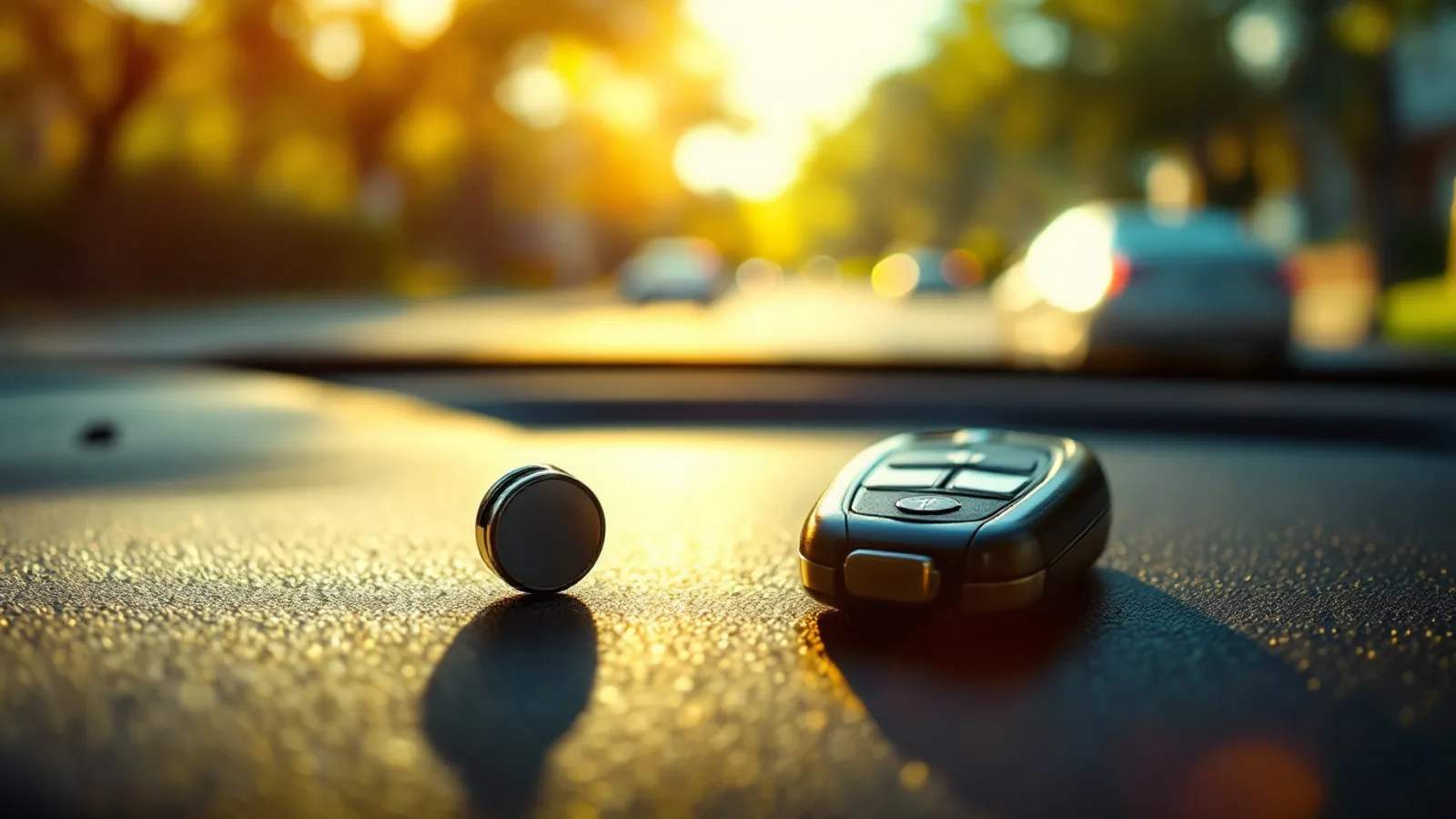
As of July 2026, if your key fob is going to fail, a Dallas summer is when it will happen. Triple-digit afternoons, dashboards that bake past 150 degrees behind glass, and fobs that live in a hot pocket or a sun-struck cupholder all add up to the same result: the little CR2032 coin cell inside gives out faster than it would anywhere cooler, and the failure tends to show up at the worst moment — at the gas pump, in a parking lot, or in a driveway with somewhere to be.
Heat does not just drain fob batteries; it can also disrupt the delicate radio handshake between the fob and your car, producing intermittent "no key detected" no-start events on push-to-start vehicles even when the fob still has some life left. Before we go any further, one non-negotiable safety point: if a child or pet is locked inside a hot car, call 911 immediately. A vehicle interior heats to lethal temperatures within minutes in Texas summer, and this is an emergency response situation, not a locksmith one — the NHTSA heatstroke campaign documents just how fast and how dangerous that rise is. With that first, the rest of this guide covers why heat kills fobs, how to tell a dead battery from a failing fob or an immobilizer fault, and what each fix actually costs in Dallas.
How Heat Accelerates Coin-Cell Battery Death
The CR2032 lithium coin cell that powers most key fobs is a reliable little battery — under normal conditions it lasts a few years. Heat shortens that dramatically. Elevated temperatures speed up the internal chemical reactions that slowly discharge any battery even when it is not in use, so a fob left on a hot dashboard or carried through 100-degree afternoons loses capacity faster than one kept cool. Repeated heat cycling — scorching by day, cooling overnight, day after day through a Dallas summer — stresses the cell further and can cause its voltage to sag under load right when the fob needs a burst of power to transmit.
That last part is why heat-related fob failures are so often intermittent before they become total. A marginal, heat-weakened battery might still lock the doors from three feet away but fail to be detected inside the cabin for a start, or work in the morning and fail in the afternoon heat. The fob is not broken; the battery has quietly lost the reserve it needs to perform under load. This is exactly why keeping a fresh coin cell — and a spare key — matters more in Texas than in a mild climate.
Dead Battery vs Failing Fob vs Immobilizer Fault
When a push-to-start car won't recognize the fob, the cause is one of three things, and they are cheap-to-expensive in this order. Sorting out which one you have keeps you from overpaying.
Dead or weak fob battery (most common, cheapest). The tell-tale signs: the fob's range has been shrinking, the dash flashes a "key battery low" or "key not detected" warning, or the fob works only when held right against the start button. Nearly every push-to-start vehicle has a backup: hold the fob directly against the start button (or a marked spot on the column) and the car reads the passive transponder chip even with a dead battery, letting you start and drive to get the coin cell replaced. There is usually also a hidden mechanical key inside the fob to unlock the door. A fresh CR2032 is a few dollars and the cheapest fix on this page. Our dead key fob battery no-start guide for Dallas walks through the backup-start trick in detail.
Failing fob (the electronics, not the battery). If a brand-new battery does not restore normal function, the fob's internal electronics may be at fault — heat, moisture, drops, and age all degrade the board and the transmitter over time. Here the fix is a replacement fob, cut and programmed to your vehicle, which follows the pricing scale below.
Immobilizer / "no key detected" system fault (least common). If a known-good fob with a fresh battery still triggers "no key detected," the issue may be in the vehicle's immobilizer or receiver rather than the fob. This is a diagnostic situation — the anti-theft system, an antenna, or a module may need attention. Our no-key-detected and immobilizer issues page covers what that involves and how it is diagnosed on-site.
Working through them in order — battery first, then fob, then system — is how you avoid buying a $300 fob for what a $4 coin cell would have fixed.
Dallas Costs: From a $4 Battery to a New Fob
Here is what each outcome costs in the Dallas market in 2026. The dead-battery fix is the cheap one; a full fob replacement follows the published key scale, and a heat-related lockout is priced by time of day.
| Situation | Dallas cost (2026) |
|---|---|
| CR2032 coin-cell battery replacement | A few dollars (DIY) |
| Smart proximity fob replacement (domestic/Asian) | $250 – $500 |
| European smart fob (BMW, Mercedes, Audi, Porsche, Jaguar, Land Rover) | $350 – $600+ |
| Transponder / chip key | $120 – $200 |
| All-keys-lost surcharge (no working key) | Add $75 – $250 |
| Lockout — key locked in a hot car | $85 – $200 daytime / $125 – $275 after-hours |
Every price above is flat-rate and quoted by phone before dispatch, based on your year, make, model, and key type. If the fix is just a coin cell, that is a few dollars and often something you can do yourself. If the fob itself has failed, the replacement runs on the smart-fob scale, and European vehicles land higher for the reasons covered on our European car locksmith page. The full key-pricing picture is on the car key replacement page and in the 2026 Dallas price guide.
When the Fob Dies at the Pump
The classic Texas-summer scenario: you stop for gas, the fob was marginal all day, and now the car won't restart. Do not panic, and do not assume you need a tow. On virtually every push-to-start vehicle, there is a backup start method for exactly this moment — hold the fob physically against the start button (many cars mark the exact spot in the manual or with a small key icon), and the car reads the fob's passive chip through short-range induction, letting you start with a dead battery. If you cannot start it that way, the hidden mechanical key blade inside the fob will at least unlock the door so you are not stranded outside the car in the heat.
If the backup start fails too, that points past the battery to the fob or the immobilizer, and a mobile locksmith can diagnose and replace on-site — no tow to a dealership. What you should not do is leave a child or pet in the vehicle while you troubleshoot in the heat; if anyone is locked inside and the interior is heating up, that is a 911 call first, every time.
Practical Heat-Season Habits That Prevent This
Most summer fob failures are preventable with a few small habits, and they cost far less than an emergency replacement.
Keep a spare key. This is the single best insurance policy. A working spare turns a dead-fob emergency into a minor annoyance — you drive on the spare and replace the coin cell at your convenience. If you have never had a spare cut, a Dallas summer is the season to fix that, and our key fob programming service can add one.
Replace the CR2032 proactively. Do not wait for the "key battery low" warning to strike on a 105-degree afternoon. If your fob is more than a couple of years old, or its range has been shrinking, swap the coin cell now. It is a few dollars and two minutes.
Don't leave the fob baking in the car. A fob left on a sun-struck dashboard cooks its battery every single day. Keep it with you, out of the direct heat, rather than tossing it in a hot cupholder or door pocket.
Know your backup start and mechanical key before you need them. Read the two paragraphs of your owner's manual that cover the dead-battery start and the hidden key blade. Knowing where they are the moment the fob dies at the pump turns a would-be tow into a 30-second fix.
Never leave kids or pets in a parked car — not even "for a minute." Texas interiors reach dangerous temperatures faster than most people expect, which is the whole reason the NHTSA runs a national heatstroke-prevention campaign. If it ever happens, 911 comes before any locksmith call.
Mobile Service Across the Metroplex
The large majority of summer fob problems — dead batteries, failed fobs, and hot-car lockouts — are handled on-site by a mobile automotive locksmith, no tow required. A locksmith comes to your vehicle at the pump, the parking lot, or the driveway, diagnoses whether it is the battery, the fob, or the immobilizer, and replaces or programs on the spot with dealer-level tools. The main exception is the newest gateway-locked vehicles, where adding a key may require online manufacturer authorization through the NASTF secure-data framework — something your locksmith will flag when you give the year, make, and model.
Summer heat does not care where you are parked, and drivers across the metroplex hit these failures every July and August — from Dallas proper to Plano, Frisco, and Arlington. If you are locked out of a hot car with nobody inside, our emergency locksmith service in Dallas prioritizes heat-season lockouts; if a person or pet is inside, call 911 first and a locksmith second.
Frequently Asked Questions
Q: Can Texas summer heat really kill my car key fob battery faster? A: Yes — heat speeds up the chemical self-discharge inside the CR2032 coin cell and stresses it through daily hot-cold cycling, so a fob that lives on a hot Dallas dashboard or in a 100-degree pocket loses capacity noticeably faster than one kept cool. That is why heat-related fob failures often start as shrinking range or intermittent "key not detected" warnings before the battery gives out completely.
Q: My push-to-start car won't recognize the fob in the heat — can I still start it? A: Yes — nearly every push-to-start vehicle lets you hold the fob directly against the start button (or a marked spot on the column) so the car reads the passive transponder chip even with a dead battery, letting you start and drive to get the coin cell replaced. There is also a hidden mechanical key inside the fob to unlock the door, so a dead fob almost never means you are truly stranded.
Q: How do I know if it's a dead battery or the fob itself failing? A: Replace the CR2032 coin cell first — it costs a few dollars and fixes the large majority of cases. If a fresh battery restores normal range and starting, it was just the battery; if a known-good fresh battery still won't work, the fob's electronics have likely failed and a replacement fob runs $250 to $500 for domestic and Asian vehicles, or $350 to $600+ for European models.
Q: How much does a replacement key fob cost in Dallas after a heat failure? A: A smart proximity fob replacement runs $250 to $500 for domestic and Asian vehicles and $350 to $600+ for European brands like BMW, Mercedes, Audi, and Porsche, because their immobilizers are more complex. If every key is lost, an all-keys-lost surcharge of $75 to $250 is added, and all of it is quoted flat-rate by phone before a technician is dispatched.
Q: What do I do if a child or pet is locked in a hot car? A: Call 911 immediately — a Texas vehicle interior reaches lethal temperatures within minutes, so this is an emergency response situation, not a locksmith one. The NHTSA heatstroke campaign documents how fast and dangerous that heat rise is; get emergency services moving first, and a locksmith can assist afterward if the vehicle still needs a key or lockout service.
Q: What's the best way to prevent a fob failure during a Dallas summer? A: Keep a working spare key, replace the CR2032 coin cell proactively before it dies, and don't leave the fob baking on a hot dashboard — those three habits prevent most summer failures for just a few dollars. Knowing your vehicle's backup-start method and hidden mechanical key ahead of time also turns a dead fob at the pump into a 30-second fix instead of a tow.
The Bottom Line
Dallas summers are brutal on key fobs — heat drains the CR2032 coin cell faster and can trigger intermittent "no key detected" no-starts before the battery fully dies. The good news is that the cheapest cause is also the most common: a fresh coin cell fixes most of it for a few dollars, the backup-start trick keeps you moving when the fob dies at the pump, and a spare key turns any of it into a non-event. When the fob itself has failed, a mobile locksmith replaces and programs on-site on the published price scale — no tow. And if a child or pet is ever locked in a hot car, call 911 first, always. For a straight diagnosis and flat pricing on a dead fob, failed fob, or hot-car lockout, call or text Dallas Locksmith Pros at (469) 896-4128.
Related articles
Dead Key Fob Battery vs. No-Start: What's Wrong in Dallas Heat
2026 Dallas guide: dead key fob battery vs. real no-start immobilizer fault. Coin-cell fix, backup start method, and $85-$500 repair pricing.
Read morePush-Button Start Not Working in Dallas? 2026 Fix Guide
2026 Dallas guide: why push-button start won't work. Most fixes are cheap (dead fob battery); a new smart fob runs $250-$500. Backup-start trick inside.
Read moreLocked Out With a Dead Car Battery in Dallas: Getting In When Nothing Has Power
As of October 2026: how to get into a car whose battery is dead, why some trunks and hoods stay shut, and Dallas lockout cost of $85 to $275.
Read moreNeed a Dallas locksmith right now?
Licensed mobile automotive locksmith. Same-day response across DFW.
Call (469) 896-4128