
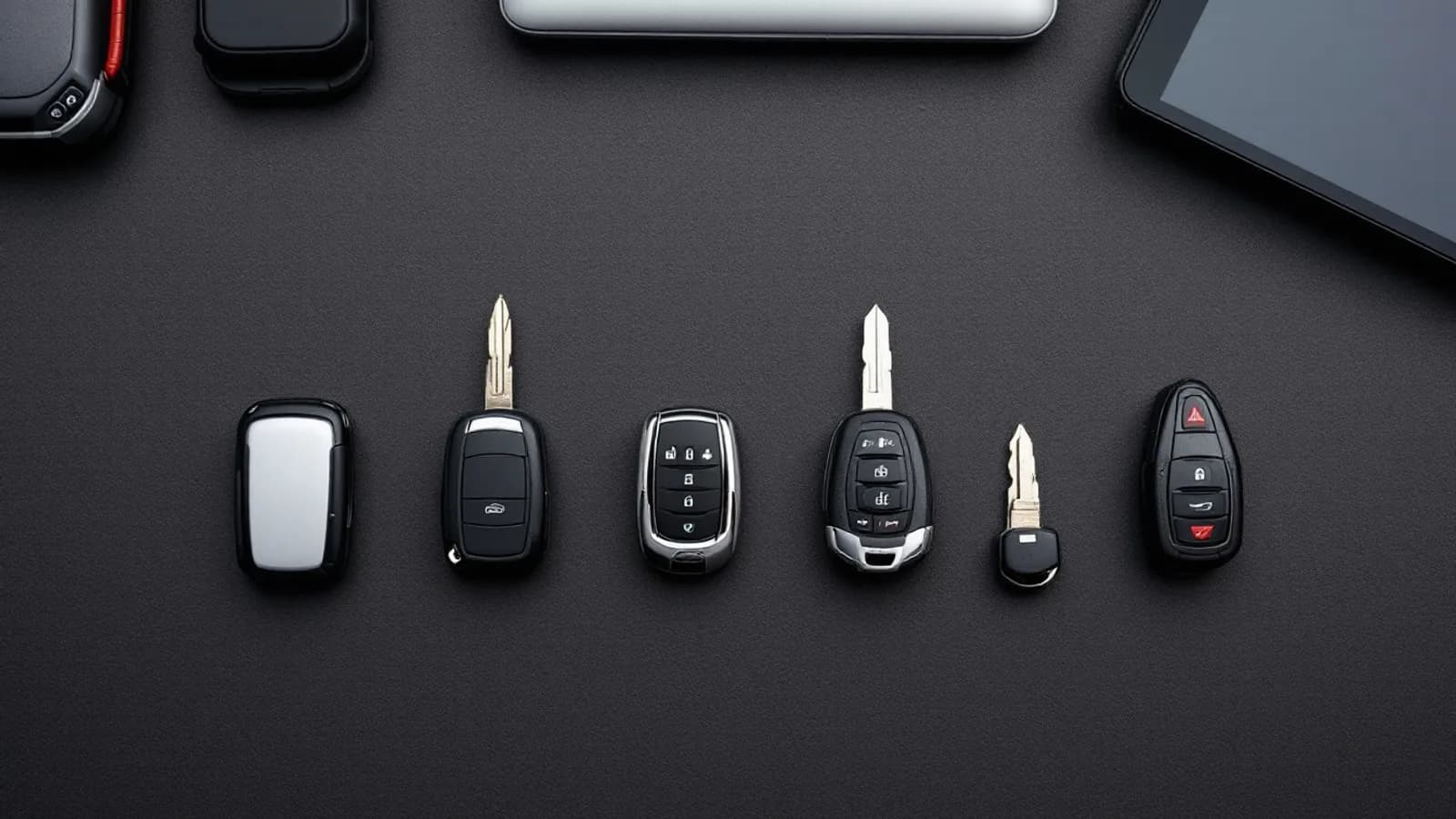
Key Fob Programming Near Me in Dallas: Who Does It, What It Costs, What It Actually Is
As of September 2026, key fob programming in Dallas runs $120-$500 depending on fob type, done at your car by a mobile automotive locksmith.
As of September 2026 — pricing and service details below are current.
The Direct Answer First
As of September 2026, key fob programming in Dallas is done by a mobile automotive locksmith who comes to your car, and it costs $120 to $500 depending on which kind of fob your vehicle uses — $120 to $200 for a transponder key, $160 to $280 for a remote head key, $180 to $320 for a flip key, and $250 to $500 for a smart proximity fob. Add $75 to $250 if no working key exists at all, because the vehicle's authorization has to be rebuilt rather than simply extended.
You do not need to tow the car to a dealership for the large majority of vehicles on the road in Dallas. You need someone who can talk to the module that holds the immobilizer decision. That is a different trade from cutting metal, and the rest of this page explains why the distinction matters, what actually happens during the twenty to forty minutes a technician spends at your car, and the handful of honest exceptions where a dealer credential really is required.
Call or text (469) 896-4128 with your year, make, model and VIN for a flat quote before anyone is dispatched.
Quick Answer
A mobile automotive locksmith programs car key fobs at your location across Dallas, usually same day, for $120 to $500 depending on fob type. Programming means writing a new identity into the vehicle's immobilizer so the car accepts that fob — it is a software operation, not a cutting operation. Bring photo ID and proof of ownership; a legitimate technician will ask for both, and on an all-keys-lost job it is mandatory.
What "Programming" Actually Means
This is the single most misunderstood part of the job, and misunderstanding it is what makes people overpay.
Cutting a key shapes metal so it turns a lock. Programming writes an identity into your car's electronics so the vehicle's immobilizer recognizes a credential it has never seen before. They are separate operations, they use separate equipment, and on a modern car the programming is the part that determines whether the engine starts.
Here is the sequence inside your car when you press the start button or turn the key:
- A receiver or antenna picks up the fob's transmission — either a rolling radio credential from a proximity fob, or a transponder chip energized by a coil around the ignition.
- A body control module or immobilizer module checks that credential against the list of identities it trusts and decides whether the car is authorized to proceed.
- The engine control module countersigns independently before fuel and spark are permitted.
Every one of those is a conversation. Programming a fob means legitimately joining that conversation, proving the technician has authorized access, and writing a new trusted identity into step two. Which is exactly why a hardware store that cuts house keys cannot do it, and why the price scales with how sophisticated the vehicle's security is rather than with how much plastic is in the fob.
There is a corollary worth internalizing: a fob you bought online is not a key until a module accepts it. Until then it is a plastic shell with a chip in it that your car has never agreed to trust.
Which Fob Types Are Programmable On Site
Nearly all of them. The four families cover almost every vehicle in the Dallas metroplex.
Transponder key — $120 to $200. A mechanical blade with a chip in the head. You insert it and turn. The chip is energized by a coil around the ignition cylinder and answers a challenge. Common on vehicles roughly from the late 1990s through the mid 2010s and still found on plenty of trucks and work vehicles.
Remote head key — $160 to $280. Same transponder function, with lock and unlock buttons molded into the head. Two systems in one piece of plastic: the transponder authorizes starting, the remote handles the doors. Either half can fail independently, which is why a key that unlocks the car but will not start it is a completely normal thing to see.
Flip key — $180 to $320. The blade folds into the body on a spring. Functionally a remote head key with better ergonomics and one extra failure mode: the flip mechanism itself wears, and a loose blade eventually stops indexing properly in the cylinder.
Smart proximity fob — $250 to $500. No blade in use, no insertion. Low-frequency antennas detect that the fob is near or inside the car, the receiver validates it, and a push button starts the engine. There is always a concealed emergency blade inside the fob body and always a near-field backup location for reading a fob with a dead battery. European proximity fobs run higher, at $350 to $600+, because the security architecture is heavier and the parts cost more.
The practical version of that list for two extremely common Dallas vehicles: our Ford Explorer and Escape fob programming guide walks through the American-brand proximity flow start to finish, and our Mazda CX-5 and CX-30 smart key guide covers the same job on a Japanese platform where the module conversation is meaningfully different.
Fob Programming Pricing in Dallas (2026)
| Fob type | How the car reads it | Dallas price range (2026) |
|---|---|---|
| Transponder key | Chip energized by a coil at the ignition cylinder | $120 – $200 |
| Remote head key | Transponder plus integrated lock/unlock buttons | $160 – $280 |
| Flip key | Folding blade, transponder plus remote | $180 – $320 |
| Smart proximity fob | LF antennas locate it, receiver validates a rolling credential | $250 – $500 |
| European smart fob | Heavier security architecture, higher parts cost | $350 – $600+ |
| All keys lost | Add-on when no working key exists | add $75 – $250 |
| Immobilizer relearn, no new key | Existing fobs re-paired after battery or module work | $120 – $280 |
| Fob diagnosis and battery service | Not detected, weak range, intermittent start | $40 – $95 |
| Fob shell swap, electronics transferred | Cracked case, worn buttons, broken blade | $40 – $95 plus the shell |
Programming vs Replacing: Which One Do You Actually Need?
A large share of the people who search for fob programming are describing a fob that already exists and has stopped being recognised. That is a relearn at $120 to $280, not a purchase, and it is worth naming explicitly because the two searches lead to very different bills.
Three quick sorters, refreshed from what came through the phone this month:
- It faded over weeks and now only works up close. Battery or transmitter. A coin cell first; if that does not restore the range, the fob genuinely needs replacing.
- It stopped dead the morning after a car battery, a jump start or a shop visit. The fob is almost certainly fine and the car has dropped its pairing. Relearn.
- The fob is physically broken but the board is clean. A shell swap at $40 to $95 plus the shell keeps your existing programming. Nobody offers this unless you ask.
The full decision tree, including water damage and radio interference, is in our repair, reprogram or replace guide for Dallas. If the car will start briefly and then cut out, that is an immobilizer rejection rather than a fob fault — see the two-second immobilizer stall. And if the fob went through a wash cycle or a pool, act quickly: the key fob water damage guide explains why the first hour matters more than anything you do afterwards.
What To Have Ready Before the Technician Arrives
Five minutes of preparation removes most of the friction from this job.
The VIN. It is visible through the windshield at the base on the driver's side, printed on the driver's door jamb sticker, and on your insurance card and registration. The VIN determines the exact fob part number, the security architecture, and whether the vehicle has anything unusual about it. A quote given without a VIN is an estimate; a quote given with one is a price.
Photo ID and proof of ownership. Current registration or title in your name. On an all-keys-lost call this is non-negotiable — creating a working credential for a vehicle from nothing is exactly what an immobilizer exists to prevent, and a technician who will skip that verification for you would skip it for someone standing next to your car.
Every key you still have, including the broken ones. A key that no longer starts the car can still hold a chip the technician can read. It changes the job from a recovery into an append operation and can save you the entire $75 to $250 add-on.
Where the car actually is. A parking garage level, a gated apartment complex, a numbered space. This is the single biggest driver of how long it takes someone to physically reach you in Dallas, Lakewood, Addison or the office towers of Las Colinas.
Whether the car has power at all. If the dash is dark and nothing responds, that is a different visit than a fob that simply is not recognized — and it changes what the technician brings.
Diagnose Before You Buy: The Cheap Causes First
A large fraction of "I need a new fob" calls do not end with a new fob, and an honest shop tells you that before you spend money.
A dead coin cell in the fob. The cheapest possible cause and genuinely common. The tell: the car only responds when you hold the fob against a specific spot, because the near-field backup coil is reading it at close range. That is the fallback working exactly as designed.
A dead or marginal 12V battery in the car. Low voltage produces a startlingly convincing imitation of a security fault, because marginal power scrambles module communication before it fully kills the vehicle. Our dead fob battery and no-start guide separates the two symptom patterns in detail — they look nearly identical from the driver's seat and cost very different amounts to fix.
Heat damage. A fob left on a dashboard through a Dallas August is a component sitting well above its design temperature for hours at a time, and the failures that follow are real. We cover the seasonal pattern in our summer heat fob failure guide.
A pairing that fell out of step. After a 12V battery replacement or module work, existing fobs sometimes stop being recognized even though nothing is broken. That is an immobilizer relearn at $120 to $280, not a key purchase.
An antenna circuit rather than a fob. Passive entry that works at one door and not the other is a positional fault. A new fob fixes nothing. The signature is described in detail in our no key detected guide, written around a European platform but mechanically applicable across makes.
Fob diagnosis and battery service is $40 to $95. Spending that first is frequently the whole repair.
The Honest Exceptions Where a Dealer Is Required
Most of the internet pretends these do not exist. They do, and knowing them protects you.
Certain 2015 and newer modules need a manufacturer credential. On some later-platform vehicles, specific security operations sit behind access that no aftermarket tool legitimately provides. That boundary is knowable from the VIN, and a real shop checks it before dispatching a truck rather than discovering it in your driveway at your expense.
Secure gateway vehicles need verification first. A number of manufacturers restrict what may communicate on the diagnostic network. Most remain serviceable by a properly equipped independent. Some do not, and we say which is which from the VIN.
Tesla is its own category. Key pairing on a Tesla is performed through the owner's own Tesla account and vehicle interface. No locksmith can do it around you, and anyone offering to should be treated as a warning sign.
A physically failed module is not key work. If the body control module or receiver has actually failed, no quantity of fobs fixes it. Some of those repairs are recoverable — module-level work like instrument cluster programming sits in that territory, where the cluster stores security data on certain platforms and has to be handled correctly rather than swapped blindly. Others genuinely belong at a dealer, and we will diagnose it and say so instead of selling you hardware that cannot help.
What a Programming Visit Looks Like
- Phone triage with the VIN. Fob type, security architecture, whether any working key exists, whether the car has power.
- A flat quote before dispatch. No "starting at" figures, no diagnostic fee that appears after arrival.
- Ownership verification on arrival. ID and paperwork, every time, on every recovery.
- Batteries checked first. Nothing gets diagnosed on unstable voltage.
- Blade cut to code where the fob carries one, whether it is a working blade or a concealed emergency blade.
- Module access and identity written, with authorization rebuilt from scratch when nothing works.
- Full verification before payment: start the car more than once, test every button, test passive entry at each door, test the trunk, physically test the blade in the lock.
That last step is what separates a finished job from a job that ends with you calling back in a week.
Broader capability sits on our key fob programming page and the general automotive locksmith overview. We work Richardson and Garland as routinely as central Dallas, around the clock.
Frequently Asked Questions
Q: How much does key fob programming cost near me in Dallas? A: Between $120 and $500 depending on fob type as of August 2026 — $120 to $200 for a transponder key, $160 to $280 for a remote head key, $180 to $320 for a flip key, and $250 to $500 for a smart proximity fob. European proximity fobs run $350 to $600+. Add $75 to $250 when no working key exists, because authorization has to be rebuilt rather than extended.
Q: Can a locksmith program a key fob, or does it have to be the dealer? A: A properly equipped mobile automotive locksmith programs fobs on the large majority of vehicles on the road, at your location, usually the same day. The exceptions are specific and knowable from the VIN: some 2015 and newer modules require a manufacturer credential, some secure-gateway vehicles restrict diagnostic access, and Tesla key pairing runs through the owner's own Tesla account rather than through any locksmith.
Q: How long does it take to program a key fob? A: Most single-fob jobs take twenty to forty minutes at your vehicle once the technician arrives, including cutting the blade and verifying every function. All-keys-lost jobs take longer — often an hour or more — because security access has to be established against a system specifically engineered to refuse it, and the authorization is rebuilt rather than extended. Phone triage with the VIN happens before dispatch so nothing is discovered on your driveway.
Q: What do I need to have ready for a key fob programming appointment? A: Your VIN, photo ID, current registration or title in your name, and every key you still have — including broken ones, because a dead key can still hold a readable chip that turns a recovery into a cheaper append job. Also know exactly where the car is parked, since garage level and gate access drive the arrival time more than distance does.
Q: Can you program a key fob I bought online? A: We will attempt it, and it sometimes works. But a real share of marketplace fobs are locked to a previous vehicle and cannot be re-registered, are the wrong regional variant, or are counterfeit shells whose electronics fail the challenge the car sends. The vehicle's modules are the final authority and no tool overrides them. If yours is rejected we say so immediately rather than charging you for a failed attempt.
Q: My fob unlocks the doors but the car will not start. Do I need a new fob? A: Usually not. Unlocking and starting are two separate permissions handled by different parts of the system, so the remote half of your key can work perfectly while the immobilizer half is not being authorized. That pattern shows up after a 12V battery replacement, after module work, or when a used fob was never properly registered. An immobilizer relearn at $120 to $280 resolves that class of fault without buying a single new key.
The Bottom Line
"Key fob programming near me" in Dallas means a mobile automotive locksmith at your car, $120 to $500 by fob type, plus $75 to $250 when nothing works. Programming is a software operation against your vehicle's immobilizer, not a cutting operation — which is why the price tracks your car's security architecture and why the cheap causes are worth ruling out before anyone sells you hardware. Have your VIN and proof of ownership ready and call (469) 896-4128. Dallas Locksmith Pros answers 24/7, quotes flat-rate before dispatch, and verifies ownership on every recovery.
Written by the Dallas Locksmith Pros mobile automotive team, serving drivers across Dallas and the surrounding metroplex 24/7.
Related articles
Smart Key Programming Dallas: Why Most Locksmiths Can't Do It On-Site (and How to Pick One Who Can)
Smart key programming in Dallas is technically gated — most locksmiths can't do late-model fobs on-site. What NASTF credentials mean and the questions to ask.
Read moreWhat It Costs to Program a Key You Already Bought in Dallas (2026)
As of September 2026, programming a fob you supplied costs $75-$250 in Dallas with a working key, $150-$400 without. Full labor table and what we can't program.
Read moreAlfa Romeo Giulia & Stelvio Key Replacement in Dallas: An Italian Badge on Familiar Wiring
As of August 2026, Alfa Giulia and Stelvio proximity fobs run $350-$600+ in Dallas. Why these two are tractable and where independent tooling stops.
Read moreNeed a Dallas locksmith right now?
Licensed mobile automotive locksmith. Same-day response across DFW.
Call (469) 896-4128