
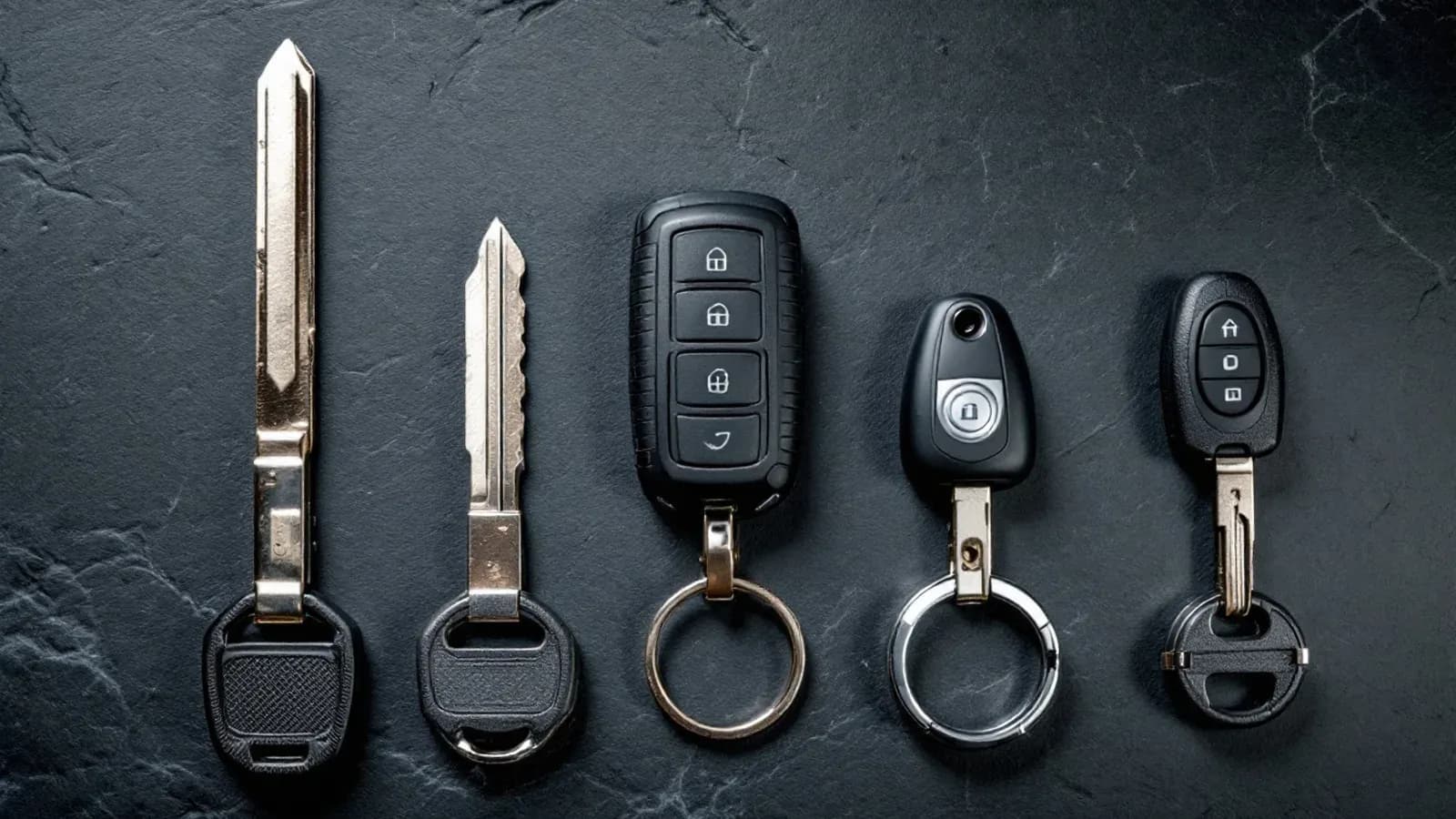
Car Key Replacement Cost in Dallas by Security Generation (2026): Why Two Cars the Same Age Differ by $300
As of September 2026, Dallas car key replacement runs $120-$600+. The price is set by your car's immobilizer generation, not its badge. Full price table inside.
Quick Answer
As of September 2026, car key replacement in Dallas runs $120 to $600+, and the single biggest reason two cars the same age quote hundreds of dollars apart is the security generation their immobilizer belongs to — not the badge and not the model year. A 2016 economy sedan on a rolling-code transponder is a $160 to $320 job. A 2016 luxury SUV on an encrypted proximity platform is $350 to $600+. Call (469) 896-4128 with the VIN and we identify the generation before quoting.
The Question Behind Almost Every Price Call
The call usually opens the same way. Someone read a price online, got a very different number from a dealer, and wants to know which one is real. Both usually are. They are describing two different pieces of engineering that happen to share the word "key."
Most price guides sort by make, or by model year, and both are proxies for the thing that actually sets the bill. The real variable is which generation of immobilizer security your car was built with. Manufacturers do not move every model to a new generation in the same year, and they do not move every trim within a model at the same time either. That is why a 2016 Camry and a 2016 GLC300 are hundreds of dollars apart, and also why two 2019 vehicles from the same brand can land in different bands.
This page sorts Dallas pricing the way the work actually sorts: by what the car's security system requires of the person standing next to it. The make-by-make view lives on the Dallas car key replacement cost price guide; this page explains why those numbers land where they do.
Car Key Cost in Dallas by Security Generation (2026)
| Security generation | Roughly when | What the car requires | Dallas price range (2026) |
|---|---|---|---|
| Gen 1 — mechanical, no chip | Pre-1996 | Cut a blade to the code or to an existing key | $75 – $160 |
| Gen 2 — fixed-code transponder | ~1996 – 2005 | Cut blade, then teach the car a static chip ID | $120 – $200 |
| Gen 3 — rolling-code transponder / remote head | ~2004 – 2014 | Cut blade, sync a changing credential, pair the remote | $160 – $320 |
| Gen 4 — proximity / push-to-start | ~2010 – 2018 | Register an encrypted fob to the body or immobilizer module | $250 – $500 |
| Gen 5 — encrypted, gated, network-checked | ~2018 onward | Authenticated session, sometimes a manufacturer credential | $350 – $600+ |
| Any generation, no working key | — | Authorization rebuilt rather than extended | Add $75 – $250 |
| Module coded rather than taught | Mostly Gen 4 – 5 | Security module programmed, or replaced and coded | $250 – $600 |
Prices as of September 2026 for the Dallas–Fort Worth market. Every number is quoted flat from the VIN before a technician is dispatched.
Gen 1: Before the Chip (Pre-1996)
There is no electronics problem here at all. The car does not know or care who you are; it only cares whether the blade lifts the wafers in the lock. That makes it the cheapest key we cut and also the one most likely to be lost entirely, because no computer anywhere holds a record of what the original key looked like.
The cost driver on these cars is not programming, it is origination — producing a correct blade with no key to copy. That is done by decoding the door lock or the ignition cylinder directly, and on a car that has spent thirty Texas summers in a driveway, the cylinder is often worn enough that the decode has to be checked against a second lock before a blade is cut.
Practical note for anyone with an older car: at this generation a spare costs almost nothing and prevents almost everything. There is no cheaper time to solve the problem than before it exists.
Gen 2: The Fixed-Code Transponder (1996 – 2005)
This is where the phrase "chip key" comes from. A small glass or carbon transponder sits in the head of the key, the car energizes it when the key enters the ignition, and the chip answers with an identifier that never changes. If that identifier is on the car's list, fuel and spark are allowed to run.
Because the credential is static, teaching one is straightforward — and the DFW market prices it accordingly at $120 to $200. Three things push a Gen 2 car toward the top of that band or past it:
- The blade is a high-security (sidewinder) profile rather than a standard edge cut, which needs a different cutting machine and more setup time.
- All keys are lost, so the car has to be put into a learn state with no existing key to authorize it.
- The immobilizer box itself has failed, which is common at this age and is a repair, not a key.
Gen 2 is also where most "my key turns but the car won't start" calls originate, because the chip can fail while the blade still works perfectly. That symptom is walked through in the anti-theft light flashing and car won't start guide.
Gen 3: Rolling Code and the Remote Head Key (2004 – 2014)
Manufacturers replaced the static answer with a changing one. The chip and the car now share a secret and step through a sequence together, so a recorded answer from yesterday is worthless today. In the same era the door remote migrated into the head of the key, which is why the remote head key and the flip key are Gen 3's signature shapes.
Two jobs now live inside one key: the immobilizer credential has to be synchronized, and the radio remote has to be paired. That is the honest reason the band steps up to $160 to $320. It is also why a key can start your car but not unlock the doors, or the reverse — those are two separate systems inside one plastic housing, and either can fail alone. The diagnosis for that split is in what to do when your key fob buttons stop working but the car still starts.
Gen 3 is the most common generation still on the road in the Dallas metroplex by volume, which is why the middle of our price sheet is so much busier than either end.
Gen 4: Proximity, Push-to-Start, and the Module Era (2010 – 2018)
The fob stops being a key and becomes a credential the car hunts for. Low-frequency antennas around the cabin ask, the fob answers, and a body or immobilizer module decides whether the start button does anything at all. Nothing mechanical is involved in that decision.
The jump to $250 to $500 comes from three real changes:
- The hardware costs more. A proximity fob contains a transmitter, a receiver, a battery circuit and an emergency blade.
- The registration is a module transaction. The technician authenticates to a computer, and that computer writes the new credential into protected memory.
- The failure modes multiply. A Gen 4 car that will not see its key might have a fob fault, an antenna fault, a module fault, or simply low system voltage — four different bills. Diagnosis and relearn is the $120 to $280 line that exists precisely so nobody buys a key they did not need.
That last point deserves weight. On Gen 4 and newer, a meaningful share of "I need a new key" calls are not key calls at all. Marginal 12-volt system voltage disrupts module communication long before it stops the engine, which is why a car that sits between drives — a second or third vehicle in a Preston Hollow or Highland Park garage — produces key complaints out of all proportion to how often it is driven. The pattern is laid out in why a car key only works sometimes, and the no-start version in Lexus RX and ES immobilizer no-start.
Gen 5: Encrypted, Gated, and Sometimes Factory-Only (2018 Onward)
From roughly 2018, several manufacturers moved key registration behind an authenticated session — the tool has to prove itself to the vehicle, and in some cases to the manufacturer's network, before the car accepts a new credential. Mercedes calls its versions FBS; other brands have their own names for the same idea. The effect on pricing is identical everywhere: $350 to $600+, and a genuine possibility that a specific VIN is dealer-only.
We treat that possibility as something to resolve before a truck rolls, not after. Reading the VIN tells us the security generation, and the generation tells us whether the job is a visit, a project, or a referral to the dealer. Saying so on the phone costs nothing; discovering it at the curb costs the customer an afternoon. The Mercedes case is documented in the FBS3 and FBS4 key replacement guide, the "car sees no key at all" version in Mercedes no key detected, and the broader module question in security module programming cost in Dallas.
European cars concentrate at this end of the chart, which is why our European car locksmith service is priced separately from the general list, and why the marque pages for Porsche, Volkswagen and the exotic and supercar tier read the way they do. Land Rover owners see the same pattern in Range Rover no key detected.
What Moves the Price Inside a Band
Generation sets the band. Four things decide where inside it you land.
Whether a working key exists. This is the largest single modifier on the sheet at $75 to $250. With a key, the technician authenticates as a trusted party and extends that trust. Without one, authorization has to be rebuilt against a module engineered to refuse exactly that. Same fob, different job. Full detail is in the all-keys-lost and EEPROM cost guide.
Whether the blade is high-security. Sidewinder and laser-cut blades need a different machine and more time than an edge cut, independent of any electronics.
Whether the module is healthy. If the security module itself has failed, no number of keys fixes it. That is a $250 to $600 coding job, or $400 to $900 when the module must be replaced and coded to the VIN.
When you call. Work outside 9 a.m. to 7 p.m. Central carries an after-hours component, and we state it inside the first quoted total rather than adding it at the curb.
How to Tell Which Generation You Have in 90 Seconds
You do not need the VIN to get close, though we will ask for it before quoting.
- Metal key only, no buttons, thin plastic head or none → Gen 1.
- Metal key with a thick plastic head, separate remote or no remote → Gen 2.
- Buttons built into the head of the key, or a blade that folds out of the remote → Gen 3.
- A fob you keep in your pocket, a start button on the dash, a hidden blade inside the fob → Gen 4 or Gen 5. The model year splits them and the VIN confirms it.
If the car has a start button and was built in 2018 or later, assume the top band until the VIN says otherwise. That is the assumption that protects you from a surprise.
Why We Publish This Instead of a Single Number
A locksmith who quotes one flat price for every car is either overcharging the simple jobs or about to renegotiate at your window. Neither is a good outcome. The generations above are real engineering boundaries, and a shop that knows which one your car sits in can give you the price on the phone. One that cannot is guessing — which is the first behaviour the Federal Trade Commission's consumer guidance tells people to watch for, and the reason we wrote how to avoid car key replacement scams in Dallas.
We are a mobile operation across Dallas, Plano, Frisco, Southlake, University Park and the rest of the metroplex, so the work happens in your driveway rather than after a tow. What we program by make is listed on the make-by-make programming page, and the core service page is car key replacement in Dallas.
Frequently Asked Questions
Q: Why did the dealer quote me twice what a locksmith did for the same car key? A: Usually because the dealer price bundles a tow, a service-department labor rate, and a part sold at list, while a mobile locksmith performs the same programming at your vehicle with the same class of equipment. The gap is widest on Gen 3 and Gen 4 cars, where the work is entirely routine and the tow is pure overhead. It narrows on Gen 5, where a manufacturer credential can genuinely be required, and on those specific VINs we tell you the dealer is the correct path rather than selling you a visit that ends in a referral.
Q: My car is a 2016. Which security generation is that? A: It depends entirely on the model, which is exactly the point of this page. A 2016 mainstream sedan with a turn-to-start ignition is almost certainly Gen 3 at $160 to $320. A 2016 luxury SUV with push-button start is Gen 4 or early Gen 5 at $250 to $600+. The model year is a weak signal; the ignition type and the VIN together are a strong one, and the VIN takes about a minute to read over the phone.
Q: Does an all-keys-lost job cost the same on every generation? A: No. The surcharge is $75 to $250, but it lands very differently. On Gen 2 the car can often be put into a learn state through the diagnostic port, so the job stays near the low end. On Gen 4 and Gen 5 the module may have to be reached directly rather than through the port, which pushes toward the top of the surcharge and can add a $250 to $600 module line on top. That is why we quote all-keys-lost from the VIN specifically rather than from a flat rate.
Q: Can you make a key for a 2026 vehicle, or is that dealer-only now? A: For most 2026 vehicles, yes — and for a minority, honestly no. Gen 5 security makes the answer VIN-specific rather than brand-specific, and it shifts as manufacturers update their platforms. We check before dispatch and say plainly which situation your car is in. A locksmith who promises every new car without looking at the VIN is making a claim they cannot verify.
Q: Is a cheaper aftermarket fob a real way to save money? A: Sometimes, and sometimes it is how a $300 job becomes a $450 one. A good aftermarket fob on a Gen 3 car is a sound choice. On Gen 4 and Gen 5 the encryption is less forgiving, and a marginal fob that programs today can lose sync in a month — at which point you pay for the programming twice. The trade-offs by generation are set out in aftermarket versus OEM car key fobs.
Q: How long does each generation take at the curb? A: Gen 1 and Gen 2 keys are typically 20 to 40 minutes. Gen 3 runs 30 to 60 minutes because the remote is paired as a second step. Gen 4 is usually 45 to 75 minutes. Gen 5 with a working key is similar; Gen 5 with no working key can run past two hours because authorization has to be rebuilt rather than extended. We give you the time estimate with the price, before dispatch.
The Bottom Line
The badge on the hood is a rough guide to what a key costs. The security generation underneath it is the actual answer, and it explains every apparent contradiction in the price sheet — why a twelve-year-old luxury car can be cheaper than a five-year-old economy SUV, and why two cars built the same year sit $300 apart.
If you know your year, make, model and ignition type, you can place yourself within about $100 using the table above. With the VIN we can do better than that on the phone.
Call (469) 896-4128. Dallas Locksmith Pros is mobile and answers 24/7, quotes flat from the VIN before dispatch, and tells you before we roll when a specific vehicle genuinely belongs at the dealer.
Written by the Dallas Locksmith Pros mobile automotive team, serving drivers across Dallas, Plano, Frisco, Southlake and the wider DFW metroplex 24/7.
Related articles
Proximity Fob vs Transponder Key Cost in Dallas: 2026 Price Ladder
2026 Dallas key-type cost guide: transponder $120-$200, remote head $160-$280, flip $180-$320, smart fob $250-$500, European $350-$600+.
Read moreFerrari & Lamborghini Key and Immobilizer Service in Dallas: What We Can Do, and What We Will Not Pretend To
As of August 2026, Ferrari and Lamborghini key work in Dallas is $350-$600+ plus $75-$250 all-keys-lost, VIN-verified before dispatch, ownership proof required.
Read moreMy Key Fob Buttons Stopped Working But the Car Still Starts — Dallas Diagnosis Guide
Dead fob buttons with a car that still starts means the immobilizer half is fine. As of September 2026 most Dallas fixes are $40-$95, not a new $250-$500 fob.
Read moreNeed a Dallas locksmith right now?
Licensed mobile automotive locksmith. Same-day response across DFW.
Call (469) 896-4128