
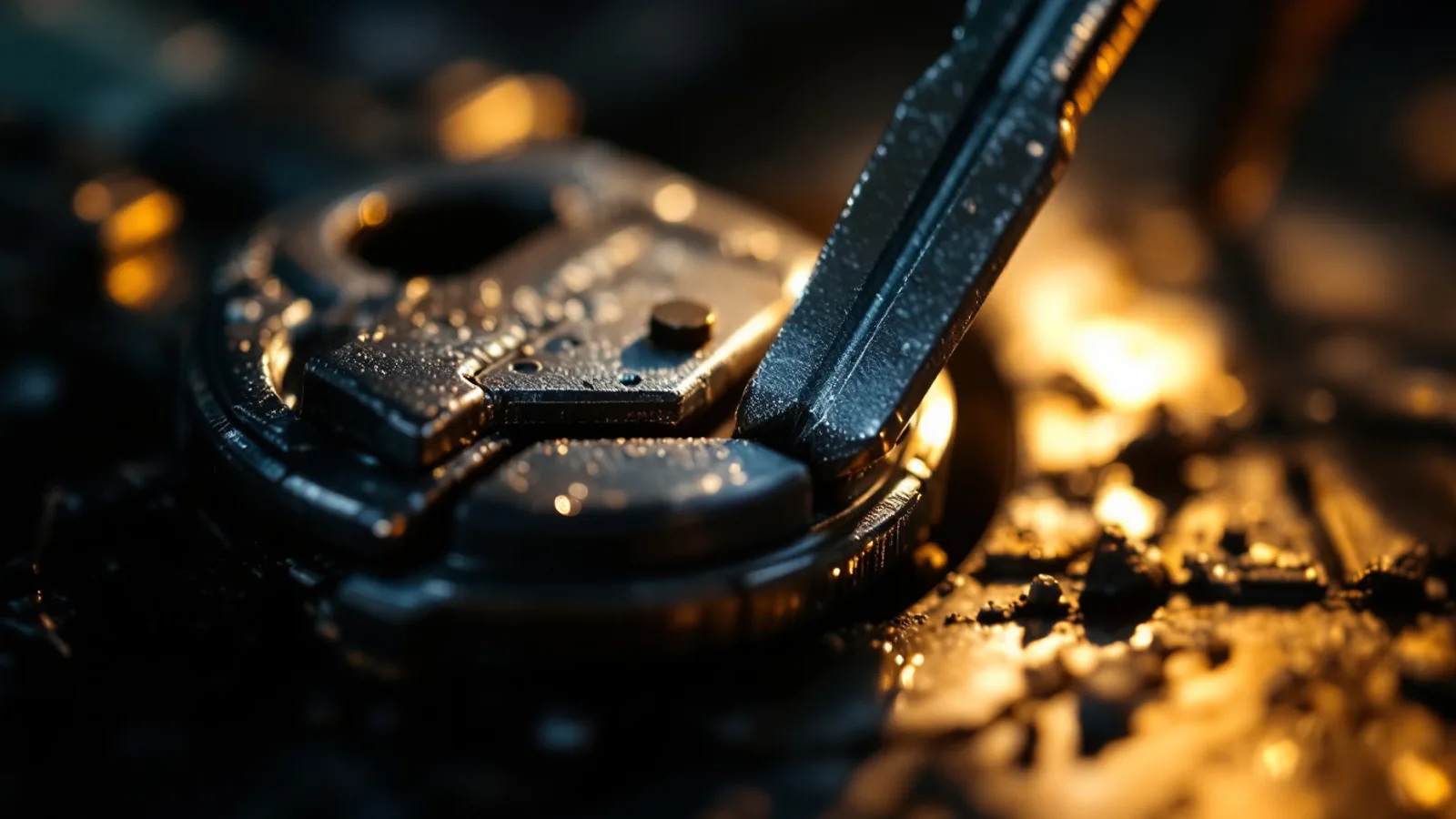
Broken Key Extraction in Dallas
Snapped keys removed from ignitions and locks without drilling — then cut fresh if needed.
Broken key extraction is the removal of a snapped or stuck key from an ignition cylinder or door lock without destroying the lock around it. A blade that shears off leaves half in your pocket and half wedged in the wafers, and forcing it makes things worse. Dallas Locksmith Pros extracts broken keys on-site across Dallas, 24/7, then decides with you whether the cylinder or the key needs follow-up work.
Quick Answer
Broken key extraction in Dallas runs $75-$150 to remove a snapped key from an ignition or door lock, most often in 20 to 40 minutes without damaging the cylinder. If the original is gone or unusable, a replacement key is cut to code and programmed on top of that — transponder keys $120-$200, smart fobs $250-$500. Dallas Locksmith Pros extracts non-destructively and quotes the follow-up work, if any, from your VIN before dispatch.
What This Costs in Dallas
Ranges current as of July 2026. Final price depends on year, make, model, and whether a working key exists — confirmed on the phone before dispatch.
| Service | Typical range | What drives it |
|---|---|---|
| Broken key extraction (ignition or door) | $75-$150 | Non-destructive, cylinder left intact |
| New transponder key after extraction | $120-$200 | Cut to code and programmed if needed |
| New smart proximity fob after extraction | $250-$500 | Push-to-start vehicles, enrolled on-site |
| Ignition cylinder service or rebuild | $90-$200 | When worn wafers caused the break |
| Door opening if key snapped in the lock | $85-$200 | Access before or after extraction |
| Immobilizer relearn if a new key is coded | $120-$280 | Re-syncing keys after the replacement |
Why Keys Snap in the First Place
Keys rarely break from a single event — they fail from accumulated wear on both sides of the lock. A blade thinned by years of use meets a cylinder whose wafers or pins have worn loose, so the key has to be jiggled and forced to turn, and metal fatigues at the shoulder where stress concentrates. Add a heavy keyring swinging off the ignition, which levers the blade every time you drive, and a hard cold snap or summer heat that makes brittle metal and tight tolerances worse, and the blade finally shears. Aftermarket copies cut from softer stock break sooner than an original. The break is the symptom; the worn pair is the cause.
The Non-Destructive Extraction Toolkit
A snapped blade is removed with slim extraction tools designed to reach alongside it and hook the cuts, not with a drill. The technician indexes the wafers to the position the fragment sits in, slides a thin extractor or a pair of them down the keyway, catches a cut on the broken piece, and draws it straight out along the path it went in. Done right, the cylinder is untouched and still works with a good key afterward. Drilling is a last resort reserved for a cylinder that is already seized or damaged, and it means replacing the lock — which is exactly the outcome proper extraction avoids on the overwhelming majority of calls.
Why Digging at It Yourself Makes It Worse
The instinct is to grab needle-nose pliers or a bit of wire and fish for the piece, and it almost always backfires. There is usually nothing to grip — the blade sits flush or below the face of the lock — so pliers just burnish the exposed edge smooth and remove the one purchase an extractor needed. Poking with wire or glue pushes the fragment deeper and can jam the wafers or snap a tool off inside, turning a clean $75-$150 extraction into a full cylinder replacement. Superglue on a matching key is a myth that bonds the wrong things together. The cheapest path is to stop, leave it, and let proper tools do it.
Ignition Versus Door Lock: Different Angles, Same Goal
Where the key broke changes the approach but not the principle. In an ignition the cylinder is buried in the column at an awkward angle, often with the steering lock loaded against it, so the technician may relieve that tension before the fragment will slide free. In a door lock the keyway is shallower and more exposed but fights back with weather grime and a return spring. Either way the goal is identical: recover the piece without scoring the wafers, confirm the lock still turns cleanly with a good key, and diagnose whether the break was the key's fault or a warning that the cylinder itself is on the way out.
After Extraction: Does the Cylinder Now Need Service?
Pulling the fragment is often only half the answer. If the key snapped because the cylinder was worn and grabby, a new key dropped into that same tired lock will wear and stick just as fast, so we test how a good key turns once the piece is out. A cylinder that feels notchy, needs wiggling, or lets a key partially rotate has worn wafers and is a candidate for service or rebuild at $90-$200. Sometimes the break was purely the key's fault — a fatigued copy in a healthy lock — and no cylinder work is needed. We tell you honestly which it is instead of upselling a rebuild you do not need.
Cutting a Replacement Key to Code
Once the broken key is out you still need something to drive with, and the recovered fragment is rarely reusable. When the two halves join cleanly we can sometimes read the cuts to duplicate them; more often we cut a fresh key to the vehicle's factory code, decoded from the lock or pulled by VIN, which yields a crisp key rather than a copy of a worn one. If the car uses a transponder or smart fob, that new key is then programmed to the immobilizer — $120-$200 for a chip key, $250-$500 for a proximity fob — so it both turns the lock and starts the engine before we leave.
Honest Pricing and Proof of Ownership
Extraction alone runs $75-$150, and that is all you pay when the lock checks out and you already have another working key. Costs stack only with genuine follow-up: a cylinder rebuild at $90-$200, a new transponder key at $120-$200, a smart fob at $250-$500, or an immobilizer relearn at $120-$280 — each quoted before we touch it, never sprung after. Because a recovered or replacement key can start and drive the vehicle, we verify ownership on arrival with your registration, title or insurance and a matching photo ID. It is a quick step, and it protects your car as much as our shop.
How Broken Key Extraction Works, Step by Step
- 1
Quote and confirm the situation
We take the year, make, model and VIN by phone and quote the $75-$150 extraction plus any cut-to-code follow-up, so nothing is sprung on arrival.
- 2
Verify ownership if a key follows
When the visit will end with a working key we check your registration, title or insurance against a matching photo ID before starting.
- 3
Extract the fragment non-destructively
Slim extraction tools index the wafers, hook a cut on the broken blade and draw it straight out along the keyway, leaving the ignition or door cylinder intact.
- 4
Test the cylinder for wear
We turn a good key to check whether worn wafers caused the break, honestly flagging a cylinder that needs service or rebuild rather than upselling one that does not.
- 5
Cut and program a replacement
If the original is gone we cut a fresh key to the factory code and program any transponder or smart fob to the immobilizer.
- 6
Verify lock and start
We confirm the lock turns cleanly with a good key and, where a new key was coded, that it starts the engine before we leave.
Where the honest limit is
Broken key extraction is almost always non-destructive, but a cylinder that was already seized, corroded or previously drilled by someone else may not survive recovery and can need replacement — a possibility we name up front rather than after prying. If a cut-to-code replacement key requires immobilizer programming, a technician confirms your exact setup from the VIN before dispatch.
Need This Service?
Same-day mobile service across Dallas & DFW. Call or text us now.
Where the Dealer's Extra Cost Goes
Same programming result — but the dealership path stacks a tow, a bench-time charge, and franchise labor on top. Here is the line-item difference.
| Cost line | At the dealership | Dallas Locksmith Pros |
|---|---|---|
| Tow to the dealership | $120–$250 | $0 — we come to you |
| Diagnostic / bench time | $120–$200 | Included |
| Key or module (part) | Retail markup | Fair, quoted upfront |
| Programming labor | Franchise rate | Included |
| Days without the car | Often 2–5 | Same day |
| All-in, typical | $700–$1,100+ | Usually 40–60% less |
Ranges as of July 2026. Your exact price is confirmed from the year, make, and model before dispatch.
Reviewed by the Dallas Locksmith Pros team
Licensed Texas automotive locksmiths · DPS Private Security #B32279201
Related Services
Specialist Programming Services



































Frequently Asked Questions
Removing a snapped key from an ignition or door lock runs $75-$150, most jobs done in 20 to 40 minutes without harming the cylinder. That is the full price when you have another working key. A cut-to-code replacement or cylinder service, if needed, is quoted separately from your VIN before we start.
Almost always, yes. Slim extraction tools reach alongside the fragment and draw it out the way it went in, leaving the wafers intact. Drilling is a last resort we reserve for a cylinder that is already seized or damaged — proper extraction is exactly what keeps the lock reusable on the great majority of calls.
Better not to. There is usually nothing to grip, so pliers polish the edge smooth and wire or glue pushes the fragment deeper and can jam the wafers. That routinely turns a clean $75-$150 extraction into a full cylinder replacement. Leaving it untouched for proper tools is the cheaper path every time.
Only if you have no other working key or the halves are too worn to reuse. The recovered fragment is rarely usable, so we usually cut a fresh key to your factory code — transponder $120-$200, smart fob $250-$500 with programming — which is crisper than copying a fatigued blade and is quoted before we cut.
Keys snap from wear on both sides: a thinned blade meeting a worn cylinder that forces you to jiggle and torque the key to turn it. A heavy keyring levering the blade, cold or heat, and softer aftermarket copies all speed it along. The break is usually a sign the ignition cylinder itself is wearing out.
Yes, whenever the visit ends with a working key. Because a recovered or replacement key can start and drive the vehicle, we check your registration, title or insurance against a matching photo ID on arrival. It is a fast step that keeps anyone from having a key to your car made without your knowledge.
Get Expert Help Today
Mobile service across Dallas & DFW. Dealer-level tools. No guesswork.