
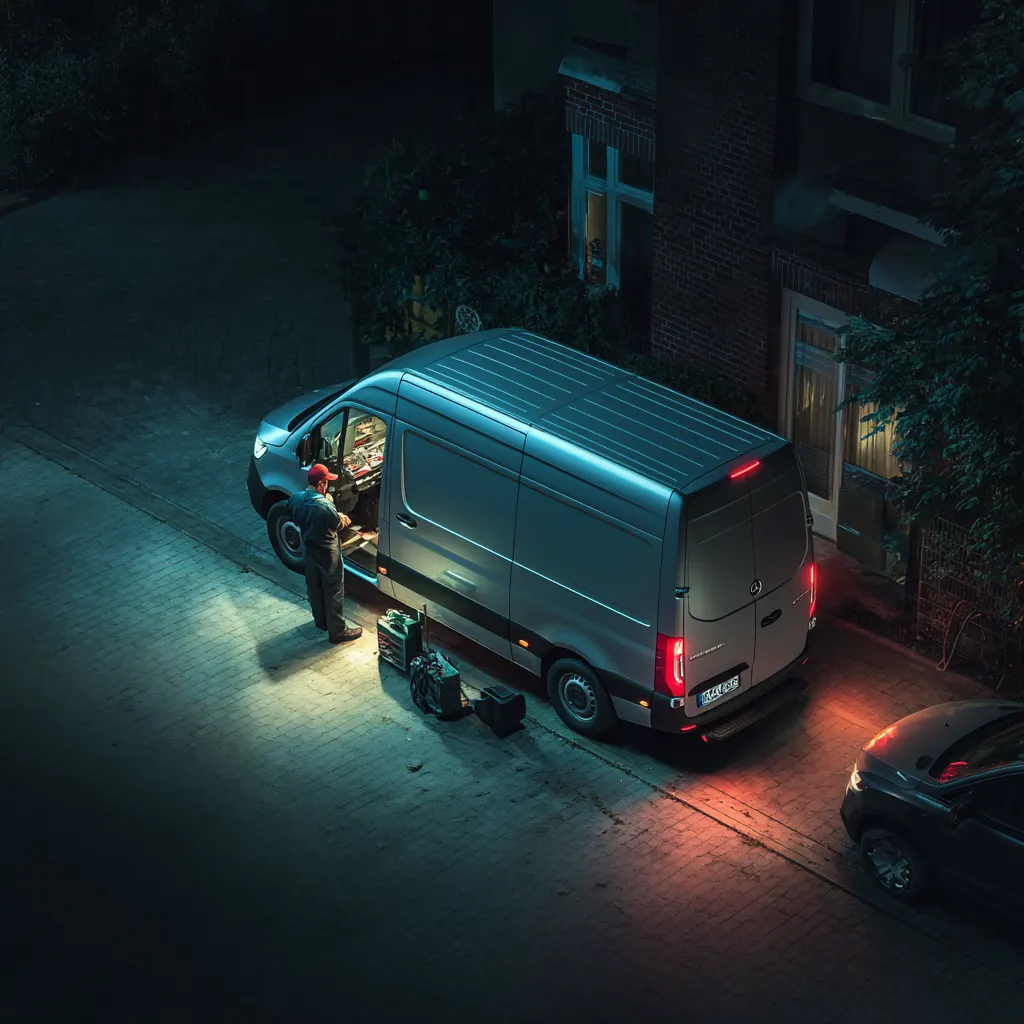
Dodge / Chrysler / Jeep WIN & RF Hub Issues in Dallas
Key-not-detected, FOBIK errors and Mopar no-crank faults diagnosed at your location, 24/7.
Every Chrysler, Dodge, Jeep and Ram start request passes through one gatekeeper module — the WIN on FOBIK-era vehicles, the RF Hub on keyless ones — and when that gatekeeper falters, the symptoms scatter: fobs not detected, keys that will not turn, engines that will not crank. Dallas Locksmith Pros traces those symptoms to their true cause on-site across Dallas before a single part is sold.
Quick Answer
Diagnosing a Mopar key-recognition fault in Dallas typically runs $120-$280, and most causes are resolved the same visit — a replacement FOBIK runs $150-$300 and a proximity smart key $250-$400. When the WIN or RF Hub module itself has failed, programming-grade repairs run $250-$600 and full module replacement with programming $600-$1,200. We quote from your year, model and VIN by phone, 24/7.
What This Costs in Dallas
Ranges current as of July 2026. Final price depends on year, make, model, and whether a working key exists — confirmed on the phone before dispatch.
| Service | Typical range | What drives it |
|---|---|---|
| Key-recognition diagnosis / re-sync | $120-$280 | Symptom traced to key, antenna, interference or module |
| Replacement FOBIK | $150-$300 | Cut, programmed and tested; 2008-2018 twist-in models |
| Proximity smart key | $250-$400 | Push-button Ram, Charger, Cherokee, Pacifica, Wrangler |
| Module-level repair and programming | $250-$600 | When diagnosis lands on the WIN or RF Hub itself |
| Used module prepared and programmed | $400-$900 | Donor unit cleared and married to your VIN |
| Full module replacement with programming | $600-$1,200 | New unit, keys relearned, verified running |
Two Gatekeepers: Telling the WIN From the RF Hub
The fastest sorting question is how your key works. If a FOBIK — the rectangular fob-shaped key — physically inserts into a dash slot and twists like a key, your vehicle runs a Wireless Ignition Node: the module that reads the FOBIK, acts as the ignition switch and holds the immobilizer gate, standard across roughly 2008-2018 Chrysler 300s, Chargers, Challengers, Grand Caravans, Journeys, Durangos and Rams. If the fob stays in your pocket and you press a button to start, key management lives in the RF Hub, the radio module behind proximity entry on later Rams, Cherokees, Wranglers, Pacificas and their siblings. The two fail, diagnose and price differently — this page treats them separately.
What FOBIK-Era Complaints Actually Mean
The twist-in generation produces a recognizable symptom set, each pointing somewhere specific. A FOBIK that inserts but will not rotate points at the node's internal mechanics wearing out — the rotation hardware lives inside the module, not the dash. A key error message with a FOBIK that turns fine points at the wireless transponder read failing: a dying FOBIK battery, a damaged key, or the node's receiver degrading. No-crank with a strong battery and a dark security indicator points at the immobilizer gate itself withholding authorization. And recognition that comes and goes — starts on the third try, fails on cold mornings — is the classic early signature of a node beginning to die.
Keyless-Era Complaints and the Hub Behind Them
Proximity vehicles fail more quietly. Key Fob Not Detected on the cluster while the fob sits in the cupholder is the headline symptom, but the supporting cast matters: remote start that stopped responding, door handles that no longer unlock on approach, or a start button that only cooperates when the fob is held against it — that last trick uses a backup low-frequency read and is itself diagnostic, proving the fob is alive while the hub's normal antennas are not hearing it. When several of those arrive together, suspicion moves off the fob and onto the RF Hub or its antenna network, and guessing with a two-hundred-dollar fob first is the expensive way to find out.
The Cheap Causes We Eliminate Before Blaming a Module
Half of our Mopar key calls end without touching a module, because the inexpensive causes come first. Fob batteries drop voltage enough to fail range tests while still lighting the test LED. FOBIK shells crack and let the board shift off its contacts. Radio interference is a genuine and underdiagnosed culprit on keyless vehicles — cheap LED bulb drivers, dashcam power supplies, phone chargers and aftermarket remote-start modules all pollute the frequencies the hub listens on, and unplugging an accessory has revived more than one supposedly dead truck. Aftermarket alarm and starter installations earn special scrutiny on used vehicles. Only when that list is exhausted does the evidence point at the module itself.
How We Pin Down the Start Chain on Site
Diagnosis is a conversation with the vehicle, not a parts lottery. We pull the body-network fault codes first, because the WIN and RF Hub both log specific complaints — keys read but not authorized, antennas open-circuit, bus communication dropped — that narrow the field immediately. Every key and fob present is graded against a reference reader. We exercise the backup-start path to separate fob faults from antenna faults. We check power and ground at the module, since a corroded feed mimics a dead unit. And we verify the immobilizer handshake with the powertrain side, because a mismatch there — usually after an engine-computer swap — blocks starting with everything else healthy. The verdict comes with evidence attached.
Fix Paths: From a Fresh Fob to a Programmed Module
The remedy follows the verdict. A weak or damaged key is replaced and programmed on the spot — $150-$300 for a FOBIK, $250-$400 for a proximity key — and spares are enrolled in the same visit for less than a second call-out. A re-sync or relearn rescues vehicles where data drifted after battery work or a lockout. Antenna and wiring faults are repaired at component price rather than module price. When the gatekeeper itself is condemned, module-level work runs $250-$600, a donor unit prepared for your VIN runs $400-$900, and a new module installed, programmed and verified runs $600-$1,200 — the full replacement sequence has its own page, our Chrysler and Dodge WIN module replacement service.
Mobile Mopar Diagnosis Across Dallas, Stated Honestly
A truck that cannot see its key cannot drive to a shop, so the diagnosis comes to the truck — home, apartment garage, job site or roadside, anywhere in Dallas, around the clock. Call with the year, model and VIN and the symptom story; the VIN tells us which gatekeeper you have and what the visit will involve; the quote you hear is the quote that applies. On arrival we verify ownership, run the evidence chain above and fix what it convicts. One honest limit: the newest security-gateway vehicles restrict some module operations to authenticated sessions, and where a specific VIN keeps an operation factory-locked, we say so at the diagnosis stage instead of learning it on your invoice.
How Dodge / Chrysler / Jeep WIN / RF Hub Issues Works, Step by Step
- 1
Phone quote from your VIN
You give year, model, VIN and the symptom; the VIN tells us whether you have a twist-in WIN or a keyless RF Hub, and the quote you hear applies.
- 2
Pull fault codes and grade keys
We read the body-network fault codes the WIN or RF Hub logs, then grade every key and fob against a reference reader to sort key from module.
- 3
Eliminate the cheap causes
We rule out a weak fob battery, a cracked shell, radio interference from LED drivers or dashcams, and antenna or power-feed faults before condemning a module.
- 4
Fix what the evidence convicts
The remedy follows the verdict: a fresh programmed fob, a re-sync after battery work, an antenna repair, or a module repaired, prepared from a donor, or replaced and relearned.
- 5
Verify the start and clear faults
Most visits end with the engine running the same day; we confirm the immobilizer handshake, test every key and clear the stored faults before leaving.
Where the honest limit is
We diagnose and repair key-recognition faults across the FOBIK and keyless Mopar generations, and we are direct about the edge cases: some operations on the newest gateway-protected VINs remain restricted to factory channels, and no roadside outfit should claim otherwise. A technician confirms your exact setup from the VIN before dispatch.
Need This Service?
Same-day mobile service across Dallas & DFW. Call or text us now.
Where the Dealer's Extra Cost Goes
Same programming result — but the dealership path stacks a tow, a bench-time charge, and franchise labor on top. Here is the line-item difference.
| Cost line | At the dealership | Dallas Locksmith Pros |
|---|---|---|
| Tow to the dealership | $120–$250 | $0 — we come to you |
| Diagnostic / bench time | $120–$200 | Included |
| Key or module (part) | Retail markup | Fair, quoted upfront |
| Programming labor | Franchise rate | Included |
| Days without the car | Often 2–5 | Same day |
| All-in, typical | $700–$1,100+ | Usually 40–60% less |
Ranges as of July 2026. Your exact price is confirmed from the year, make, and model before dispatch.
Reviewed by the Dallas Locksmith Pros team
Licensed Texas automotive locksmiths · DPS Private Security #B32279201
Related Services
Specialist Programming Services































Frequently Asked Questions
A fresh battery rules out one suspect. The message appears whenever the RF Hub fails to hear the fob: a damaged fob board, a failing antenna network, radio interference from accessories like LED drivers and dashcams, or the hub itself dying. If the truck starts with the fob held against the start button, the fob is alive and the hub side is the problem.
The pattern usually tells. One key failing while a spare works convicts the key. Every key failing at once, intermittent recognition, or a no-crank arriving with door-lock and remote-start misbehavior points at the WIN or RF Hub and its wiring. We test each key against a reference reader and pull the module's own fault codes at your location.
Diagnosis and re-sync work runs $120-$280, and many calls end there. Replacement FOBIKs run $150-$300 and proximity smart keys $250-$400, programmed on-site. If the module is condemned, repair-level programming runs $250-$600, a donor module prepared for your VIN $400-$900, and full replacement with programming $600-$1,200. The band is confirmed from your VIN before dispatch.
Yes — more common than most owners believe. The hub listens on low-power frequencies that cheap electronics pollute — LED bulb drivers, dashcams and aftermarket remote-start modules are repeat offenders. The giveaway is a fault that appears after new accessories were added or vanishes in a different parking spot. Unplugging suspects one at a time is a legitimate first test we walk callers through by phone.
Rotation and recognition are separate systems inside the node: the slot turned, but the wireless transponder read failed. That points at a weak FOBIK battery, a cracked key board, or the node's receiver circuit degrading. Caught early it is one of the cheaper faults — often a replacement FOBIK at $150-$300. When it recurs across multiple keys, it is a warning the node itself is aging.
Yes — every step on this page happens wherever the vehicle refuses to start: fault-code reads, key and fob testing, antenna and power checks, programming and relearns, at your home or workplace anywhere in Dallas, 24/7. Most visits end with the engine running the same day; if the verdict is a failed module, you get the finding and a firm replacement quote before anything further is authorized.
Get Expert Help Today
Mobile service across Dallas & DFW. Dealer-level tools. No guesswork.