
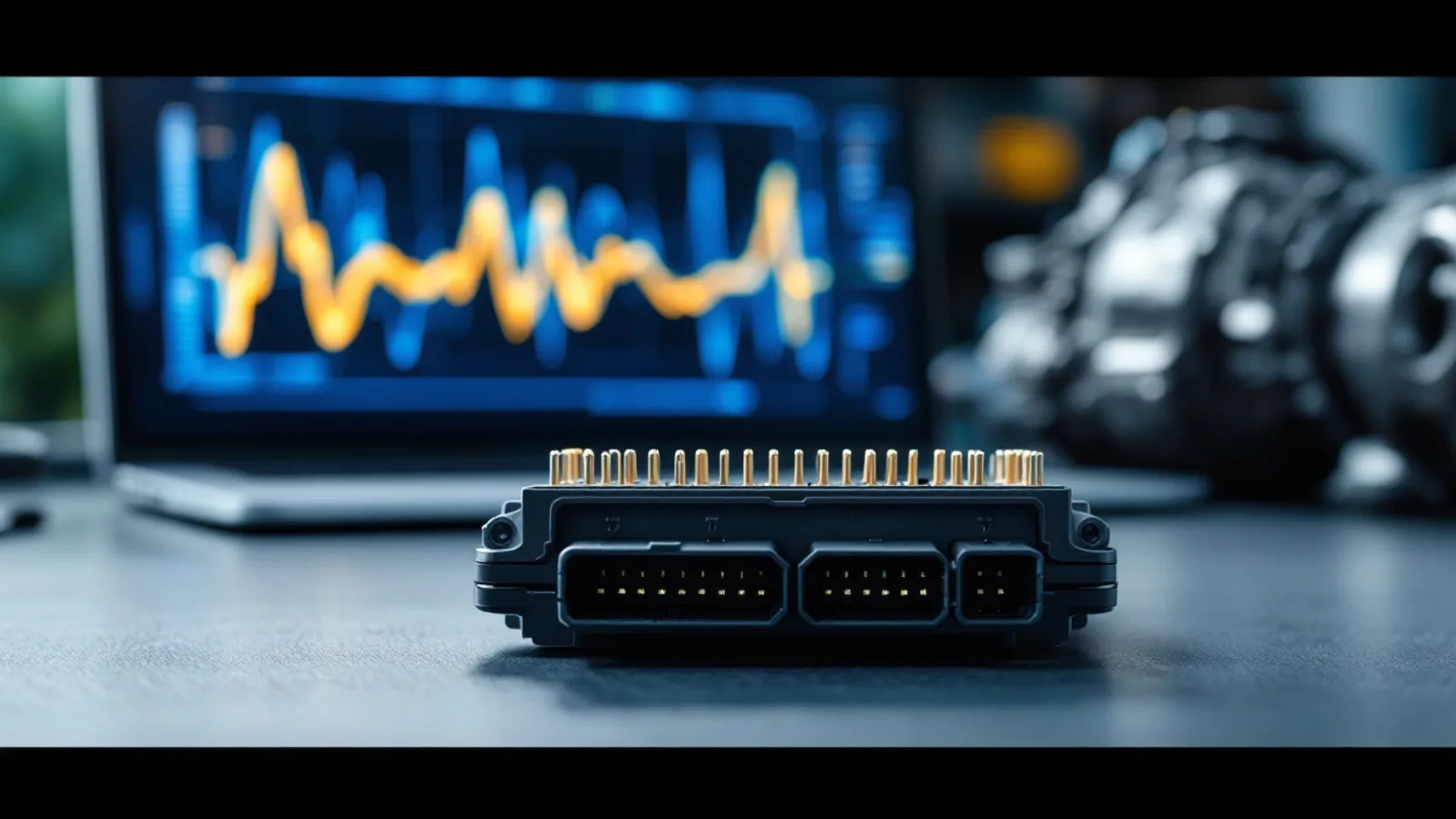
TCM Transmission Module Programming in Dallas
VIN-matched transmission controller programming and adaptive relearn, GM to Mercedes.
A transmission control module does not decide whether your gearbox is healthy — it decides when and how hard it shifts. Replace one without matching it to the VIN and running the adaptive relearn and you get a car that shifts worse than it did before. Dallas Locksmith Pros programs and matches transmission controllers on-site in Dallas across domestic and European platforms.
Quick Answer
Transmission control module programming in Dallas runs $250-$600 for a new controller written to your VIN and calibration, $400-$900 for a used unit needing donor data cleared, and $600-$1,200 for a full replacement with programming. Every job includes the adaptive relearn, because a module carrying generic defaults shifts badly even when the programming was done correctly. We cover GM TCM and TEHCM units, Ford standalone and PCM-integrated control, BMW EGS and Mercedes VGS. Internal units sit at the upper end and are quoted after the VIN and part number are confirmed.
What This Costs in Dallas
Ranges current as of July 2026. Final price depends on year, make, model, and whether a working key exists — confirmed on the phone before dispatch.
| Service | Typical range | What drives it |
|---|---|---|
| TCM programming and VIN-match | $250-$600 | Calibration written, adaptives reset and relearned |
| Used TCM, donor data cleared | $400-$900 | Part number must match the transmission family |
| TCM or TEHCM replacement with programming | $600-$1,200 | Internal units require the pan and fluid out |
| Start-authorization relearn (BMW EGS) | $120-$280 | Controller identity aligned with the security side |
| Mercedes VGS valve-body controller coding | Quoted by VIN | Some coding is online-authorized only |
| Typical dealer module path | $700-$1,100+ | Parts counter pricing plus tow and wait |
What the TCM Does and How It Fails
The transmission control module reads input and output shaft speed, throttle demand, fluid temperature and range position, then commands the solenoids that route line pressure through the valve body. When it fails or loses its programming the symptom set is consistent: harsh or erratic shifts, a hold in one gear that will not clear, limp mode after a short drive, no crank unless the shifter is nudged, and stored codes pointing at several solenoid circuits at once. Heat cycling, fluid intrusion into an internal controller, and low voltage during a battery swap are the causes we see most.
VIN-Matching Plus Adaptive Relearn
A replacement controller has to be written with your VIN and the calibration your vehicle was built with, and then it has to learn your specific transmission. Adaptive values — clutch fill times, pressure offsets, shift overlap — are worn-in numbers unique to your hardware, and a fresh module starts from generic defaults that feel wrong from the first mile. Programming without completing the relearn is why a correctly installed module can still shift badly on the drive home. We write the VIN, load the calibration, reset adaptives and finish the learn cycle before calling the job done.
GM TCM and TEHCM Units
On many Chevrolet, GMC, Cadillac and Buick applications the controller is a TEHCM mounted inside the transmission on the valve body, so the pan comes down and the fluid comes out before any programming begins. The unit is written with the VIN and the correct calibration, and the transmission identity is set so the module knows which hardware it is driving. A quick learn follows. Salvage TEHCM units are plentiful and workable, but the part number has to match the transmission family exactly or the shift quality never comes right.
Ford TCM and PCM-Integrated Control
Ford splits this by platform. Some vehicles run transmission control inside the powertrain module, so what a customer describes as a TCM job is really a powertrain flash with as-built configuration; others use a standalone controller with its own calibration and relearn procedure. Getting that wrong wastes a parts order and a day. We read the VIN and the installed part numbers first, then quote the correct job. On the integrated platforms the immobilizer also comes into play, which is territory our Ford PATS key programming service covers.
BMW EGS Transmission Control
BMW calls the transmission controller the EGS, and across much of the fleet it participates in start authorization. It carries a stored identity that must agree with the engine module and the key system, so a mismatched unit hands you a no-start rather than a shift complaint, which sends plenty of owners chasing the wrong repair. A used EGS has to be aligned to the vehicle rather than simply plugged in. When the fault turns out to sit in a neighboring module, our BMW FEM, CAS and FRM repair service is the better starting point.
Mercedes VGS and CVT Controllers
Mercedes builds the controller into the valve body as the VGS unit, including on CVT-equipped models, so replacement is a fluid-out job and the electronics are not separately serviceable in the way most owners expect. Coding is typically an online-authorized procedure tied to the VIN, which means some of this work is genuinely dealer-side and we will say so. A technician confirms your exact setup from the VIN before dispatch. If the real fault sits in the electronic ignition, our Mercedes EZS, ESL and EIS service is where to start.
When It Is the Module and When It Is Mechanical
This is the honest part. A control module explains harsh electronic shifts, limp mode, solenoid circuit codes and a controller that will not communicate. It does not explain slipping under load, burnt fluid, metal in the pan, a whine that rises with road speed, or a gear that disappeared after a hard tow. We program and match modules — we are not a transmission rebuild shop, and when the evidence points at worn hardware we tell you to see one instead of selling you a module that will not fix the car.
How TCM Transmission Module Programming Works, Step by Step
- 1
VIN and part-number quote
We confirm the VIN and installed part number by phone to identify a standalone TCM, a GM TEHCM, a BMW EGS or a Mercedes VGS, then quote.
- 2
Confirm module, not mechanical
On-site we read solenoid circuit codes and command line pressure to prove the fault is electronic rather than slipping clutches, burnt fluid or metal in the pan.
- 3
Access internal units if needed
For a GM TEHCM or Mercedes VGS the pan comes down and the fluid comes out, since the controller lives on the valve body inside the transmission.
- 4
Write VIN and calibration
The controller is programmed with your VIN, the correct calibration and the transmission identity so it knows exactly which hardware it is driving.
- 5
Reset and relearn adaptives
Clutch fill times and pressure offsets are reset from generic defaults and relearned to your transmission through the adaptive learn cycle.
- 6
Verify shift quality
We road-verify clean shifts and, on BMW EGS, a proper start authorization before the job is called done.
Where the honest limit is
We program and match transmission controllers — we are not a transmission rebuild shop, and slipping under load, burnt fluid, metal in the pan or a whine that rises with road speed is worn hardware that no module will fix, so we say so instead of selling you electronics. Some Mercedes VGS coding is online-authorized and a portion of it is genuinely dealer-side. A technician confirms your exact setup from the VIN before dispatch.
Need This Service?
Same-day mobile service across Dallas & DFW. Call or text us now.
Where the Dealer's Extra Cost Goes
Same programming result — but the dealership path stacks a tow, a bench-time charge, and franchise labor on top. Here is the line-item difference.
| Cost line | At the dealership | Dallas Locksmith Pros |
|---|---|---|
| Tow to the dealership | $120–$250 | $0 — we come to you |
| Diagnostic / bench time | $120–$200 | Included |
| Key or module (part) | Retail markup | Fair, quoted upfront |
| Programming labor | Franchise rate | Included |
| Days without the car | Often 2–5 | Same day |
| All-in, typical | $700–$1,100+ | Usually 40–60% less |
Ranges as of July 2026. Your exact price is confirmed from the year, make, and model before dispatch.
Reviewed by the Dallas Locksmith Pros team
Licensed Texas automotive locksmiths · DPS Private Security #B32279201
Related Services
Specialist Programming Services



































Frequently Asked Questions
A new transmission controller written to your VIN and calibration falls in the $250 to $600 band. A used unit needing the donor data cleared runs $400 to $900, and full replacement with programming runs $600 to $1,200. Internal units such as a GM TEHCM or a Mercedes VGS sit at the upper end because the transmission has to be opened, and we quote after confirming the VIN and part number.
Almost never. Slipping under load, burnt fluid and metal in the pan are mechanical wear, and a new controller commands the same worn clutches with better software. We will tell you when the evidence points that way rather than selling a module, because replacing electronics on a mechanically failed transmission is money spent twice.
Adaptives are the learned clutch fill times and pressure offsets your transmission built up over its life. A replacement module starts with generic defaults, so without a relearn the shifts land harsh or lazy even though the programming was done correctly. It is part of every TCM job we complete, not an upsell offered afterwards.
Usually, when the part number matches your vehicle exactly. The donor data is cleared, your VIN and calibration are written, and the adaptive learn is run afterwards. Some European controllers are locked to their original vehicle and cannot be reused at all, so send the part number before purchasing anything from a salvage yard.
The vehicle needs a valid park or neutral signal before it will crank, and that signal passes through the range sensor and the transmission controller. A failed sensor, a misadjusted range switch and a controller that lost its programming all produce the identical symptom, so we test the signal path before replacing any part.
Much of this work is mobile, including diagnosis, VIN-matching and relearn. Some Mercedes VGS coding is online-authorized and a portion of it is genuinely dealer-side, so a technician confirms your exact setup from the VIN before dispatch and tells you honestly what can be finished in your driveway.
Get Expert Help Today
Mobile service across Dallas & DFW. Dealer-level tools. No guesswork.